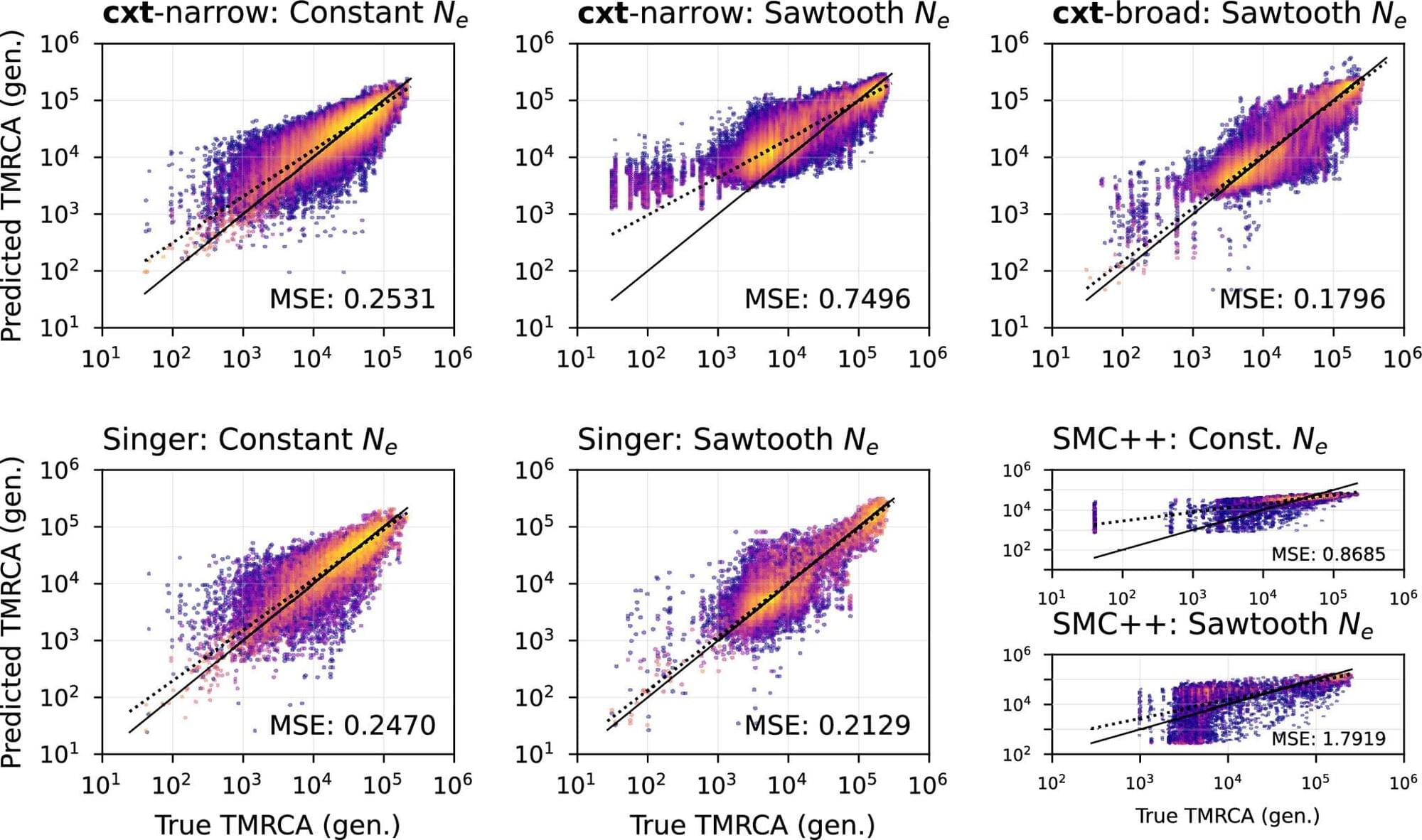
Researchers at the University of Oregon have developed an artificial intelligence tool that can read genetic code the way large language models like ChatGPT read text. Scanning the genome for biological mutation patterns, the computer model traces pairs of genes back in time to their last common ancestor.
It’s the first language model designed for population genetics, said Andrew Kern, a computational biologist in the UO College of Arts and Sciences. As described in a paper published April 10 in the Proceedings of the National Academy of Sciences, the AI tool offers scientists a fast and flexible alternative to classical methods for reconstructing evolutionary history.
In practice, it can help researchers like Kern understand when disease-resistance genes emerged in a population, for example, or when species evolved key traits.