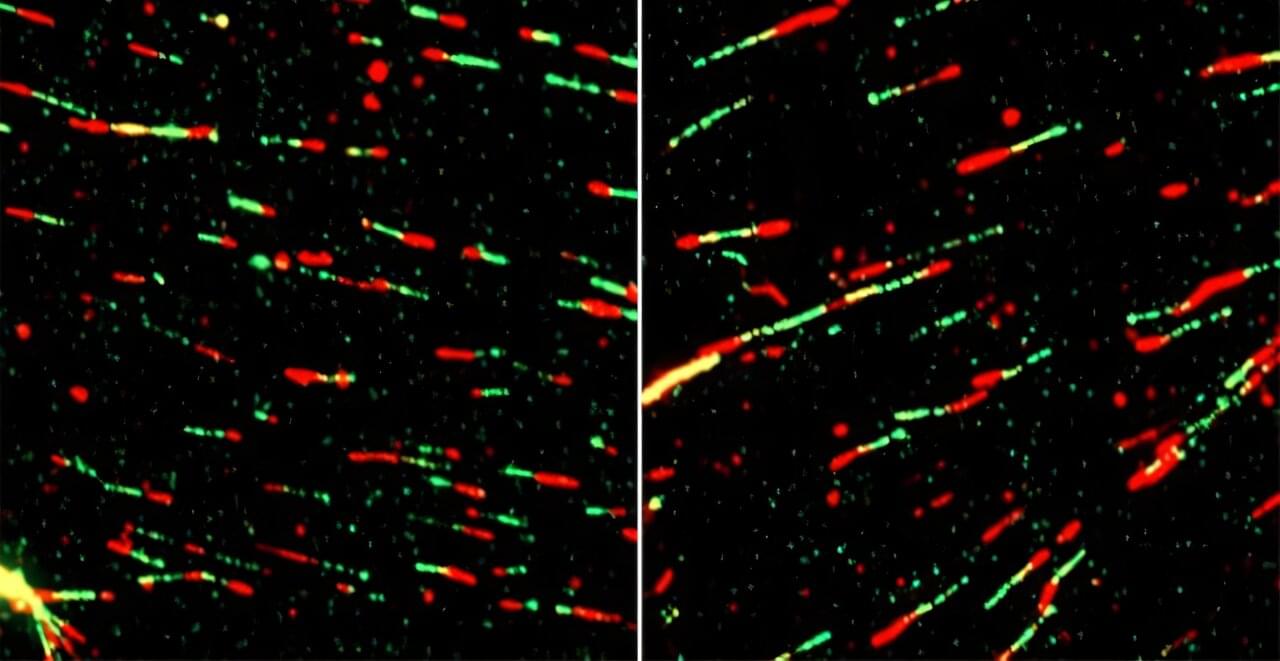
Loss of an enzyme necessary for a process called lipoylation disrupts the way cancer cells copy their DNA, increasing their vulnerability to a class of anticancer drugs known as PARP inhibitors, a study led by UT Southwestern Medical Center researchers shows.
The findings, published in Science Advances, reveal a previously unrecognized mechanism to protect DNA replication and genome stability that could lead to new treatments for some cancers.
“This study shows that metabolism doesn’t just fuel cancer cells—it also directly shapes how DNA is copied and protected. This helps explain why inhibiting lipoylation could make tumors especially sensitive to PARP inhibitors,” said Yuanyuan “Faith” Zhang, M.D., Ph.D., Assistant Professor of Radiation Oncology and a member of the Experimental Therapeutics Research Program in the Harold C. Simmons Comprehensive Cancer Center at UT Southwestern. Dr. Zhang co-led the study with first author Zengfu Shang, Ph.D., Assistant Professor of Radiation Oncology in the Zhang Lab.