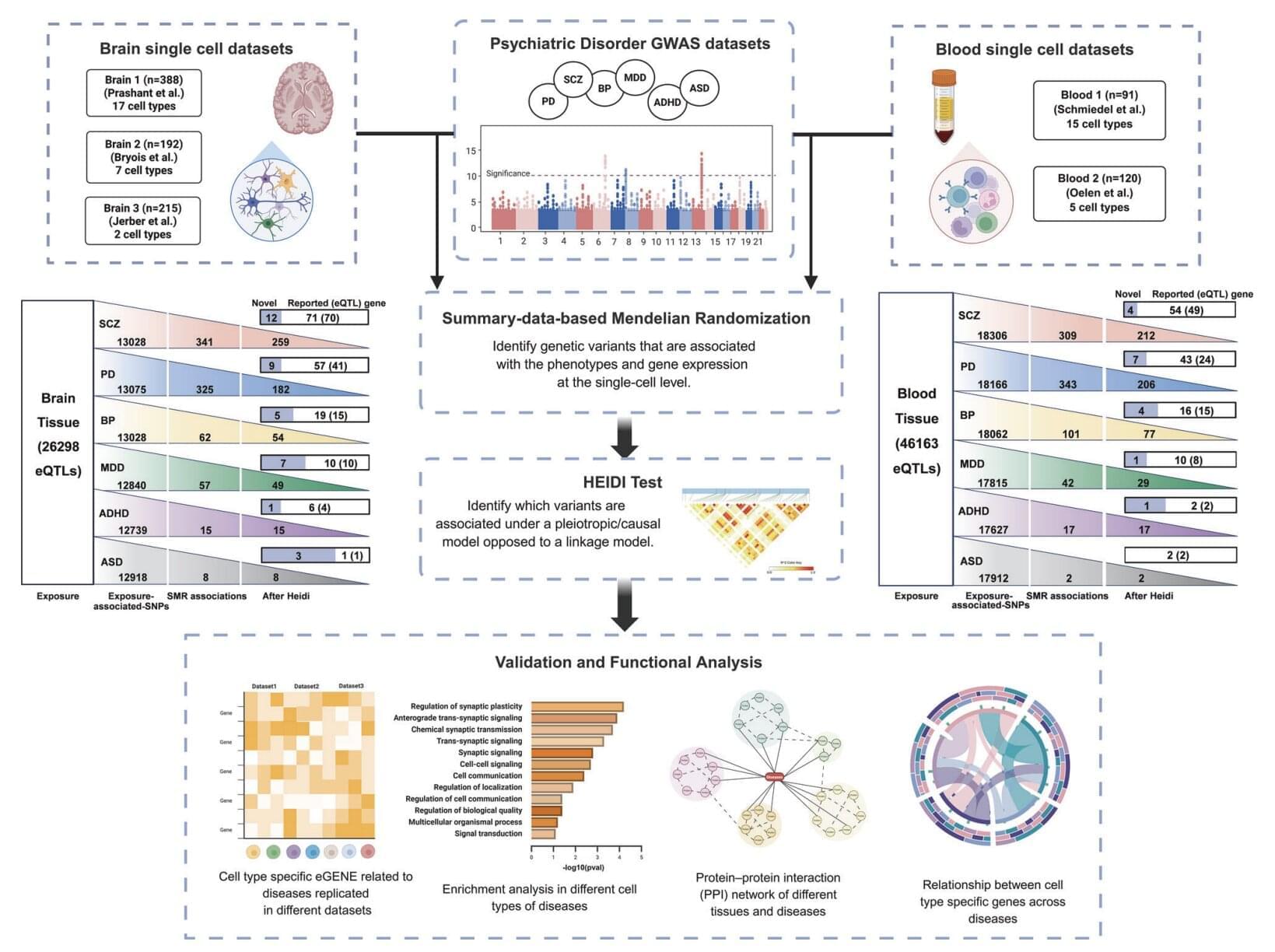
The emergence of neuropsychiatric disorders, conditions that affect various brain functions and behaviors, is known to be driven by an intricate combination of factors. These can include both a genetic predisposition and exposure to traumatic events or other external circumstances.
Over the past decades, many neuroscience studies have tried to shed light on the origins of different mental health disorders. However, the biological, cellular and molecular mechanisms underpinning these disorders have not yet been clearly elucidated.
Researchers at Peking University Sixth Hospital and Peking University Institute of Mental Health recently analyzed genetic data collected from patients diagnosed with six different neuropsychiatric disorders, to better delineate the genes and cell types that contribute to their emergence. Their paper, published in Molecular Psychiatry, identifies 345 genes expressed in different types of cells that were linked to an increased risk of developing these disorders.