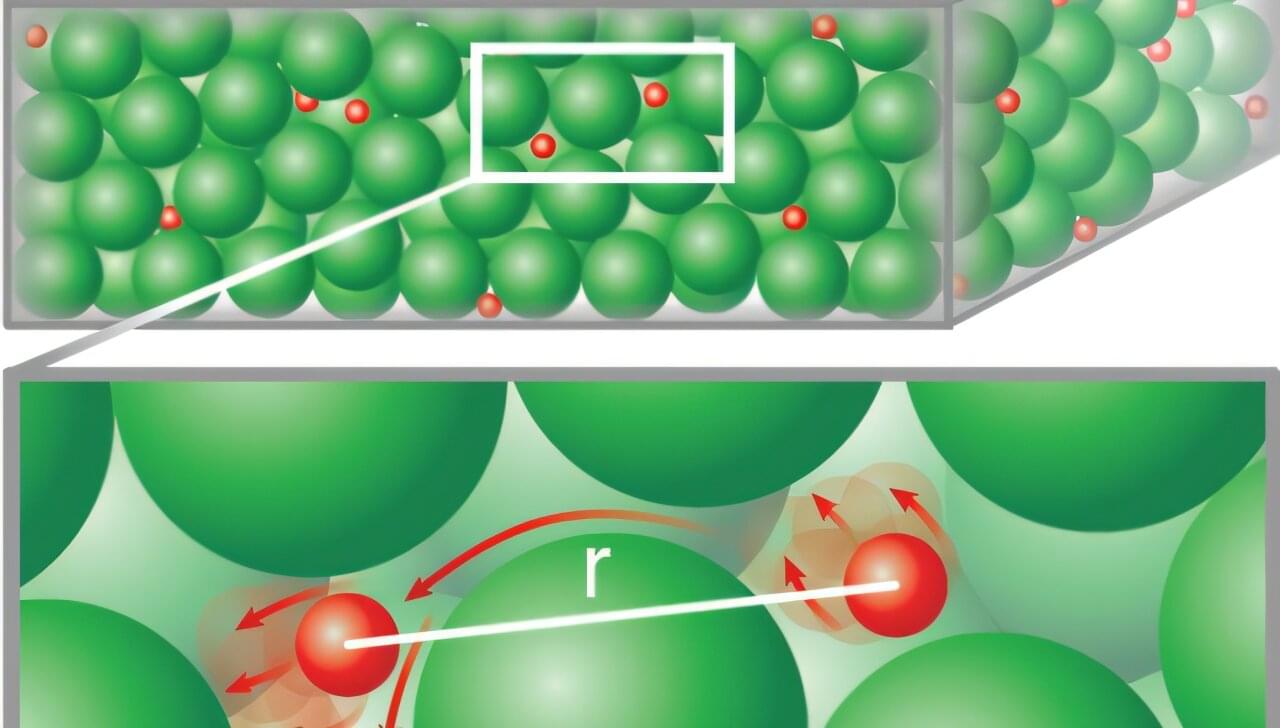
A scientific discovery by researchers at Tel Aviv University’s School of Chemistry offers a new perspective on a long-standing scientific mystery: how does a flowing liquid suddenly become a rigid, almost frozen material, without changing its structure? This phenomenon, known as the “glass transition,” has puzzled physicists for over a hundred years. The study proposes a new experimental approach to observing this elusive process—by tracking the motion of tiny particles that serve as microscopic “sensors” within the material.
The study was conducted by Prof. Haim Diamant and Prof. Yael Roichman of the School of Chemistry at Tel Aviv University, together with the research group of Prof. Stefan Egelhaaf at Heinrich Heine University Düsseldorf. The findings were published in the journal Nature Physics.