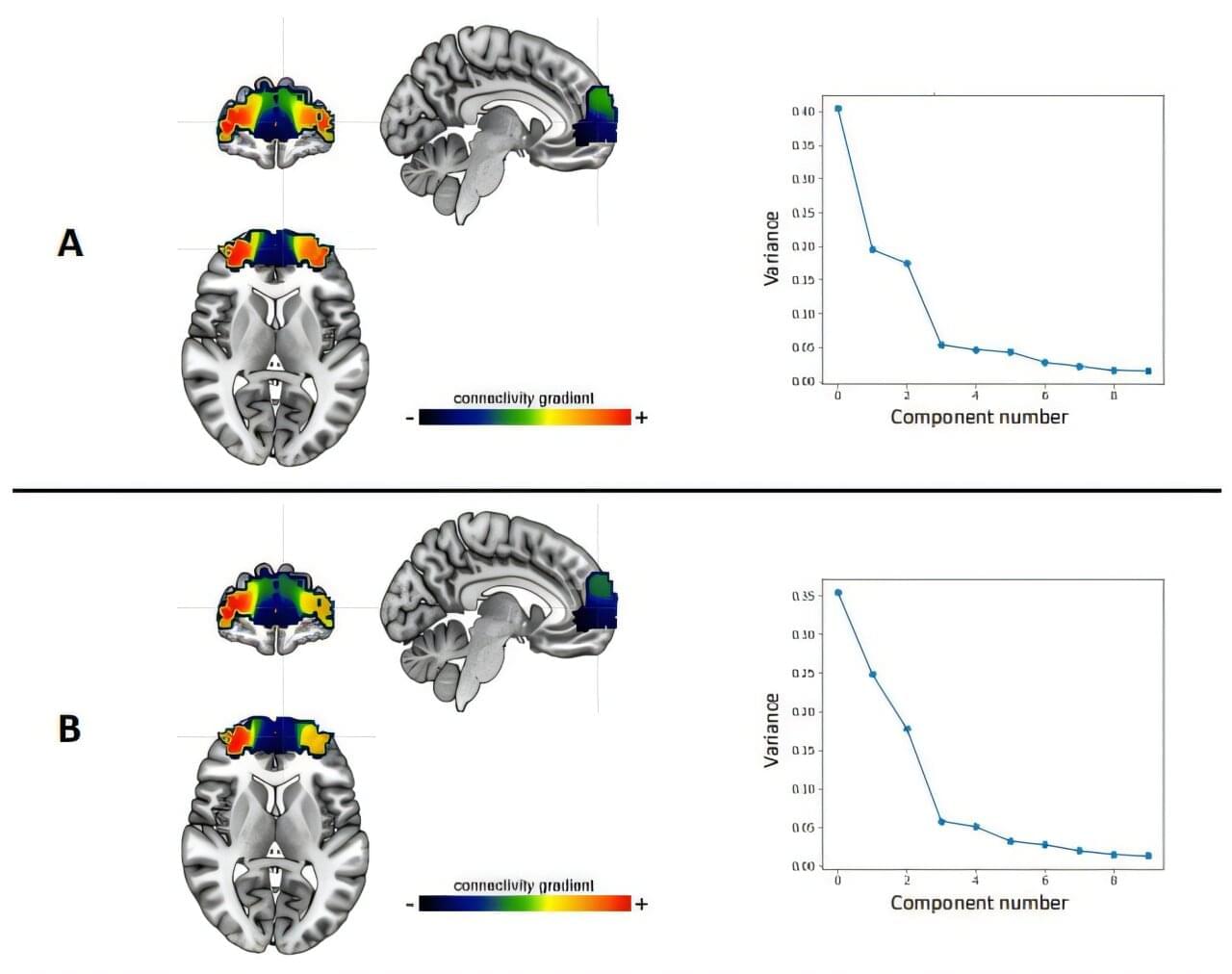
When a writer comes up with a striking metaphor, when an engineer solves a tricky problem by combining seemingly unrelated tools, or when a child invents the rules of a new game, what happens in the brain? In cognitive neuroscience, creativity is defined as the ability to produce ideas that are both original and relevant within a given context.
For several years, one hypothesis has gained traction in this field of research: Creativity involves two major brain networks. On the one hand, the default mode network (DMN), associated with the spontaneous generation of ideas and free associations. On the other hand, the executive control network (ECN) comes into play when we deliberately control our thinking in order to achieve a goal.
“Creativity is, in a sense, the result of dynamic cooperation between these two networks,” explains Emmanuelle Volle, neurologist and co-leader of the FrontLab team at the Paris Brain Institute. “We believe that creative ideas do not emerge from nothing, but result from the synthesis and reorganization of existing knowledge stored in semantic memory.”