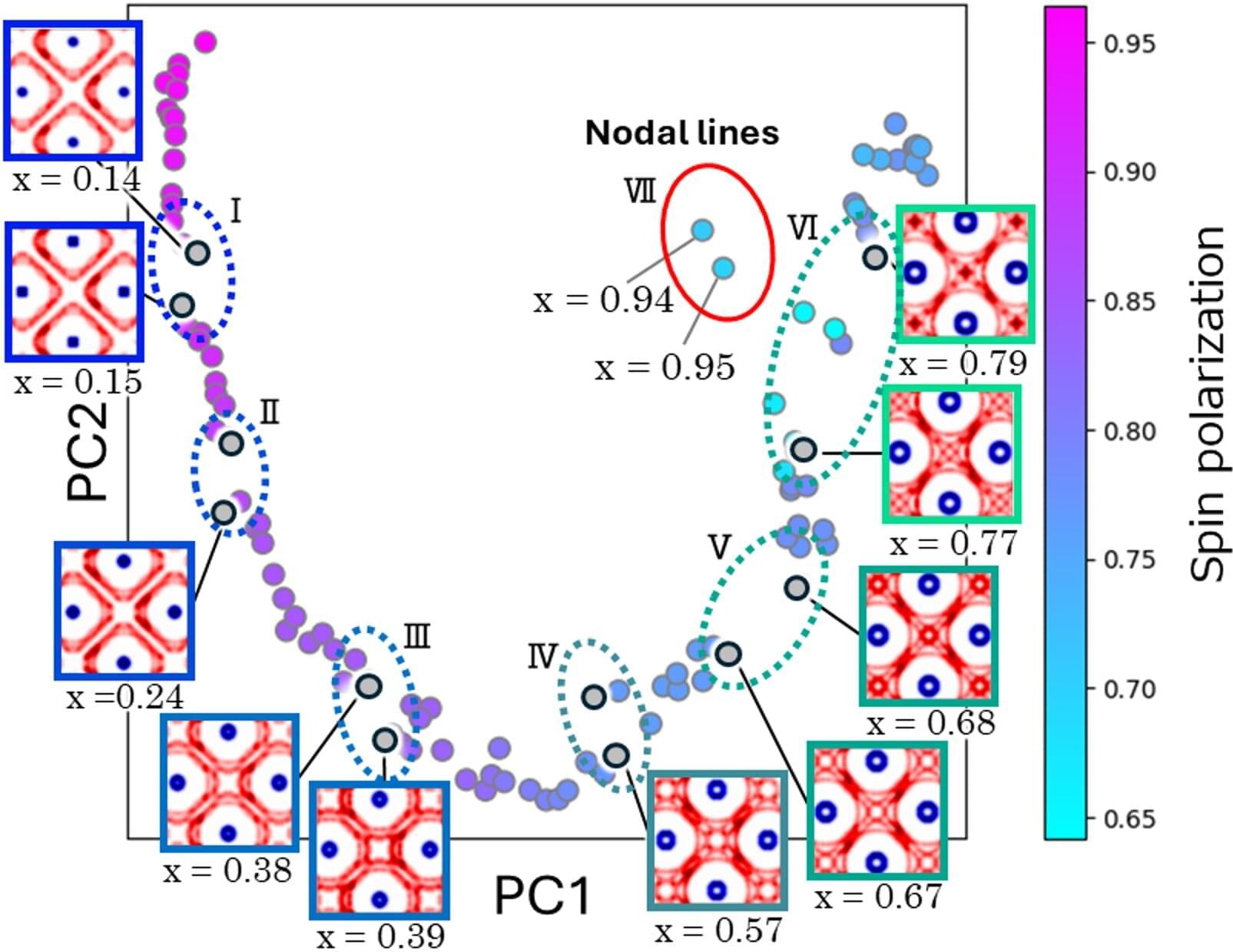
The search for next-generation electronic materials often starts with studying the Fermi surface, which serves as a map of a material’s electronic structure. Its shape varies with crystal structure, composition, and electronic band arrangement, directly impacting properties such as carrier density, magnetic behavior, and spin polarization. This makes it a crucial tool for understanding and engineering new materials.
The Fermi surface of a material is determined experimentally using techniques such as angle-resolved photoemission spectroscopy (ARPES). However, interpreting ARPES data requires specialized expertise, and the measurements themselves are often susceptible to noise. As experiments produce larger amounts of data, carefully reviewing every image by hand becomes time-consuming and inefficient.