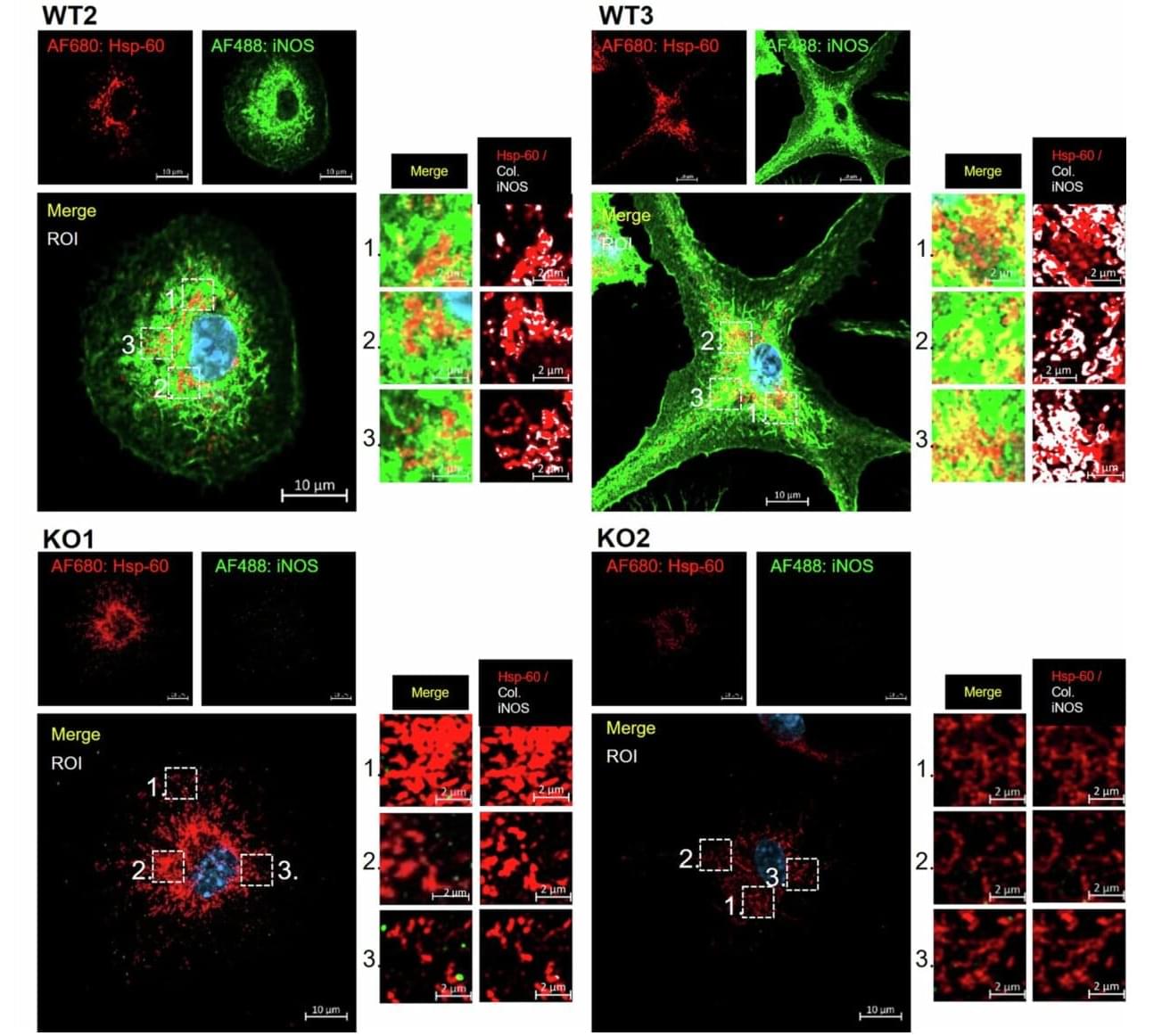
A protein long understood to drive inflammation by producing nitric oxide has a second, previously unknown role—it physically binds to another key protein inside cells to directly modulate the immune response. The discovery, published in Nature Metabolism, could open new routes to treating conditions such as cardiovascular disease, arthritis, Crohn’s and other inflammatory diseases.
When the immune system detects infection or injury, it triggers inflammation to fight back. That response is essential, but it must be carefully controlled. If it runs too hard for too long, it causes the tissue damage that underlies many chronic diseases. Understanding the molecular switches that regulate inflammation—and finding new ways to target them—is one of the biggest challenges in modern medicine.
Researchers from the University of Surrey and the University of Oxford have identified one such switch. They have shown that inducible nitric oxide synthase (iNOS)—a protein that produces nitric oxide during inflammation—can also bind directly to a second protein, IRG1, inside mitochondria. That physical interaction blocks IRG1 from producing itaconate, a metabolite that acts as a brake on the inflammatory response.