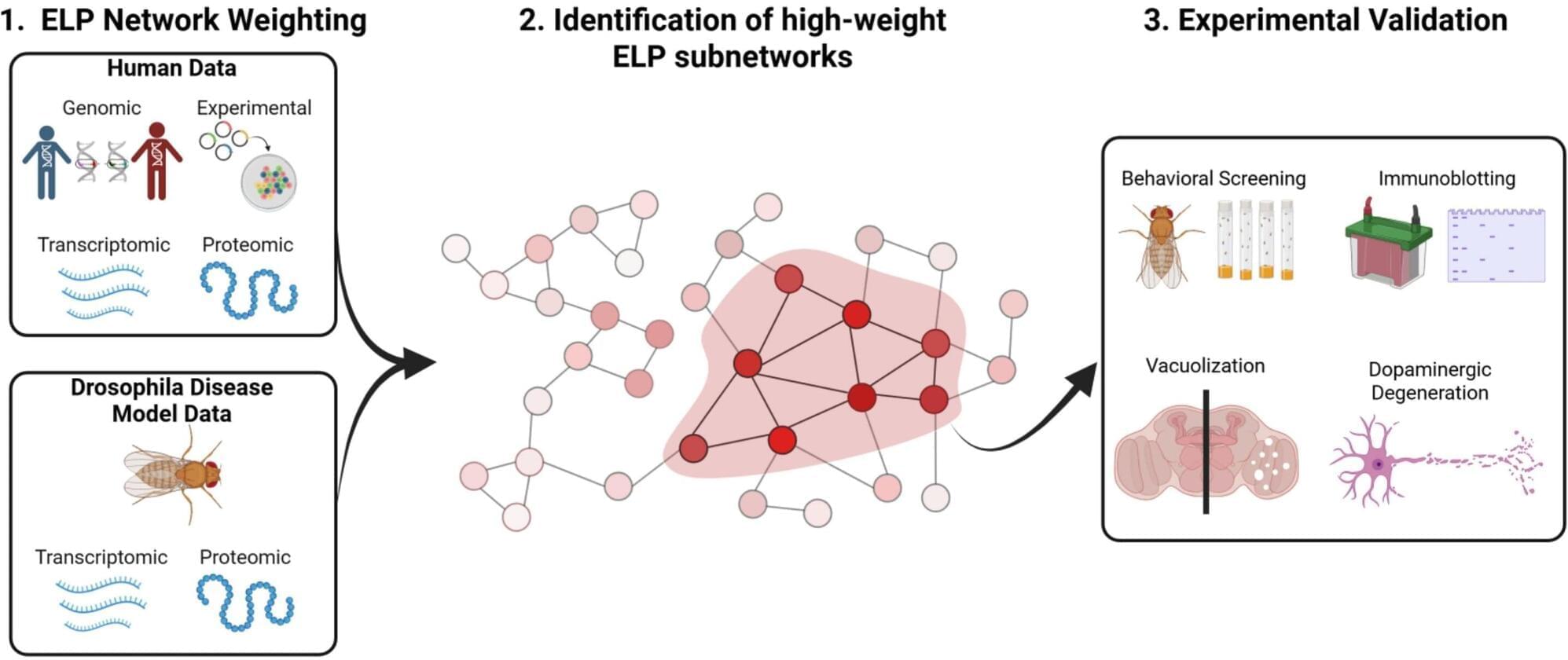
A novel strategy that combines computational and experimental approaches has allowed researchers at Baylor College of Medicine and the Duncan Neurological Research Institute (Duncan NRI) at Texas Children’s Hospital to distinguish alterations in gene function that contribute to Parkinson’s disease from those that protect from the condition. The study, published in Neurobiology of Disease, revealed novel risk factors and previously unrecognized therapeutic targets, offering hope for a future in which effective therapies will be available to prevent, slow down or stop this devastating disease.
“Parkinson’s disease is the most common neurodegenerative movement disorder—it affects more than 10 million people worldwide,” said corresponding author Dr. Juan Botas, professor of molecular and human genetics and molecular and cellular biology at Baylor. Botas also is a member of the Duncan NRI and director of the High Throughput Behavioral Screening Core at Texas Children’s.
“People with the condition have tremors, muscle stiffness and balance problems. They move slowly with a shuffling gait; their symptoms often start gradually and worsen over the years. Current therapies only relieve symptoms but do not prevent the gradual loss of brain cells called neurons that cause the disease,” said Dr. Botas.