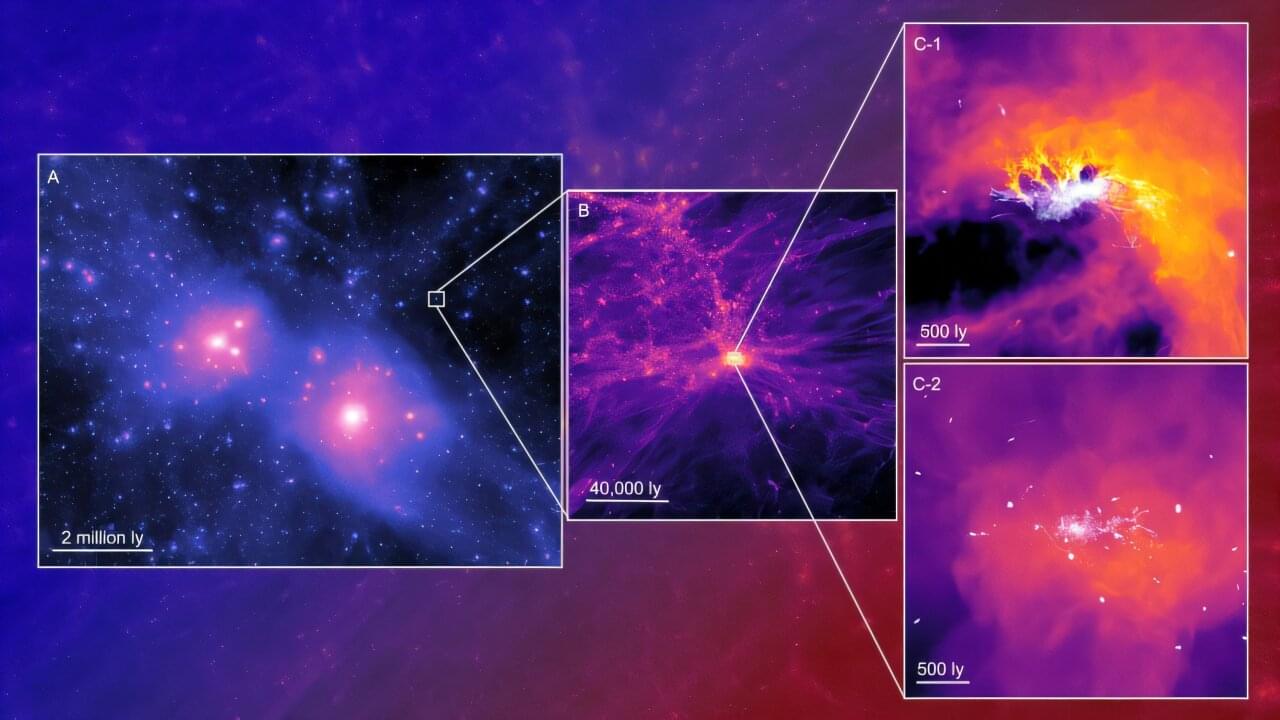
Ultra-faint dwarf galaxies—tiny satellite galaxies orbiting the Milky Way—have long been seen as cosmic fossils. Now, a new study published today in Monthly Notices of the Royal Astronomical Society uses an unprecedented set of simulations to show just how powerfully these faint systems can reflect the conditions of the early universe and tell us why some galaxies grew and others did not.
They could also reveal what the universe’s earliest “climate” was like—for example, the level of radiation and how this impacted whether and where stars formed.
Dwarf galaxies are often described as small cousins of the Milky Way. They form in small dark matter halos which are predicted by the standard model of cosmology. The faintest examples of such systems are extreme in both size and fragility, and lie on the boundary of our knowledge about galaxy formation and dark matter.