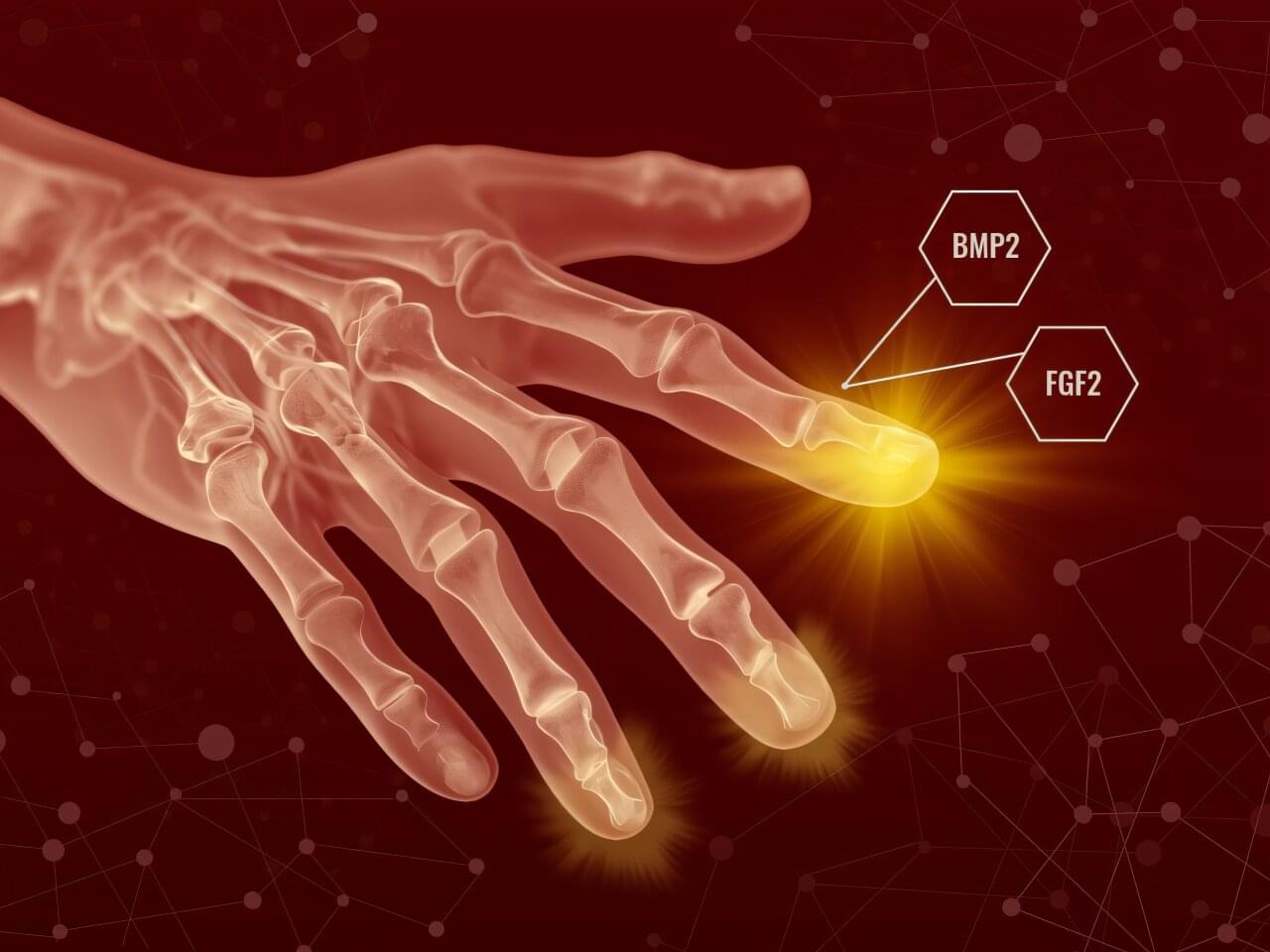
For centuries, the inability to regrow lost body parts has been considered a defining limitation of humans and other mammals. While animals like salamanders can regenerate entire limbs, humans are left with scar tissue. But new research from the Texas A&M College of Veterinary Medicine and Biomedical Sciences (VMBS) suggests that this limitation may not be permanent. Instead, the capacity for regeneration may still exist—hidden within the body’s normal healing process.
“Why some animals can regenerate and others, particularly humans, can’t is a big question that has been asked since Aristotle,” said Dr. Ken Muneoka, a professor in the VMBS’ Department of Veterinary Physiology & Pharmacology (VTPP). “I’ve spent my career trying to understand that.”
In their study, published in Nature Communications, Muneoka and his colleagues detail a newly developed two-step treatment that led to the regeneration of bone, joint structures and ligaments. While the results were imperfect, the team believes this approach could be used more immediately to reduce scarring and improve tissue repair after amputations.