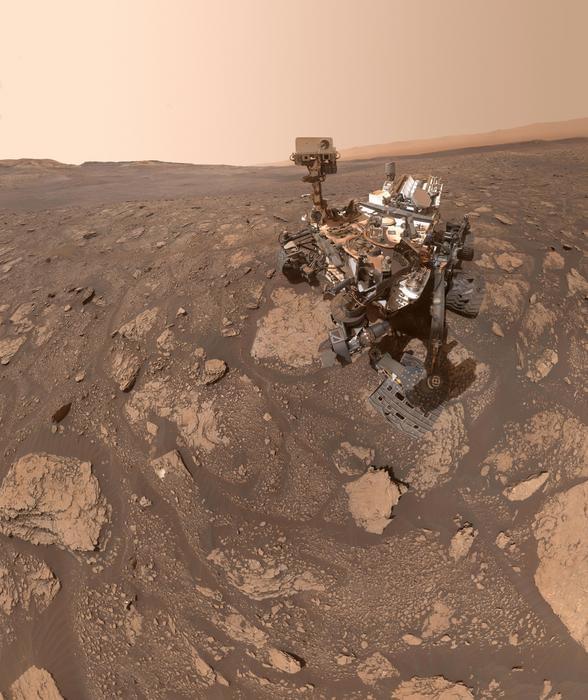
“We think we’re looking at organic matter that’s been preserved on Mars for 3.5 billion years,” said Dr. Amy Williams. [ https://www.labroots.com/trending/space/30462/nasa-rover-unc…les-mars-2](https://www.labroots.com/trending/space/30462/nasa-rover-unc…les-mars-2)
Does Mars contain the building blocks for life as we know it? This is what a recent study published in Nature Communications hopes to address as a team of researchers investigated whether the surface of Mars could preserve evidence for life as we know it using experiments from one of its rovers. This study has the potential to help scientists better understand how and where to search for past evidence of life as we know it and comes as NASA is working to return samples from the surface of Mars.
For the study, the researchers examined data obtained from NASA’s Curiosity rover, which has been exploring Gale Crater on Mars since 2012. Recently, it used its cache of scientific instruments to identify more than 20 organic molecules from 3.5-billion-year-old Martian clays. These included a first-time identification of DNA precursors and specific chemicals that are delivered to planets via meteorites.