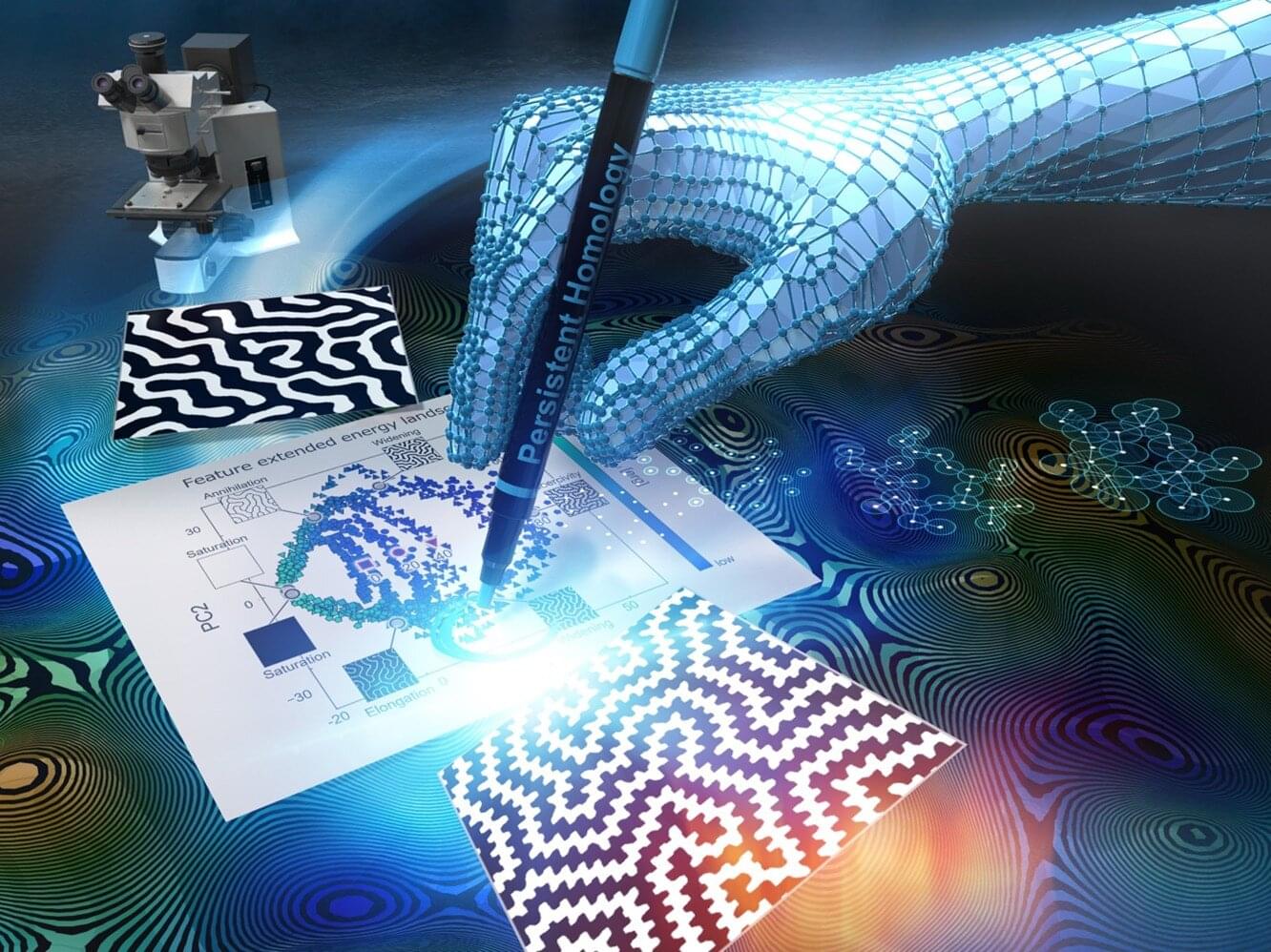
The rapid increase in electric vehicle adoption in recent years has highlighted a crucial issue: the energy conversion efficiency of electric motors. In electric motors, iron loss or magnetic hysteresis loss is a primary source of energy dissipation, arising from the repeated reversal of magnetic fields within the motor core, made of soft magnetic materials. Moreover, electric motors typically operate in high-temperature environments, where thermal effects can lead to partial demagnetization, further complicating energy-loss mechanisms.
The structure of magnetic domains (tiny magnetic regions) of soft magnetic materials strongly influences their magnetic properties, including response to high temperatures and hysteresis loss.
Magnetic domains exhibit a variety of fine structures. In some soft magnetic materials, they form intricate zig-zag patterns known as maze domains. These maze domains show complex and abrupt temperature-dependent behavior that can significantly affect energy loss.
Thank you for some other informative web site. Where else may I get that kind of info written in such an ideal approach? I have a mission that I’m simply now operating on, and I have been on the glance out for such information.
https://share.google/e6fubzQxjD8Bis458