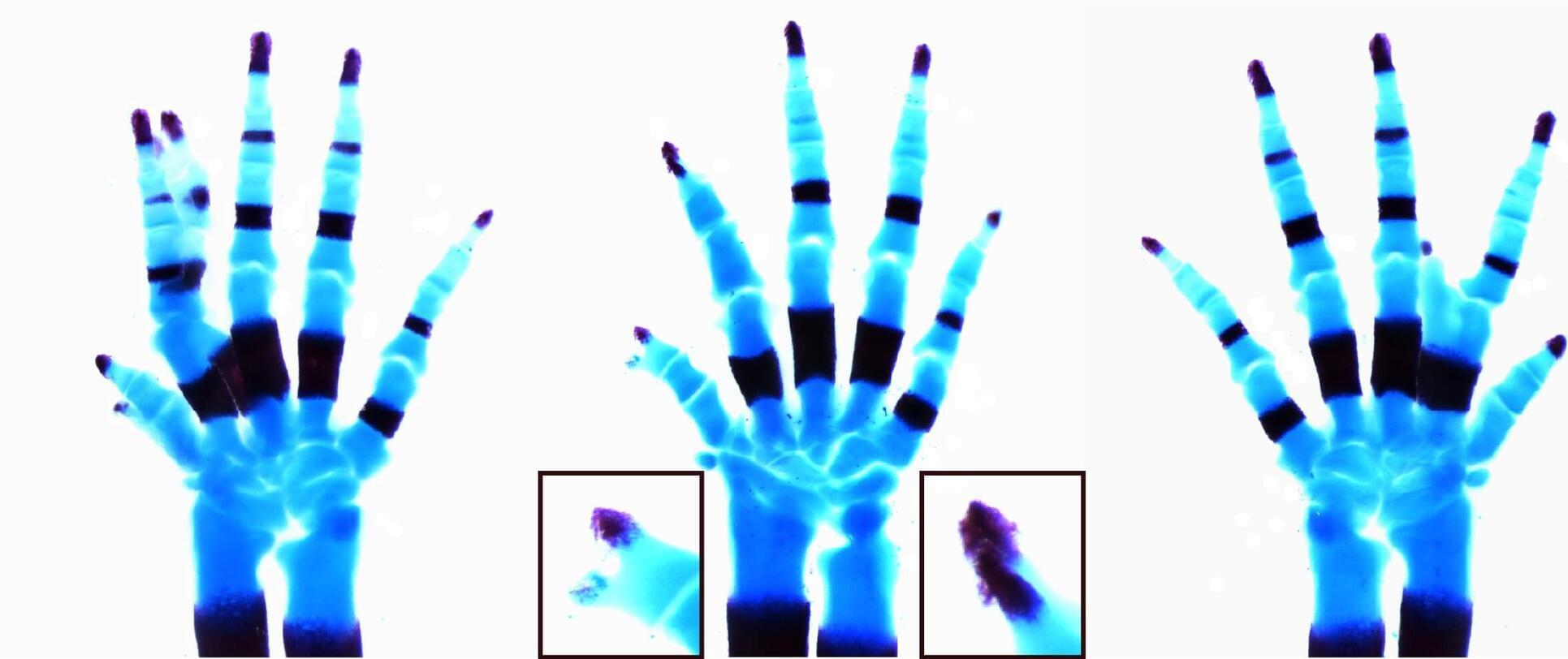
In a new study published in Genes & Development, research led by Dr. Lila Allou at the MRC Laboratory of Medical Sciences (LMS) in London and Professor Stefan Mundlos at the Max Planck Institute for Molecular Genetics and Charité in Berlin demonstrates how different regulatory genetic elements coordinate the temporal activity of a key developmental gene. Their findings likely explain subtle differences seen in patients with congenital limb malformations, for which the underlying disease mechanisms often remain unknown.
Although every cell contains the same genes, not all genes are active at any given time. Gene regulation is a fundamental process that ensures only the necessary genes are expressed in each cell type. This is why, for example, neurons differ in structure and function from muscle cells. Precise fine-tuning of gene regulation is especially critical during development. Timed waves of transcriptional activity ensure that an embryo develops into a healthy organism with properly positioned and formed limbs, organs, and tissues. This process is driven by specialized genes and controlled by regulatory elements in the genome.