Childhood obesity!
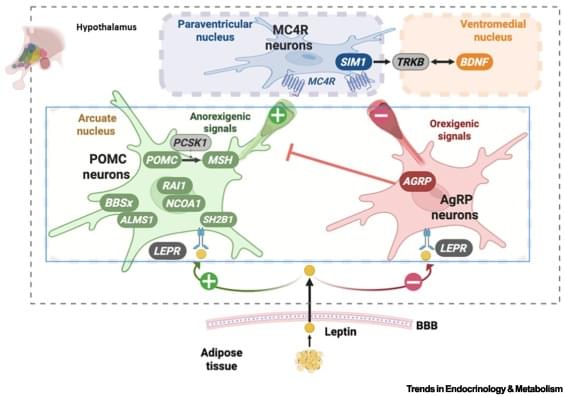
Obesity associated with the melanocortin system can be diagnosed in childhood, including both monogenic and syndromic forms.
Genetic obesity is characterized by early onset and extreme hyperphagia, although there is no precise definition for these features.
Numerous polymalformative syndromes include obesity among their main phenotypic traits. Among these are ciliopathies, in which alterations in the neuronal ciliary system can disrupt hypothalamic proopiomelanocortin neuron signaling, helping to explain the hyperphagia and obesity frequently observed in some of these disorders.
Pharmacological treatment of patients with impairment of the leptin– melanocortin pathway can be classified into specific and nonspecific treatments.
The use of these therapies is expanding to new indications, and additional treatments are under clinical investigation for both monogenic and polygenic obesity sciencenewshighlights ScienceMission https://sciencemission.com/childhood-obesity-19506
Advances in our understanding of hypothalamic control of energy homeostasis have resulted in the identification of genetic forms of obesity, both syndromic and nonsyndromic, with some precision treatments now being employed. In this review article, we examine the progress being made in identifying new genes involved in the hypothalamic leptin–melanocortin system and their possible implications in obesity, as well as other potential clinical features. We include an update on clinical trials in genetic obesity with specific pharmacological treatments, such as agonists for the melanocortin 4 receptor, and for glucagon-like peptide-1 receptor. The possibility of employing new precision drug targets in specific forms of obesity is modifying the approach to disease treatment in the pediatric clinic.