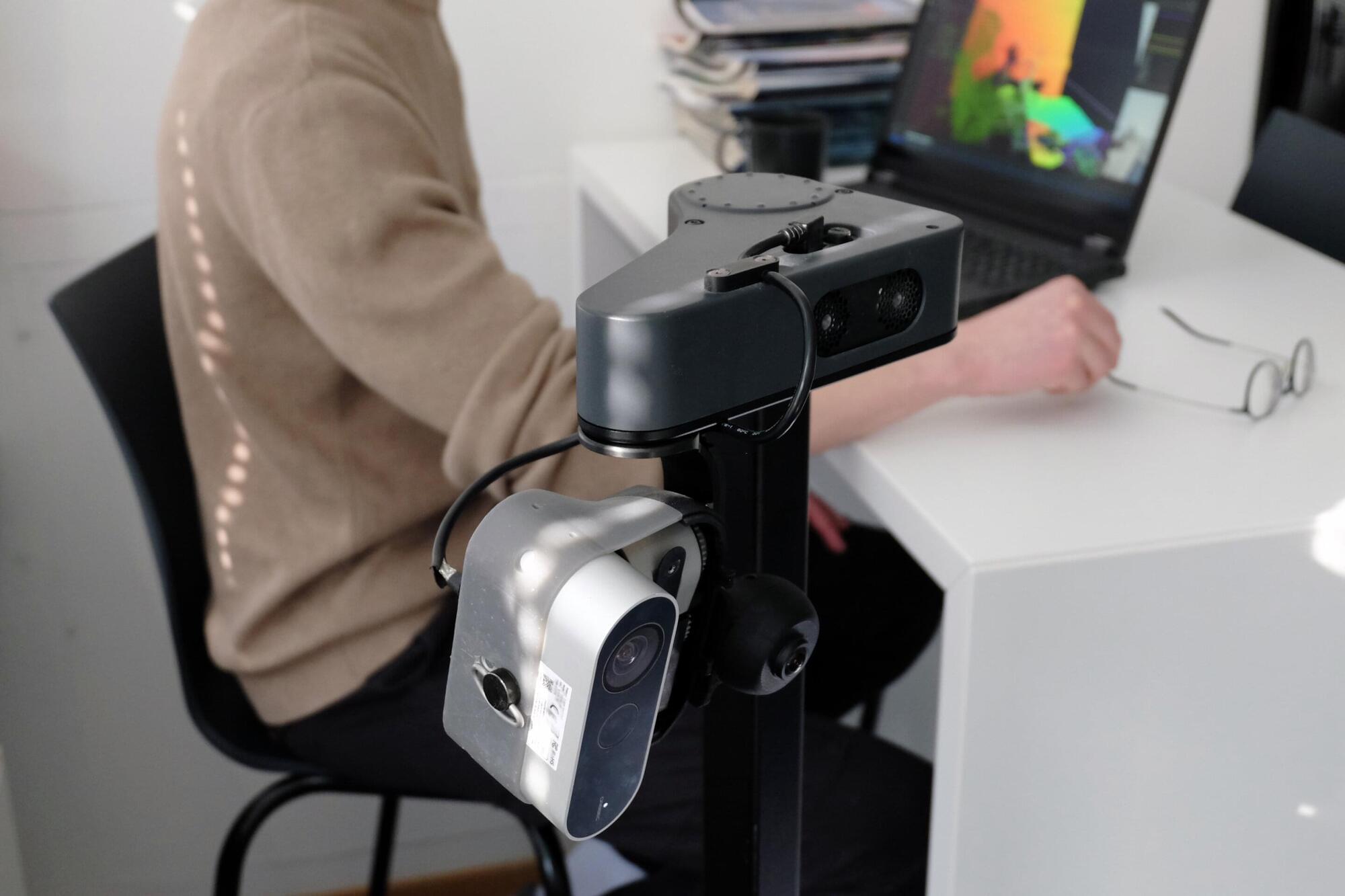
A robot that can locate lost items on command, the latest development at the Technical University of Munich (TUM), combines knowledge from the internet with a spatial map of its surroundings to efficiently find the objects being sought. The new robot from Prof. Angela Schoellig’s TUM Learning Systems and Robotics Lab looks like a broomstick on wheels with a camera mounted at the top. It is one of the first robots that not only integrates image understanding but also applies it to a clearly defined task.
To find a pair of glasses misplaced in the kitchen, for example, the robot has to look around and build a three-dimensional image of the room. The camera initially provides two-dimensional images, but these pixels also contain depth information. This creates a spatial map of the environment that is accurate to the centimeter and is constantly updated. A laptop also provides the robot with information about which objects are visible in the image and what significance they have for humans.
“We have taught the robot to understand its surroundings,” says Prof. Schoellig. The head of the Robotics Lab at the TUM Chair of Safety, Performance and Reliability for Learning Systems aims to develop robots that can navigate any environment independently. Humanoid robots working in factories or robots in care settings in private homes require this newly developed basic understanding, which, as Schoellig explains, “is important for all robots that move in spaces that are constantly changing.” A paper introducing the technology is published in the journal IEEE Robotics and Automation Letters.