In the air people breathe, the water on Earth, the stars in the sky and more, atoms are the building blocks that make up the universe. Understanding the structure of the atomic nucleus is crucial for research with implications for astrophysics and in applications such as medical imaging and data storage.
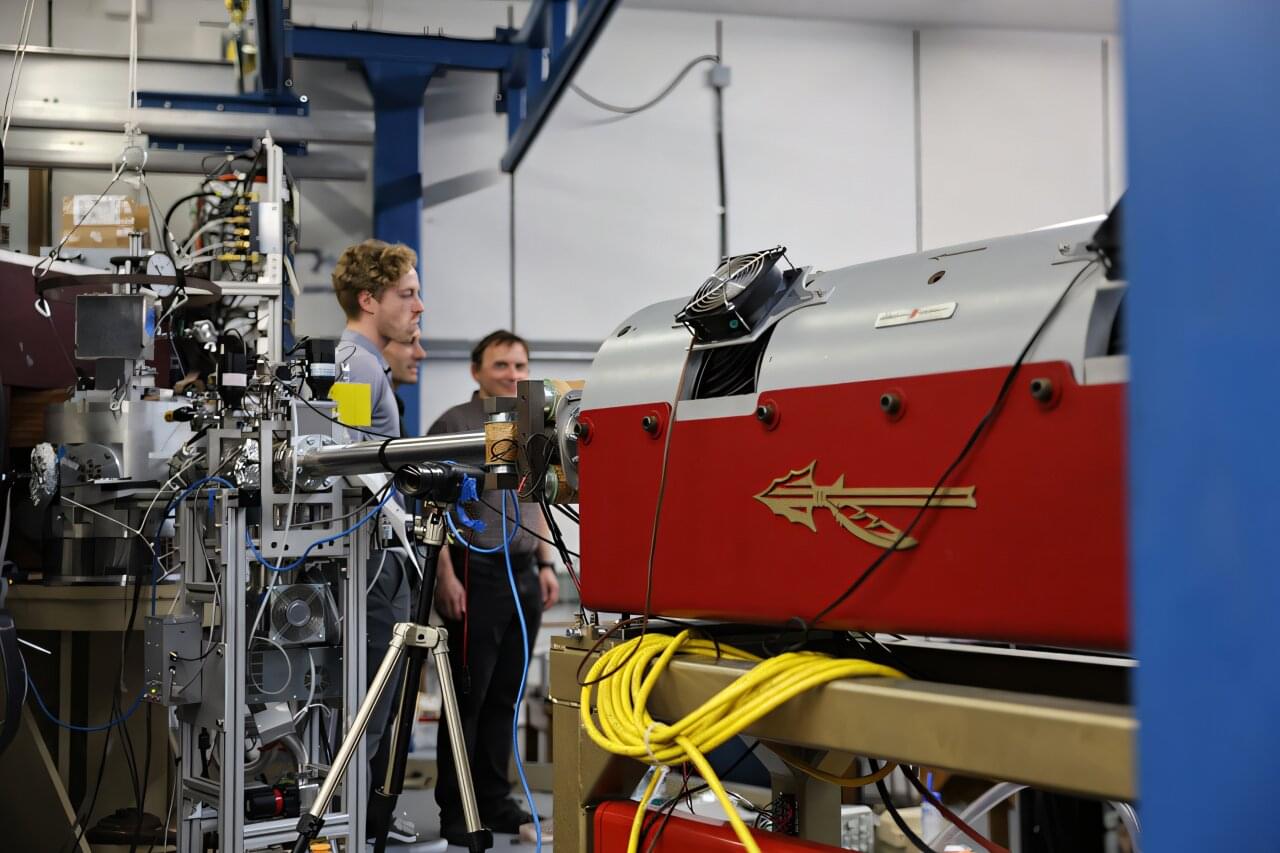
A new study conducted by Department of Physics researchers using the John D. Fox Superconducting Linear Accelerator Laboratory at Florida State University examined titanium-50 nuclei and showed that a long-standing explanation for where magnetism in atomic nuclei comes from does not fully work for titanium-50. The research, which was published in Physical Review Letters, suggests that scientists may need to rethink how they explain nuclear magnetism.
“What current models propose is that magnetic strength is largely generated by spin-flip excitations, that means when flipping proton or neutron spins from up to down between so-called spin-orbit partner orbitals,” said Associate Professor Mark Spieker, a co-author on the multi-institution study. “For the first time, we showed that this type of spin-flip cannot be the only mechanism that generates nuclear magnetism.”