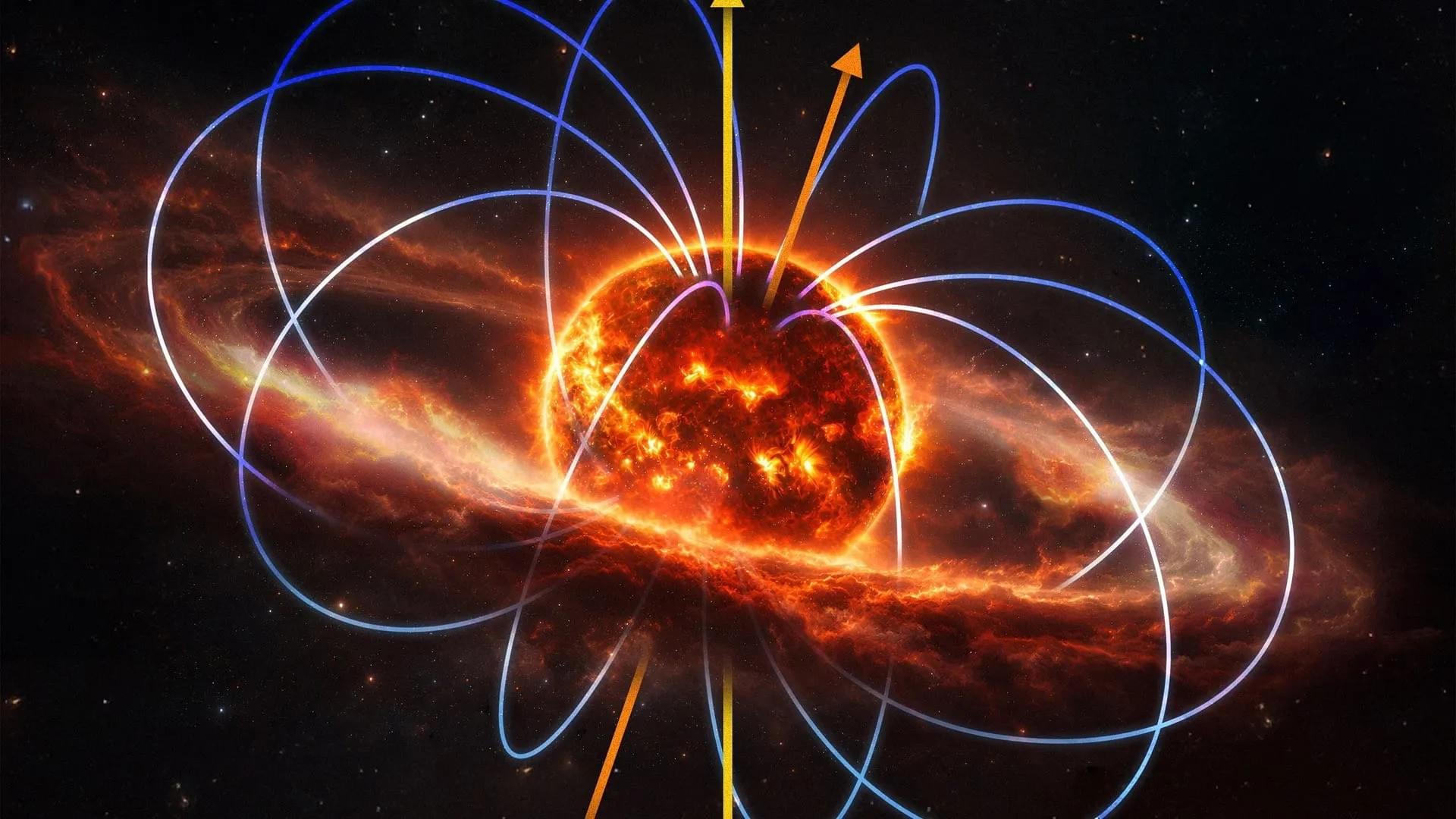
“This is a great example of a serendipitous discovery, something we didn’t expect to find but that will give us a new window into understanding planet-star relationships,” said Dr. Luke Bouma. [ https://www.labroots.com/trending/space/30366/natural-space-…tability-2](https://www.labroots.com/trending/space/30366/natural-space-…tability-2)
How can scientists determine if exoplanets orbiting M-dwarf stars are habitable? This is what a study recently presented at the 247th Meeting of the American Astronomical Society hopes to address as a team of scientists investigated how stellar activity from M-dwarf stars could influence planetary habitability. This study has the potential to help scientists to narrow constraints for conditions regarding finding life beyond Earth.
For the study, the researchers explored a unique type of M-dwarf star called a complex periodic variable (CPV), which are young M-dwarf stars that have been observed to have periodic decreases in brightness. While brightness dimming is often attributed to a planet passing in front of the star, or even gas and dust, astronomers were perplexed regarding this particular phenomenon. Their initial hypothesis was the brightness dips resulted from bright and dark regions on the star’s surface.
After significant analysis, the researchers discovered that the brightness dips were caused by a “donut” of super-heated gas called plasma, which all stars are made of, trapped within the star’s magnetic field. As the donut rotated around the star, it caused periodic dips in brightness. Along with estimating that approximately 10 percent of M-dwarf stars could be designated as CPVs, they also note this unique stellar could help gain greater insight into how it influences planetary conditions, which the researchers dubbed “space weather stations”