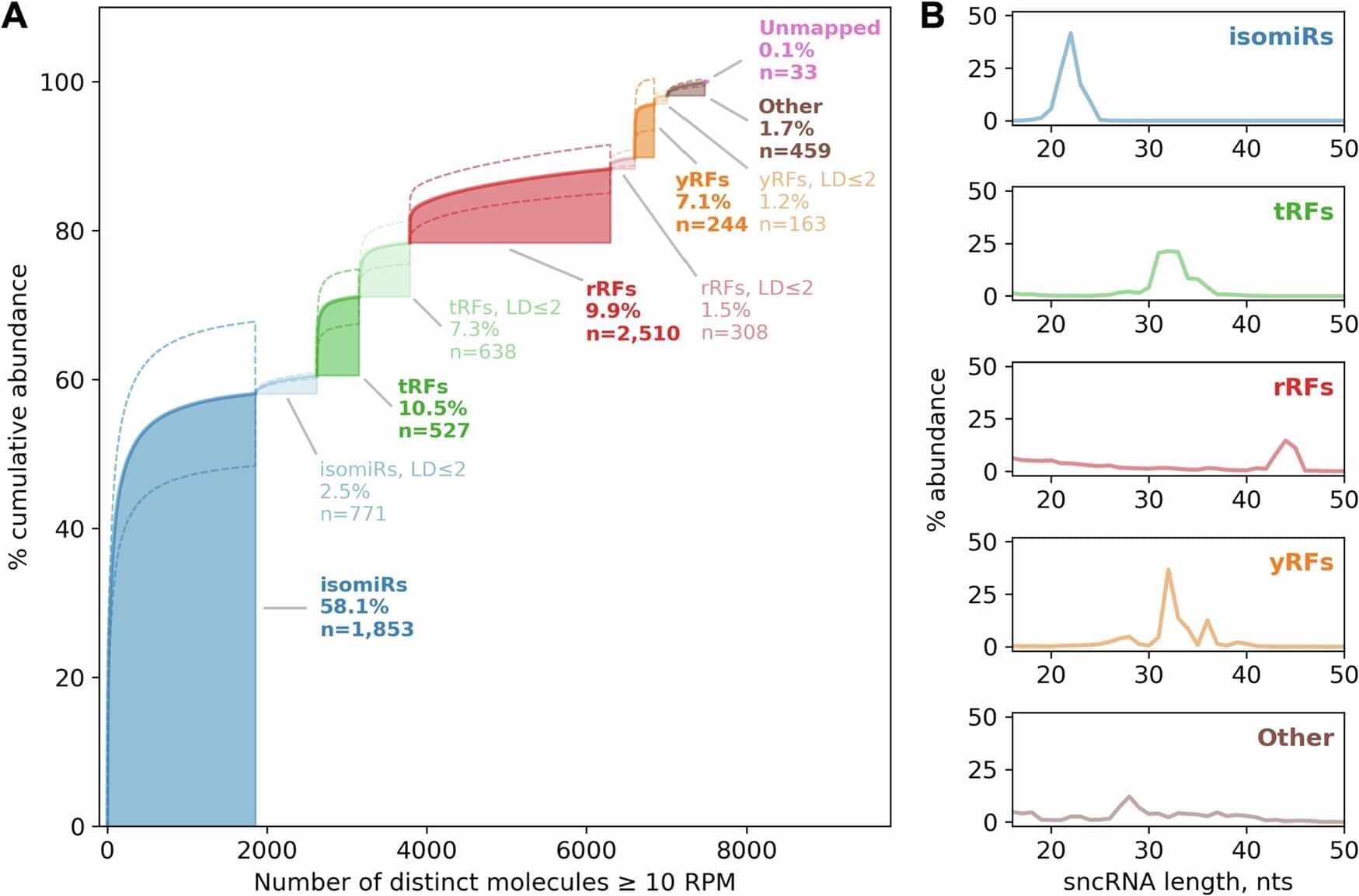
For decades, scientists studying brain disorders have focused almost exclusively on proteins and the genes encoding them. Now, research from Thomas Jefferson University’s Computational Medicine Center suggests that several classes of small regulatory molecules, fittingly known as small RNAs, may play a much larger role in schizophrenia and bipolar disorder, and in a healthy brain, than previously thought.
In a study recently published in Translational Psychiatry, a team led by Isidore Rigoutsos, Ph.D. took a comprehensive look at small RNAs in brain samples from people with schizophrenia, bipolar disorder and individuals without psychiatric illness. Their goal was to find out what kind of small RNAs are active in the brain, and whether their levels change in disease.
“Little attention had been paid to small RNAs in these disorders,” says Dr. Rigoutsos, “even though small RNAs help control numerous processes by modulating the abundance of genes.”