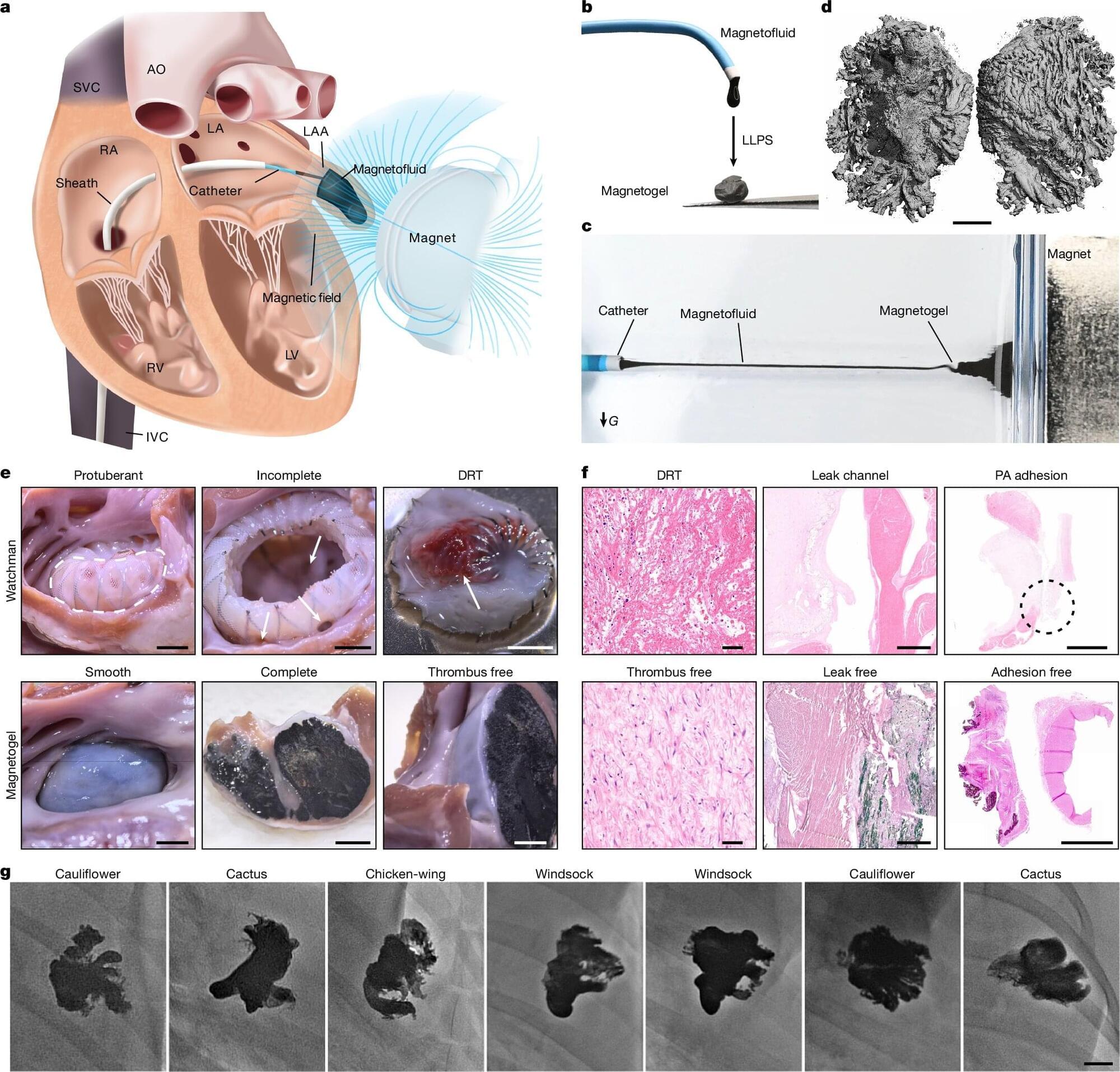
Atrial fibrillation is a common heart condition characterized by a rapid, irregular heartbeat stemming from the heart’s upper chamber. It is a leading cause of stroke from clots that form in a small pouch of the heart called the left atrial appendage (LAA). While several treatment options exist, they have many drawbacks, and risks often remain. But now, researchers have developed a promising new treatment involving magnetic fluids. Their study, published in Nature, describes the new procedure and results from rat and pig studies.
Atrial fibrillation treatment options Blood thinners are a common treatment for atrial fibrillation. However, some patients cannot take them due to an increased risk of bleeding. Another option is closing off the LAA with a device. This is referred to as left atrial appendage occlusion (LAAO). While the devices that are currently available reduce stroke risk, they can leave small leaks and attract clots on or around the device itself. One of these devices is the Watchman occluder—a metallic transcatheter LAAO device.
One reason blocking off the LAA is difficult is that its shape varies from patient to patient, and is often rather odd. Names of these strange and difficult-to-fill shapes include cauliflower, cactus, chicken wing and the most challenging type—the windsock. Some improvements have been made to attempt to fit these shapes better, but issues remain.