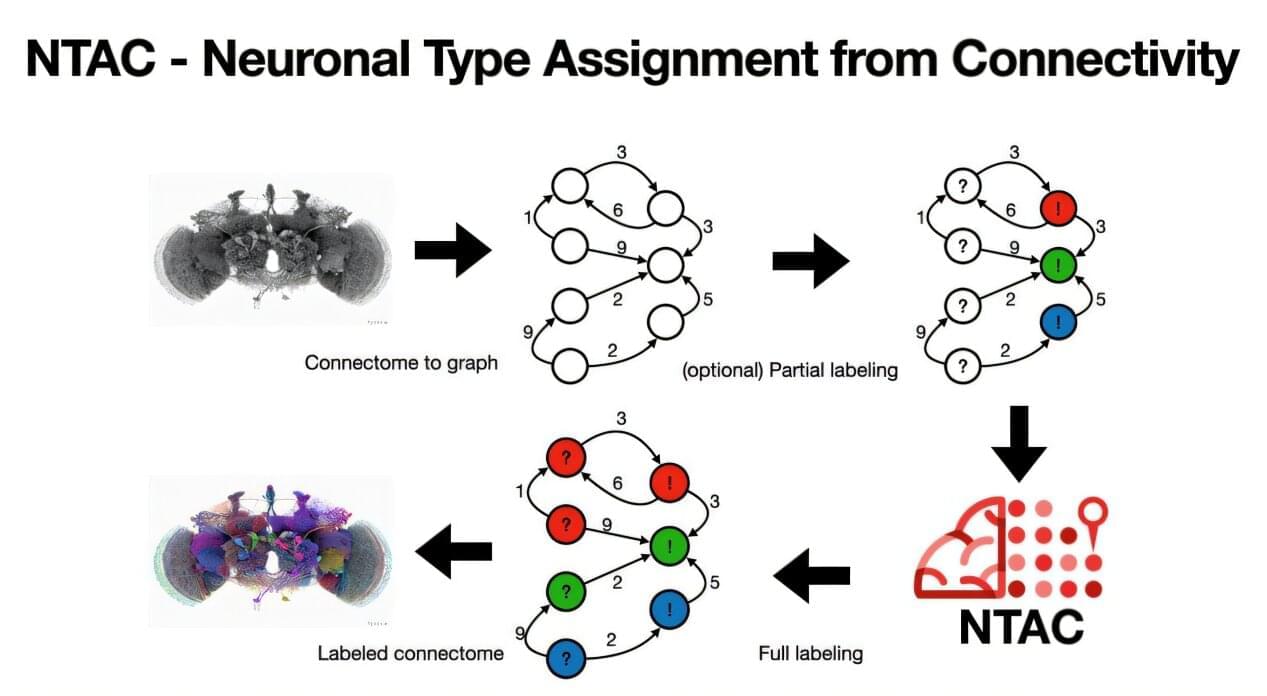
Recent technological advances facilitate the reconstruction of complete brain connectomes in small organisms and partial connectomes in mammals, involving the mapping of the network of neurons and synaptic connections. Accurate cell typing of these connectomes aids in interpreting circuit functions and comparing brain organization across species.
Traditionally, cell typing relied on manual morphological classification by experts—a slow process that required detailed anatomical information. However, morphology can be deceptive or inadequate in many brain regions, especially in circuits with repeated cell types, where neurons can share very similar morphology despite differing in connectivity.