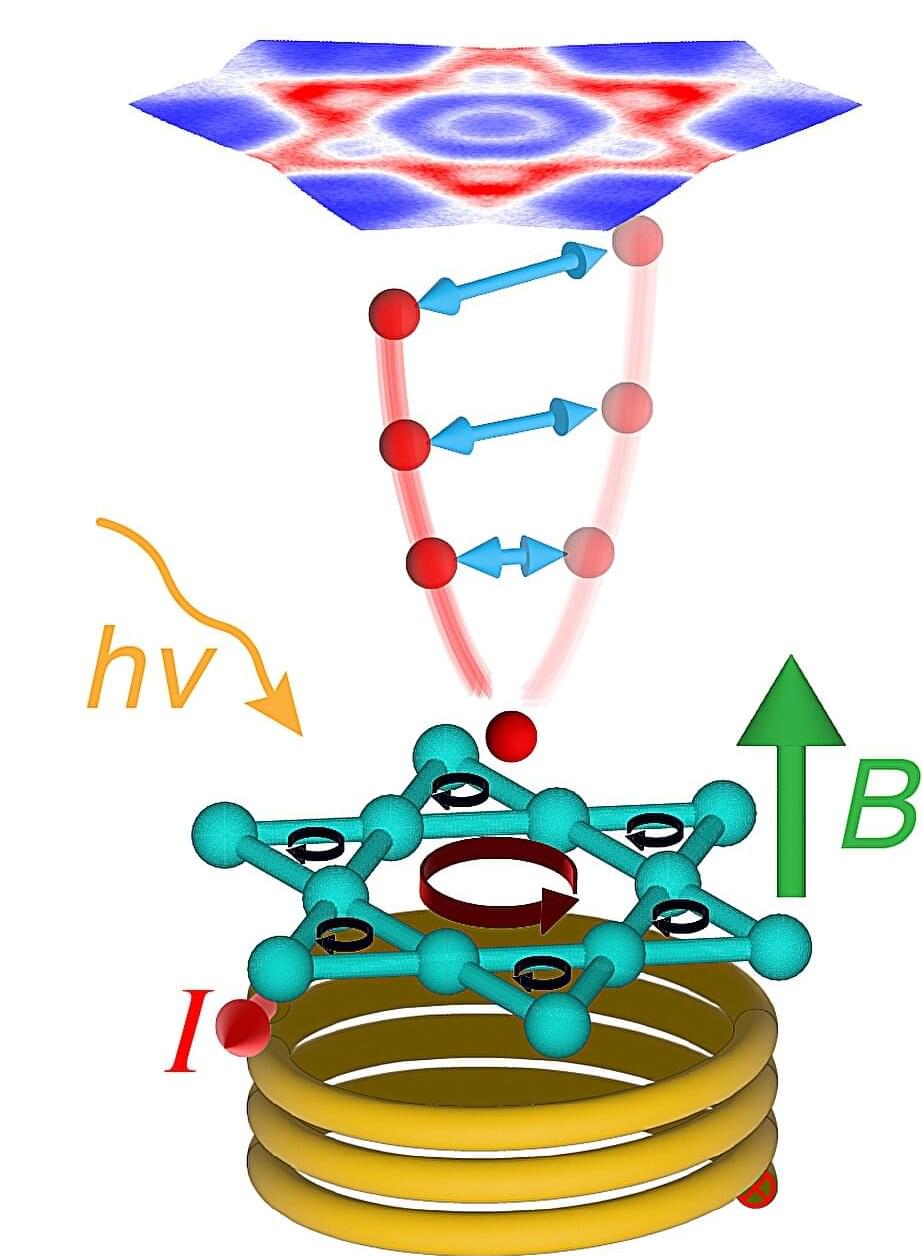
Electron movement and structures described in quantum physics allow researchers to better understand how and why materials like superconductors behave as they do. Rice University researchers Jianwei Huang and Ming Yi have developed a new capability, magnetoARPES, building on angle-resolved photoemission spectroscopy (ARPES) that allows researchers to study quantum behaviors they have been unable to resolve using ARPES alone. The work has been published in Nature Physics.
MagnetoARPES adds a tunable magnetic field, external to the sample, to ARPES. This allows researchers to probe the full electronic response to a magnetic field, giving insights into why certain collective behaviors of electrons develop.
Magnetic fields have, historically, been excluded from ARPES experiments, but over the course of a few years of experimentation and simulations, Yi’s team found a viable way to incorporate this capability into the ARPES sample environment.