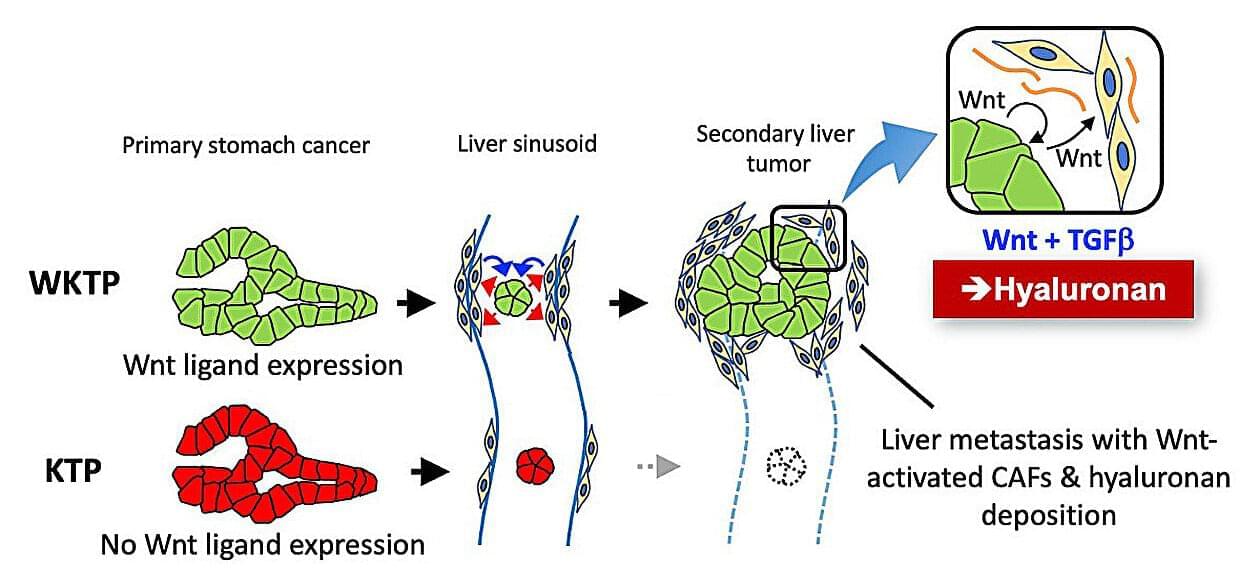
Researchers at the Cancer Research Institute and the Nano Life Science Institute (WPI-NanoLSI), Kanazawa University, have uncovered a critical mechanism that enables gastric cancer to spread to distant organs. Their study shows that cancer cells stimulate Wnt signaling in surrounding stromal fibroblasts to produce hyaluronan, creating a supportive microenvironment that promotes metastasis. These findings provide new insight into how metastatic tumors establish themselves and suggest promising strategies to prevent gastric cancer progression. The work is published in the journal Nature Communications.
Gastric cancer remains one of the leading causes of cancer-related deaths worldwide, largely because it frequently spreads to other organs such as the liver. While genetic mutations that initiate tumors have been extensively studied, the biological mechanisms that allow cancer cells to colonize new tissues remain poorly understood.
“Wnt signaling”—a pathway essential for stem cell maintenance and tissue regeneration—is often activated in gastric cancer through external ligand stimulation rather than genetic mutation. This study further identifies that Wnt signaling in the tumor microenvironment also plays a crucial role in disease progression.