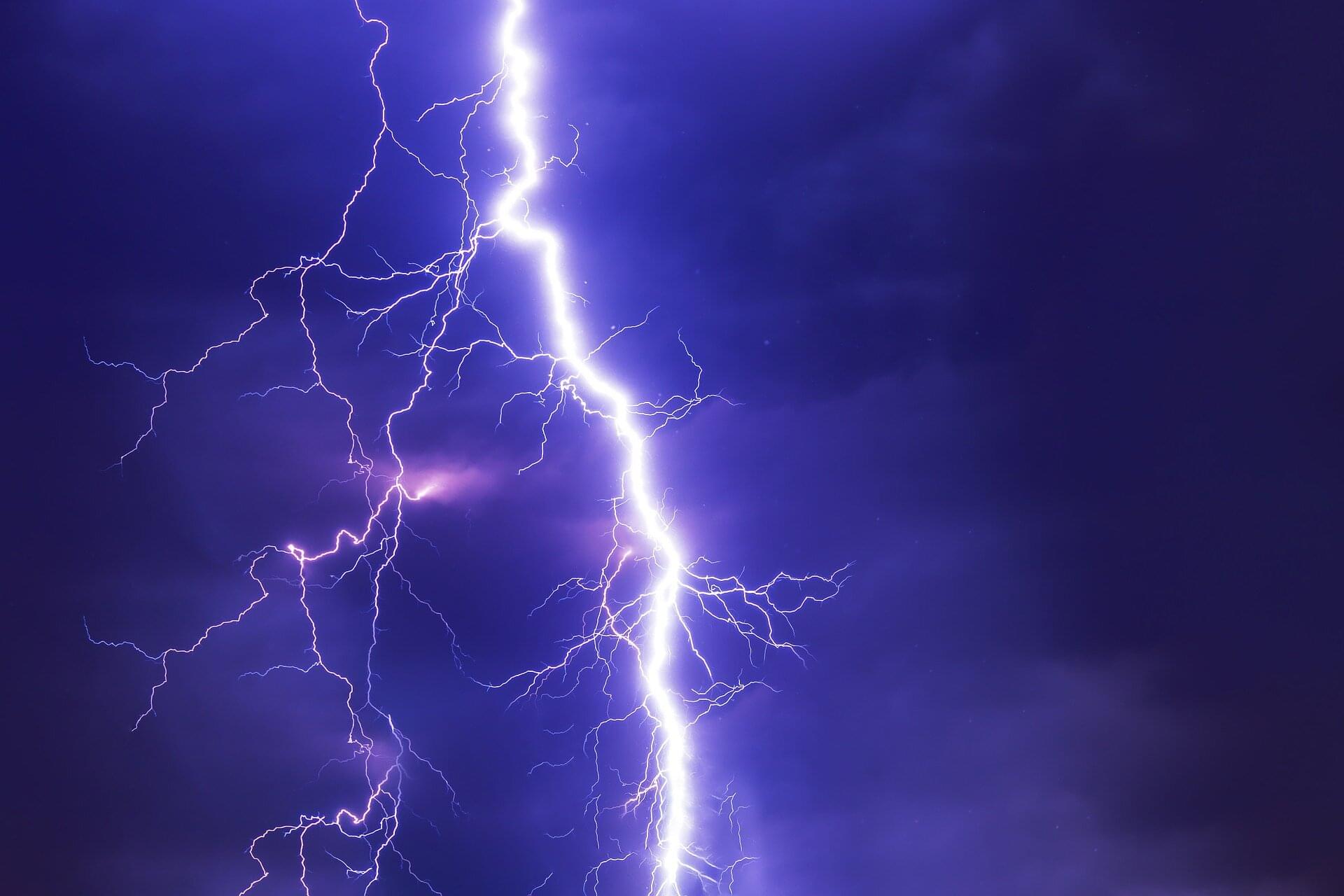
Lightning formation and the conditions triggering it have long been shrouded in a cloud of mystery, but new research led by Penn State scientists is lifting the fog. Using mathematical calculations, the researchers have discovered that lightning-like discharge doesn’t require a storm cloud—it could be made inside everyday material on a lab bench. The study is published in the journal Physical Review Letters.
“We applied the same exact models that we use for lightning research but shrank down the scale to slightly larger than a deck of cards,” said Victor Pasko, professor of electrical engineering at Penn State and lead author on the paper. “We calculated that when supplied with a high-powered electron source, lightning can be triggered in everyday insulating materials like glass, acrylic and quartz.”
The team used detailed numerical simulations to show that lightning-like radiation bursts could form inside small solid blocks, under conditions achievable in the lab. The work, if proven experimentally, could have implications for more compact and potentially safer X-ray sources in doctors’ offices and security checkpoints, the researchers said. The primary benefit, however, would be to enable the study of a powerful natural phenomenon on a lab bench.