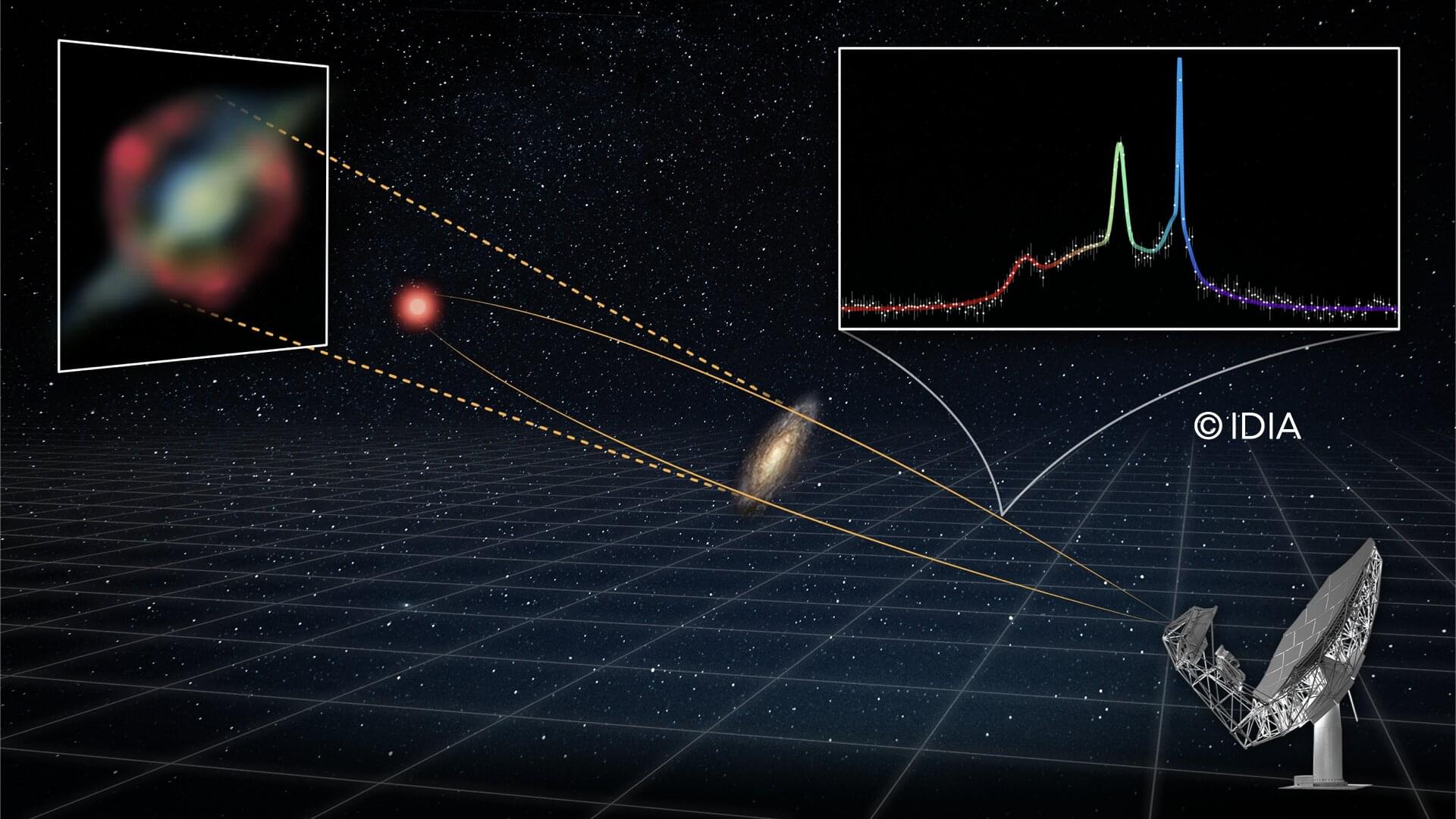
Astronomers using the MeerKAT radio telescope in South Africa have discovered the most distant hydroxyl megamaser ever detected. It is located in a violently merging galaxy more than 8 billion light-years away, opening a new radio astronomy frontier.
Hydroxyl megamasers are natural “space lasers”—extremely bright radio-wavelength emissions produced when hydroxyl molecules in gas-rich, merging galaxies crash into one another. These cosmic collisions compress gas and stimulate large reservoirs of hydroxyl molecules to amplify radio emission.
The physical mechanism is very similar to lasers on Earth, but operates at a much longer wavelength of light of about 18 centimeters, rather than the optical light that our eyes can see. When this special radio light is exceptionally bright, it is termed a megamaser—a “cosmic beacon” that can be seen across vast stretches of the universe.