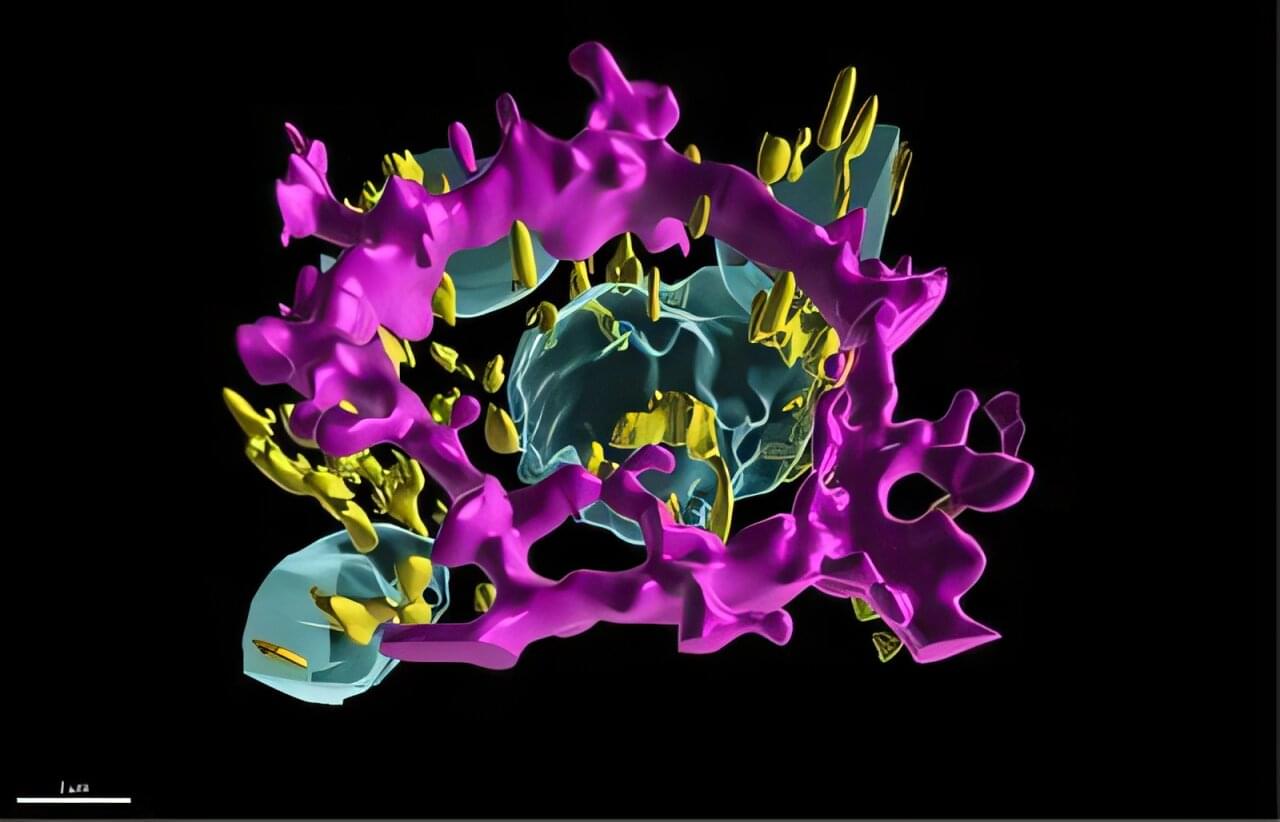
National Institutes of Health (NIH) researchers have developed a digital replica of crucial eye cells, providing a new tool for studying how the cells organize themselves when they are healthy and affected by diseases. The platform opens a new door for therapeutic discovery for blinding diseases such as age-related macular degeneration (AMD), a leading cause of vision loss in people over 50. The study is published in the journal npj Artificial Intelligence.
“This work represents the first-ever subcellular resolution digital twin of a differentiated human primary cell, demonstrating how the eye is an ideal proving ground for developing methods that could be used more generally in biomedical research,” Kapil Bharti, Ph.D., scientific director at the NIH’s National Eye Institute (NEI).
The researchers created a highly detailed, 3D data-driven digital twin of retinal pigment epithelial (RPE) cells, which perform vital recycling and supportive roles to light-sensing photoreceptors in the retina. In diseases such as AMD, RPE cells die, which eventually leads to the death of photoreceptor cells, causing loss of vision.
I’m 54, lost the sight in one eye, losing it in my right eye…I’m totally okay with and am seeking a company with a r n d department looking for testers, trials etc. in the area of sight slightly beyond sight..