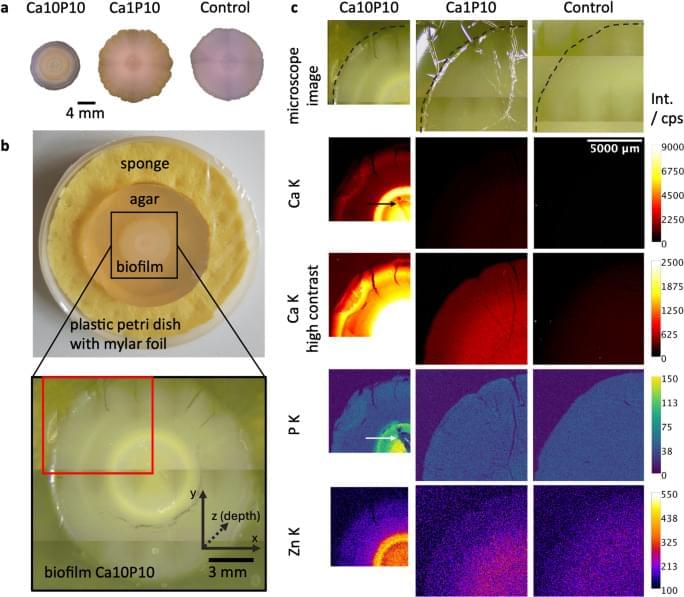
Biofilms are biological materials that form as bacteria protect themselves from environmental challenges secreting extracellular matrix and accumulating minerals under specific conditions. To understand biofilm formation and mineralization, we grew Escherichia coli on agar plates containing a nutritive and mineralizing medium. Previous studies showed that the alkaline phosphatase (ALP) present in E. coli biofilms leads to hydroxyapatite precipitation in such conditions. Here, we introduced X-ray fluorescence techniques as powerful tools to analyze the composition of mineralized biofilms in two and three dimensions. In addition to calcium and phosphate, we found that the traces of zinc introduced via the nutrients and bacteria, also accumulates in the mineralized regions.