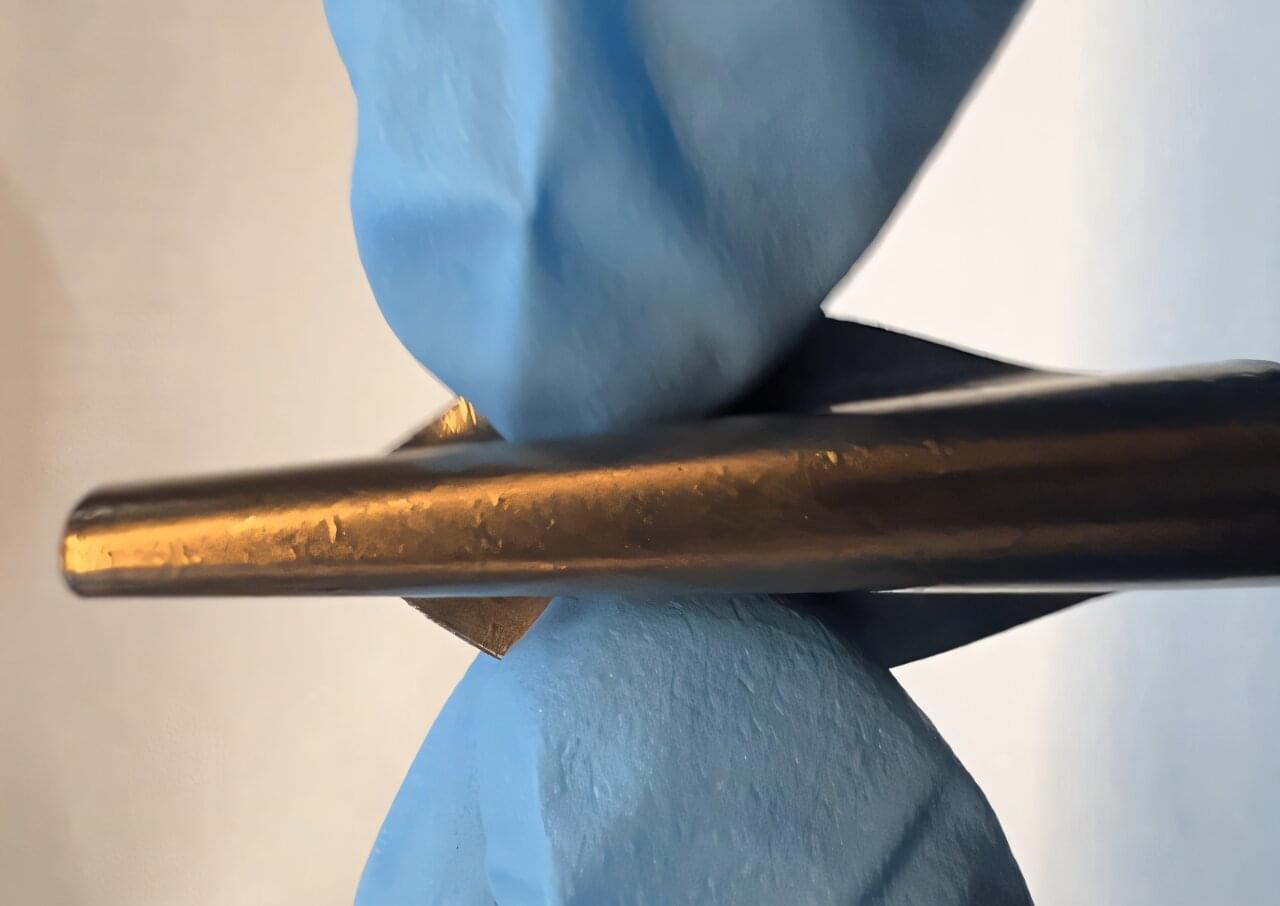
Researchers from Drexel University who discovered a versatile type of two-dimensional conductive nanomaterial called MXene nearly a decade and a half ago, have now reported on a process for producing its one-dimensional cousin: the MXene nanoscroll. The group posits that these materials, which are 100 times thinner than human hair yet more conductive than their two-dimensional counterparts, could be used to improve the performance of energy storage devices, biosensors and wearable technology.
Their finding, published in the journal Advanced Materials, offers a scalable method for producing the nanoscrolls from a MXene precursor with precise control over their shape and chemical structures.
“Two-dimensional morphology is very important in many applications. However, there are applications where 1D morphology is superior,” said Yury Gogotsi, Ph.D., Distinguished University and Bach professor in Drexel’s College of Engineering, who was a corresponding author of the paper.