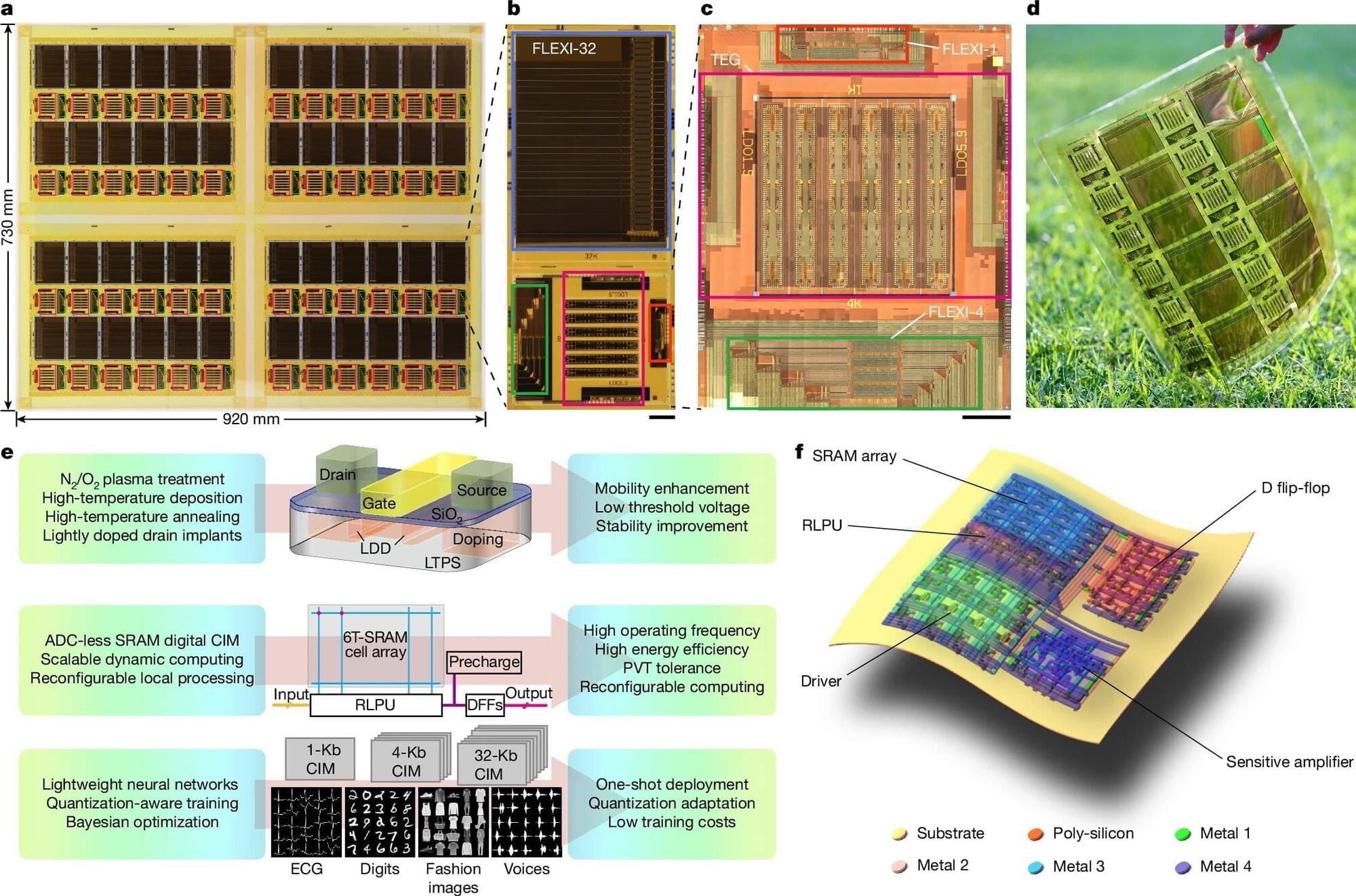
The promise of smart wearables is often talked up, and while there have been some impressive innovations, we are still not seeing their full potential. Among the things holding them back is that the chips that operate them are stiff, brittle, and power-hungry. To overcome these problems, researchers from Tsinghua University and Peking University in China have developed FLEXI, a new family of flexible chips. They are thinner than a human hair, flexible enough to be folded thousands of times, and incorporate AI.
A flexible solution
In a paper published in the journal Nature, the team details the design of their chip and how it can handle complex AI tasks, such as processing data from body sensors to identify health indicators, such as irregular heartbeats, in real time.