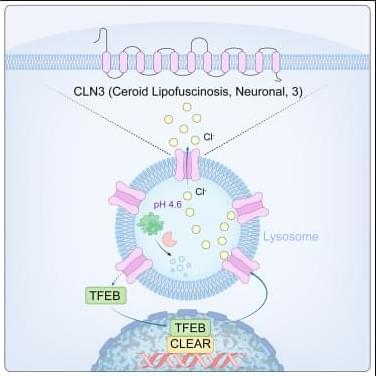
Lysosomes degrade damaged organelles and macromolecules to recycle nutrient components. Lysosomal storage diseases (LSDs) are linked to mutations of genes encoding lysosomal proteins and may lead to age-related disorders, including neurodegenerative diseases. But, how lysosomal dysfunction contributes to neurodegenerative diseases is not clear yet…
The researchers identify CLN3 (ceroid lipofuscinosis, neuronal 3), linked to Batten disease as a conserved lysosomal protein that regulates lysosomal chloride homeostasis, pH, and protein degradation.
Curcumin analog C1 is a natural compound with anti-inflammatory properties could enhance CLN3 activity and improve lysosomal function by activating TFEB. sciencenewshighlights ScienceMission https://sciencemission.com/CLN3-n-chloride-efflux-n-lysosomes
Wang et al. identify CLN3 as a conserved lysosomal protein that regulates lysosomal chloride homeostasis, pH, and protein degradation. Transcription factor EB (TFEB) activation enhances CLN3 function, revealing the TFEB-CLN3 signaling axis as a promising therapeutic target for lysosomal storage disorders.