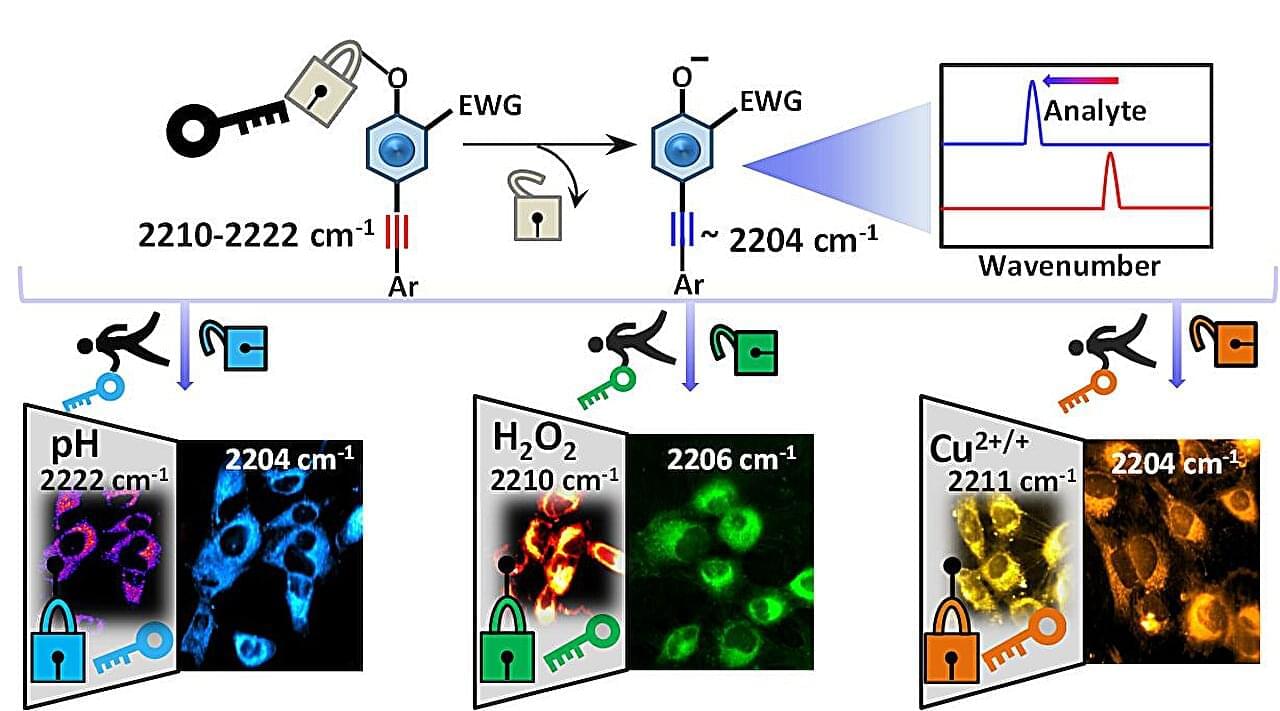
Seeing chemistry unfold inside living cells is one of the biggest challenges of modern bioimaging. Raman microscopy offers a powerful way to meet this challenge by reading the unique vibrational signatures of molecules. However, cells are extraordinarily complex environments filled with thousands of biomolecules.
To make specific molecules stand out, researchers often attach small chemical probes, such as alkyne tags, that produce signals in a so-called cell-silent spectral window where native cellular components do not scatter light. This allows Raman microscopes to selectively detect the tagged molecules against an otherwise crowded molecular background. Despite this advantage, the widespread adoption of Raman microscopy in biology has been limited by one fundamental problem: Raman signals are extremely weak.