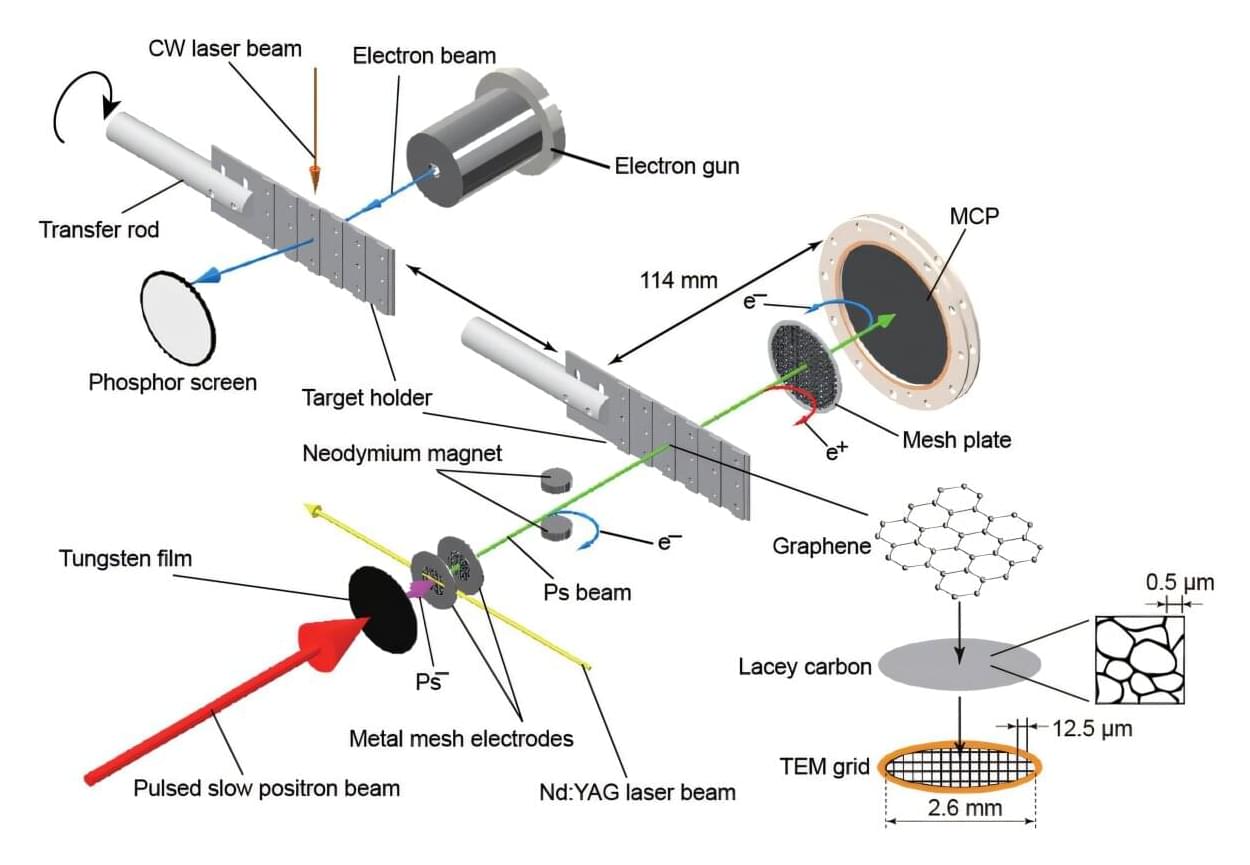
One of the discoveries that fundamentally distinguished the emerging field of quantum physics from classical physics was the observation that matter behaves differently at the smallest scales. A key finding was wave-particle duality, the revelation that particles can exhibit wave-like properties.
This duality was famously demonstrated in the double-slit experiment. When electrons were fired through two slits, they created an interference pattern of light and dark fringes on a detector. This pattern showed that each electron behaved like a wave, with its quantum wave-function passing through both slits and interfering with itself. The same phenomenon was later confirmed for neutrons, helium atoms, and even large molecules, making matter-wave diffraction a cornerstone of quantum mechanics.