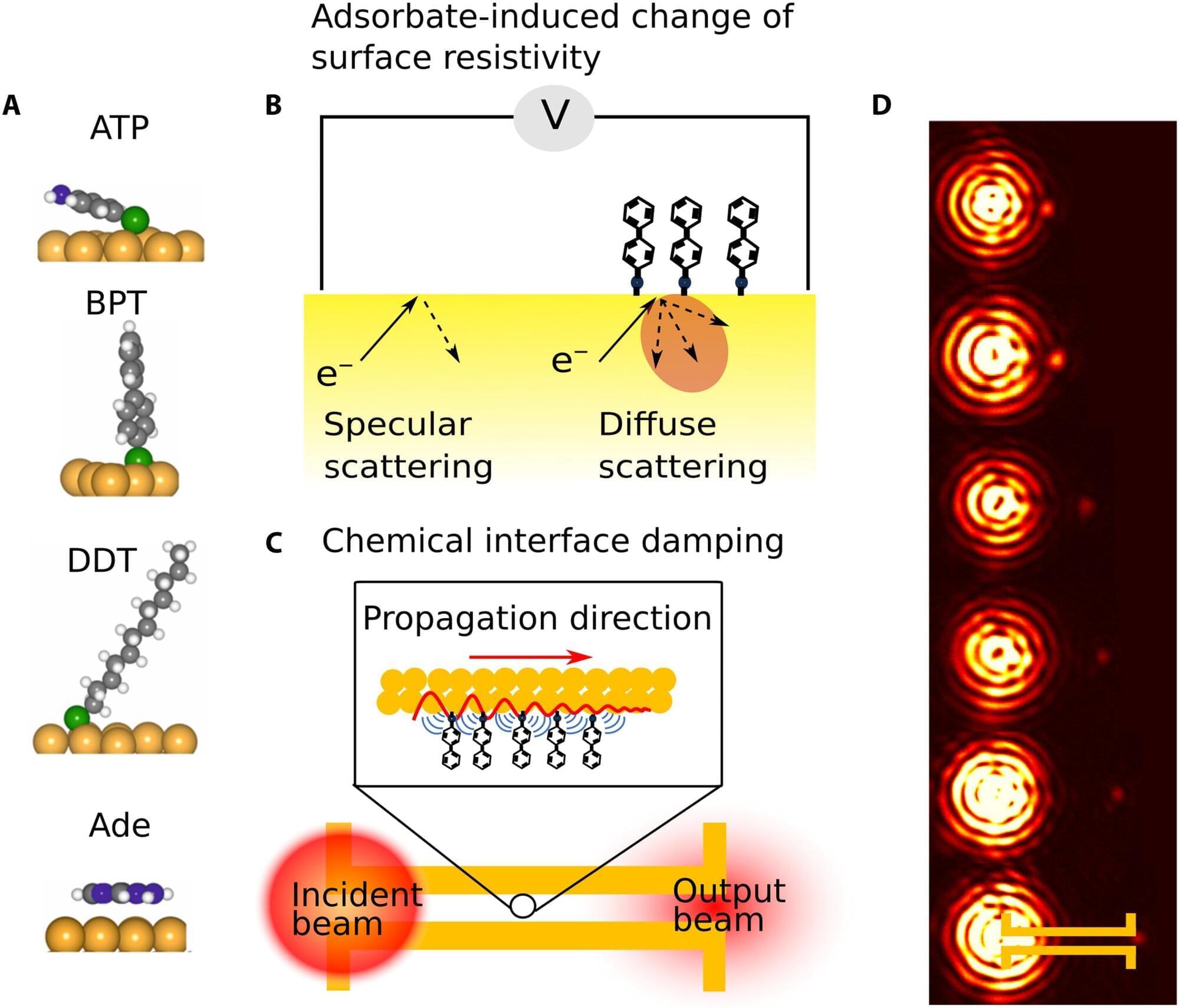
Metal nanostructures can concentrate light so strongly that they can trigger chemical reactions. The key players in this process are plasmons—collective oscillations of free electrons in the metal that confine energy to extremely small volumes. A new study published in Science Advances now shows how crucial adsorbed molecules are in determining how quickly these plasmons lose their energy.
The team led by LMU nanophysicists Dr. Andrei Stefancu and Prof. Emiliano Cortés identified two fundamentally different mechanisms of so-called chemical interface damping (CID), the plasmon damping caused by adsorbed molecules. Which mechanism dominates depends on how the electronic states of the molecule align with those of the metal surface, gold in this case—and this alignment is even reflected in the material’s electrical resistance.