Get the latest international news and world events from around the world.
Short-Term Head-Out Whole-Body Cold-Water Immersion Facilitates Positive Affect and Increases Interaction between Large-Scale Brain Networks
An emerging body of evidence indicates that short-term immersion in cold water facilitates positive affect and reduces negative affect. However, the neural mechanisms underlying these effects remain largely unknown. For the first time, we employed functional magnetic resonance imaging (fMRI) to identify topological clusters of networks coupled with behavioural changes in positive and negative affect after a 5 min cold-water immersion. Perceived changes in positive affect were associated with feeling more active, alert, attentive, proud, and inspired, whilst changes in negative affect reflected reductions in distress and nervousness.
Medications change our gut microbiome in predictable ways
The bacteria in our poop are a reasonable representation of what’s living in our digestive system. To understand how different drugs can impact the gut microbiome, the team cultured microbial communities from nine donor fecal samples and systematically tested them with 707 different clinically relevant drugs.
The researchers examined changes in the growth of different bacterial species, the community composition, and the metabolome – the mix of small molecules called metabolites that microbes produce and consume. They found that 141 drugs altered the microbiome of the samples and even short-term treatments created enduring changes, entirely wiping out some microbial species. The primary force behind how the community responds to drug inhibition was competition over nutrients.
“The winners and losers among our gut bacteria can often be predicted by understanding how sensitive they are to the medications and how they compete for food,” said the first author on the paper. “In other words, drugs don’t just kill bacteria; they also reshuffle the ‘buffet’ in our gut, and that reshuffling shapes which bacteria win.”
Despite the complexity of the bacterial communities, the researchers were able to create data-driven computer models that accurately predicted how they would respond to a particular drug. They factored in the sensitivity of different bacterial species to that drug and the competitive landscape – essentially, who was competing with whom for which nutrients.
Their work provides a framework for predicting how a person’s microbial community might change with a given drug, and could help scientists find ways to prevent these changes or more easily restore a healthy gut microbiome in the future.
Our gut microbiome is made up of trillions of bacteria and other microbes living in our intestines. These help our bodies break down food, assist our immune system, send chemical signals to our brain, and potentially serve many other functions that researchers are still working to understand. When the microbiome is out of balance – with not enough helpful bacteria or the wrong combination of microbes – it can affect our whole body.
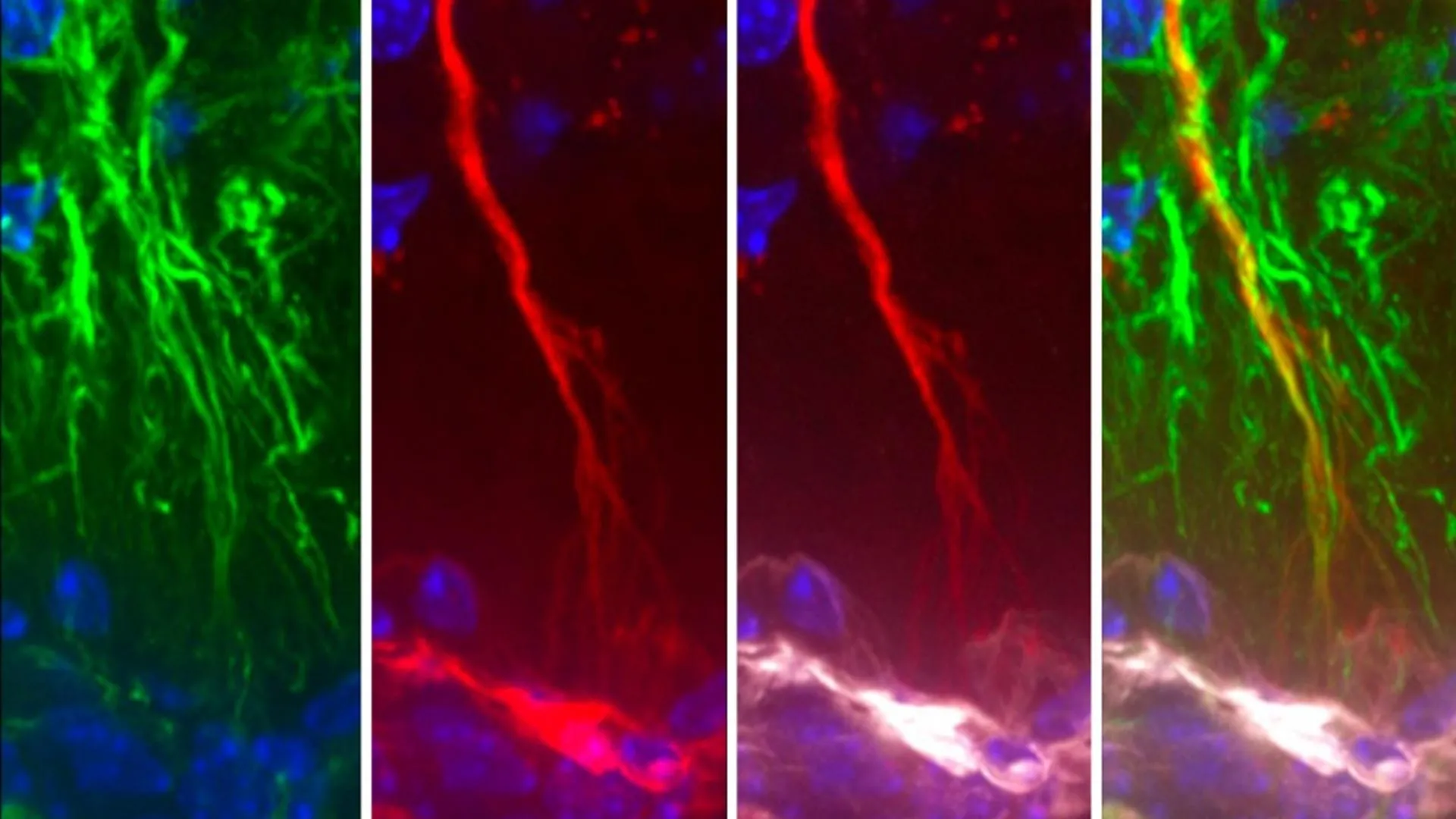
Real-time imaging captures what happens to cancer cells arriving in the brain
Metastasis occurs when cancer cells break away from the original tumor and travel through the bloodstream to form new tumors in other parts of the body. It is the leading cause of cancer-related death. Brain metastasis is particularly severe and affects 10–30% of patients with advanced lung, breast, and melanoma cancers.
While therapies exist for established brain tumors, there are limited strategies that directly target the very first cancer “seed cells” that enter and lodge in the brain.
Our brains, however, are equipped with immune cells called microglia that rapidly respond to pathogens and cancer cells by engulfing and digesting them. Yet scientists could not explain why microglia sometimes fail to destroy incoming seed cells because they could not watch this critical interaction in real-time in the living brain.
Ultra-thin nanomembrane device forms soft, seamless interface with living tissue
Researchers have developed a new class of ultra-thin, flexible bioelectronic material that can seamlessly interface with living tissues. They introduced a novel device called THIN (transformable and imperceptible hydrogel-elastomer ionic-electronic nanomembrane). THIN is a membrane just 350 nanometers thick that transforms from a dry, rigid film into an ultra-soft, tissue-like interface upon hydration.
The study, performed by the Center for Neuroscience Imaging Research (CNIR) within the Institute for Basic Science (IBS) together with Sungkyunkwan University (SKKU), is published in Nature Nanotechnology.
Tumbleweed aerodynamics inspire hybrid robots for harsh terrains
A new study published in Nature Communications details a hybrid robot that combines the wind-driven mobility of tumbleweeds with active quadcopter control, offering a new paradigm for energy-efficient terrestrial exploration.
Current terrestrial exploration lacks systems that exploit wind for mobility. Further, drag-driven robots like land sails and inflatable spheres require large sizes and complex deployment.
The researchers found the inspiration for their Hybrid Energy-efficient Rover Mechanism for Exploration Systems, or HERMES, in an unusual place.
Rare high-resolution observations of a flare-prolific solar active region
Scientists have captured an exceptionally rare, high-resolution view of an active region that produced two powerful X-class solar flares—an achievement rarely possible from Earth. Using the GREGOR solar telescope in Tenerife, researchers recorded the explosive activity of the sun’s most energetic sunspot group of 2025, revealing twisted magnetic structures and the early stages of flare ignition with unprecedented detail. The flares triggered fast coronal mass ejections that lit up Earth’s skies with vivid auroras in the nights that followed.
Challenges of observing solar flares High-resolution observations of strong solar flares are extremely rare and difficult to obtain with ground-based solar telescopes.
“Strong flares occur either on the backside of the sun, or during the night, or when the weather is cloudy, or when the seeing conditions are poor, or when they are just outside the field of view, where the telescope is pointing,” says Prof. Carsten Denker head of the Solar Physics section at the Leibniz Institute for Astrophysics Potsdam (AIP) and first author of the study published in Research Notes of the AAS.
Do Other Dimensions Really Exist?
An exploration of whether other dimensions truly exist in the universe. My Patreon Page:https://www.patreon.com/johnmichaelgodierMy Event Horizon Channel:htt…