Toggle light / dark theme

How one national lab is getting its supercomputers ready for the AI age

OAK RIDGE, Tenn. — At Oak Ridge National Laboratory, the government-funded science research facility nestled between Tennessee’s Great Smoky Mountains and Cumberland Plateau that is perhaps best known for its role in the Manhattan Project, two supercomputers are currently rattling away, speedily making calculations meant to help tackle some of the biggest problems facing humanity.

You wouldn’t be able to tell from looking at them. A supercomputer called Summit mostly comprises hundreds of black cabinets filled with cords, flashing lights and powerful graphics processing units, or GPUs. The sound of tens of thousands of spinning disks on the computer’s file systems, and air cooling technology for ancillary equipment, make the device sound somewhat like a wind turbine — and, at least to the naked eye, the contraption doesn’t look much different from any other corporate data center. Its next-door neighbor, Frontier, is set up in a similar manner across the hall, though it’s a little quieter and the cabinets have a different design.

Yet inside those arrays of cabinets are powerful specialty chips and components capable of, collectively, training some of the largest AI models known. Frontier is currently the world’s fastest supercomputer, and Summit is the world’s seventh-fastest supercomputer, according to rankings published earlier this month. Now, as the Biden administration boosts its focus on artificial intelligence and touts a new executive order for the technology, there’s growing interest in using these supercomputers to their full AI potential.
Molecular cooperation at the threshold of life

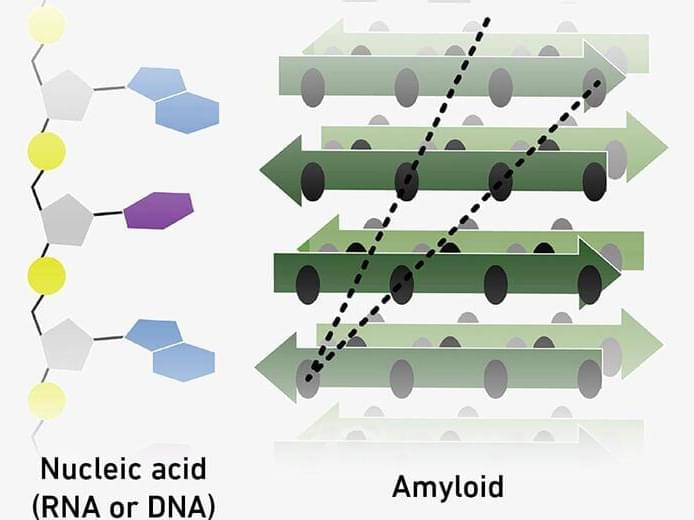
Protein-like aggregates known as amyloids can bind to molecules of genetic material. It is possible that these two types of molecules stabilized each other during the development of life—and that this might even have paved the way for the genetic code.

How organisms develop from inanimate matter is one of the biggest questions in science. Although many possible explanations have been proposed, there are no definitive answers. That’s no surprise: these processes took place 3 billion to 4 billion years ago, when the conditions on Earth were completely different from today.

“Over this vast period of time, evolution has thoroughly obliterated the traces that lead back to the origins of life,” says Roland Riek, professor of physical chemistry and associate director of ETH Zurich’s new interdisciplinary Center for Origin and Prevalence of Life. Science has no choice but to formulate hypotheses—and to substantiate them as thoroughly as possible with .

New model allows for learning and prediction of microbial interactions

A tiny but prolific world of microbes encompasses everything around us, both inside and out. Microbiomes, which are comprised of diverse communities of microbes, play a pivotal role in shaping human health, yet the intricacies of how different microbial compositions influence our well-being remain largely unknown.

In a recent study published in Proceedings of the National Academy of Sciences, researchers at the University of Illinois Urbana-Champaign describe a new framework they have created to predict how species within microbiomes interact with each other to create unique compositions.

“Microbes can be used in medicine, aka ‘bugs as drugs,’ and these microbial therapeutics hold the possibility of being the answer to many of the diseases we face today,” said Shreya Arya, a graduate student in the O’Dwyer lab.

Personalized Cancer Medicine: Humans make Better Treatment Decisions than AI

Limits of large language models in precision medicine. Treating cancer is becoming increasingly complex, but also offers more and more possibilities. After all, the better a tumor’s biology and genetic features are understood, the more treatment approaches there are. To be able to offer patients personalized therapies tailored to their disease, laborious and time-consuming analysis and interpretation of various data is required. Researchers at Charité — Universitätsmedizin Berlin and Humboldt-Universität zu Berlin have now studied whether generative artificial intelligence (AI) tools such as ChatGPT can help with this step. This is one of many projects at Charité analyzing the opportunities unlocked by AI in patient care.

If the body can no longer repair certain genetic mutations itself, cells begin to grow unchecked, producing a tumor.

The crucial factor in this phenomenon is an imbalance of growth-inducing and growth-inhibiting factors, which can result from changes in oncogenes — genes with the potential to cause cancer — for example.

Procurement in the age of AI

Procurement professionals face challenges more daunting than ever. Recent years’ supply chain disruptions and rising costs, deeply familiar to consumers, have had an outsize impact on business buying. At the same time, procurement teams are under increasing pressure to supply their businesses while also contributing to business growth and profitability.

Deloitte’s 2023 Global Chief Procurement Officer Survey reveals that procurement teams are now being called upon to address a broader range of enterprise priorities. These range from driving operational efficiency (74% of respondents) and enhancing corporate social responsibility (72%) to improving margins via cost reduction (71%).

/* */