What would you have done to stop catastrophic events if you knew in advance what you know now.
We have the moral obligation to take action in every way we can.
The future is in our hands. The stakes are the highest they have ever been. The Large Hadron Collider developed by the European Centre for Nuclear Research (CERN) is a dangerous instrument. The start-up April 5 has initiated a more reckless use of LHC’s capabilities.
If we approach the subject from a non theist point of view, what we have is a re-boot. A restore of a previously working “system image”. Can we restore a person to the last known working state prior to system failure?
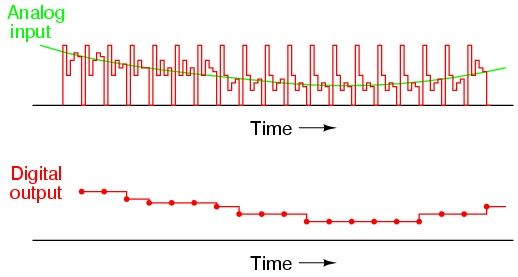
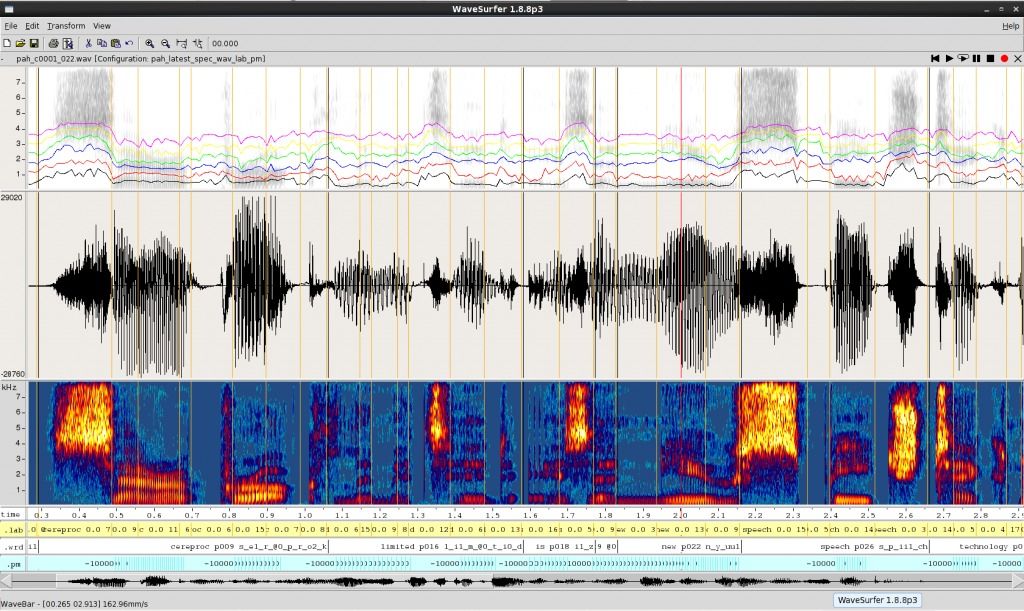
As our Biological (analog) life get’s more entwined with the Digital world we have created, chances are, there might be options worth exploring. It all comes down to “Sampling” — taking snapshots of our analog lives and storing them digitally. Today, with reasonable precision we can sample, store and re-create most of our primary senses, digitally. Sight via cameras, sound via microphones, touch via haptics and even scents can be sampled and/or synthesized with remarkable accuracy.
Life as Routines, Sub-routines and Libraries:
In the story “Memories with Maya”, Krish the AI researcher put forward in simple language, some of his theories to the main character, Dan:
“Humans are creatures of habit,” he said. “We live our lives following the same routine day after day. We do the things we do with one primary motivation–comfort.” “That’s not entirely true,” I said. “What about random acts. Haven’t you done something crazy or on impulse?” “Even randomness is within a set of parameters; thresholds,” he said.
If we look at it, the average person’s week can be broken down to typical activities per day and a branch out for the weekend. The day can be further broken down into time-of-day routines. Essentially, what we have are sub-routines, routines and libraries that are run in an infinite loop, until wear and tear on mechanical parts leads to sector failures. Viruses also thrown into the mix for good measure.
Remember: we are looking at the typical lives of a good section of society — those who have resigned their minds to accepting life as it comes, satisfied in being able to afford creature comforts every once in a while. We aren’t looking at the outliers — the Einsteins, the Jobs the Mozarts. This is ironic, in that, it would be easier to back-up, restore, and resurrect the average person than it would be to do the same for outliers.
Digital Breadcrumbs — The clues we leave behind.
What exactly does social media sites mean by “What’s on your mind?” — Is it an invitation to digitize our Emotions, our thoughts, our experiences via words, pictures, sounds and videos? Every minute, Gigabytes (a conservative estimate) of analog life is being digitized and uploaded to the metaphoric “Cloud” — a rich mineral resource, ripe for data mining by “deeplearning” systems. At some point in the near future, would AI combined with technologies such as Quantum Archeology, Augmented Reality and Nano-tech, allow us to run our brains (minds?) on a substrate independent platform?
If that proposition turns your geek on, here’s some ways that you can live out a modern day version of Hansel and Gretel, insuring you find your way home, by leaving as many digital bread crumbs as you can via:
Mind Files — Terasem and Lifenaut:
What is the LifeNaut Project?
The long-term goal is to test whether given a comprehensive database, saturated with the most relevant aspects of an individual’s personality, future intelligent software will be able to replicate an individual’s consciousness. So, perhaps in the next 20 or 30 years technology will be developed to upload these files, together with futuristic software into a body of some sort – perhaps cellular, perhaps holographic, perhaps robotic. LifeNaut.com is funded by the Terasem Movement Foundation, Inc.
The LifeNaut Project is organized as a research experiment designed to test these hypotheses:
(1) a conscious analog of a person may be created by combining sufficiently detailed data about the person (“mindfile & biofile”) using future consciousness software (“mindware”), and
(2) such a conscious analog may be downloaded into a biological or nanotechnological body to provide life experiences comparable to those of a typically birthed human.
Read about Voice Banking, Speech Reconstruction and how natural human voice can be preserved and re-constructed. Voice banking might help even in cases when there is no BSOD scenario involved.
Roger Ebert, noted film critic got his “natural” voice back, using such technology.
Without us even knowing it, we are Transhumans at heart. Owners of the gaming console Xbox and the Kinect, have at their disposal, hardware that until just a couple of years ago, was only within reach of large corporations and Hollywood studios. Motion Capture, Laser scanning, full body 3D models and performance capture was not accessible to lay-people.
Today, this technology can contribute toward backup and Digital resurrection. A performance capture session can encode digitally, the essence of a persons gait, the way they walk, pout, and express themselves — A person’s unique Digital Signature. The next video shows this.
“It was easy to create a frame for him, Dan,” he said. “In the time that the cancer was eating away at him, the day’s routine became more predictable.
At first he would still go to work, then come home and spend time with us. Then he couldn’t go anymore and he was at home all day.
I knew his routine so well it took me 15 minutes to feed it in. There was no need for any random branches.”
A performance capture file, could also be stored as part of a MindFile. LifeNaut and other cryonic service providers could benefit from such invaluable data when re-booting a person.
“And sometimes when we touch”:
Perhaps one of the most difficult of our senses to recreate, is that of touch. Science is already making giant strides in this area, and looking at it from a more human perspective, touch is one of the more direct and cherished sensations that defines humanity. Touch can convey emotion.
…That’s the point of this kind of technology – giving people their humanity back. You could argue that a person is no less of a human after losing a limb, but those who suffer through it would likely tell you that there is a feeling of loss. Getting that back may be physically gratifying, but it’s probably even more psychologically gratifying… — Nigel Ackland- on his bebionic arm.
If a person’s unique “touch” signature can be digitized, every nuance can be forever preserved…both for the benefit of the owner of the file, and to their loved ones, experiencing and remembering shared intimate moments.
A widely accepted definition of Transhumanism is: The ethical use of all kinds of technology for the betterment of the human condition.
This all encompassing summation is a good start as an elevator pitch to laypersons, were they to ask for an explanation. Practitioners and contributors to the movement, of course, know how to branch this out into specific streams: science, philosophy, politics and more.
We are in the midst of a technological revolution, and it is cool to proclaim that one is a Transhumanist. Yet, many intelligent and focused Transhumanists are asking some all important questions: What road-map have we drawn out, and what concrete steps are we taking to bring to fruition, the goals of Transhumanism?
Transhumanism could be looked at as culminating in Technological Singularity. People comprehend the meaning of Singularity differently. One such definition: Singularity marks a moment when technology trumps the human brain, and the limitations of the mind are surpassed by artificial intelligence. Being an Author and not a scientist myself, my definition of the Singularity is colored by creative vision. I call it Dirrogate Singularity.
I see us humans, successfully and practically, harnessing the strides we’ve made in semiconductor tech and neural networks, Artificial intelligence, and digital progress in general over the past century, to create Digital Surrogates of ourselves — our Dirrogates. In doing so, humans will reach pseudo-God status and will be free to merge with these creatures they have made in their own likeness…attaining, Dirrogate Singularity.
So, how far into the future will this happen? Not very far. In fact it can commence as soon as today or as far as, in a couple of years. The conditions and timing are right for us to “trans-form” into Digital Beings; Dirrogates.
I’ll use excerpts from the story ‘Memories with Maya’ to seed ideas for a possible road-map to Dirrogate Singularity, while keeping the tenets of Transhumanism in focus on the dashboard as we steer ahead. As this text will deconstruct many parts of the novel, major spoilers are unavoidable.
Dirrogate Singularity v/s The Singularity:
The main distinction in definition I make is: I don’t believe Singularity is the moment when technology trumps the human brain. I believe Singularity is when the human mind accepts and does not discriminate between an advanced “Transhuman” (effectively, a mind upload living in a bio-mechanical body) and a “Natural” (an un-amped homo sapien)
This could be seen as a different interpretation of the commonly accepted concept of The Singularity. As one of the aims of this essay is to create a possible road-map to seed ideas for the Transhumanism movement, I choose to look at a wholly digital path to Transhumanism, bypassing human augmentation via nanotechnology, prosthetics or cyborg-ism. As we will see further down, Dirrogate Singularity could slowly evolve into the common accepted definitions of Technological Singularity.
What is a Dirrogate:
A portmanteau of Digital + Surrogate. An excerpt from the novel explains in more detail:
“Let’s run the beta of our social interaction module outside.”
Krish asked the prof to follow him to the campus ground in front of the food court. They walked out of the building and approached a shaded area with four benches. As they were about to sit, my voice came through the phone’s speaker. “I’m on your far right.”
Krish and the prof turned, scanning through the live camera view of the phone until they saw me waving. The phone’s compass updated me on their orientation. I asked them to come closer.
“You have my full attention,” the prof said. “Explain…”
“So,” Krish said, in true geek style… “Dan knows where we are, because my phone is logged in and registered into the virtual world we have created. We use a digital globe to fly to any location. We do that by using exact latitude and longitude coordinates.” Krish looked at the prof, who nodded. “So this way we can pick any location on Earth to meet at, provided of course, I’m physically present there.”
“I understand,” said the prof. “Otherwise, it would be just a regular online multi-player game world.”
“Precisely,” Krish said. “What’s unique here is a virtual person interacting with a real human in the real world. We’re now on the campus Wifi.” He circled his hand in front of his face as though pointing out to the invisible radio waves. “But it can also use a high-speed cell data network. The phone’s GPS, gyro, and accelerometer updates as we move.”
Krish explained the different sensor data to Professor Kumar. “We can use the phone as a sophisticated joystick to move our avatar in the virtual world that, for this demo, is a complete and accurate scale model of the real campus.”
The prof was paying rapt attention to everything Krish had to say. “I laser scanned the playground and the food-court. The entire campus is a low rez 3D model,” he said. “Dan can see us move around in the virtual world because my position updates. The front camera’s video stream is also mapped to my avatar’s face, so he can see my expressions.”
“Now all we do is not render the virtual buildings, but instead, keep Daniel’s avatar and replace it with the real-world view coming in through the phone’s camera,” explained Krish.
“Hmm… so you also do away with render overhead and possibly conserve battery life?” the prof asked.
“Correct. Using GPS, camera and marker-less tracking algorithms, we can update our position in the virtual world and sync Dan’s avatar with our world.”
“And we haven’t even talked about how AI can enhance this,” I said.
I walked a few steps away from them, counting as I went.
“We can either follow Dan or a few steps more and contact will be broken. This way in a social scenario, virtual people can interact with humans in the real world,” Krish said. I was nearing the personal space out of range warning.
“Wait up, Dan,” Krish called.
I stopped. He and the prof caught up.
“Here’s how we establish contact,” Krish said. He touched my avatar on the screen. I raised my hand in a high-five gesture.
“So only humans can initiate contact with these virtual people?” asked the prof.
“Humans are always in control,” I said. They laughed.
“Aap Kaise ho?” Krish said.
“Main theek hoo,” I answered a couple of seconds later, much to the surprise of the prof.
“The AI module can analyze voice and cross-reference it with a bank of ten languages.” he said. “Translation is done the moment it detects a pause in a sentence. This way multicultural communication is possible. I’m working on some features for the AI module. It will be based on computer vision libraries to study and recognize eyebrows and facial expressions. This data stream will then be accessible to the avatar’s operator to carry out advanced interaction with people in the real world–”
“So people can have digital versions of themselves and do tasks in locations where they cannot be physically present,” the prof completed Krish’s sentence.
“Cannot or choose not to be present and in several locations if needed,” I said. “There is no reason we can’t own several digital versions of ourselves doing tasks simultaneously.”
“Each one licensed with a unique digital fingerprint registered with the government or institutions offering digital surrogate facilities.” Krish said.
“We call them di-rro-gates.” I said.
One of the characters in the story also says: “Humans are creatures of habit.” and, “We live our lives following the same routine day after day. We do the things we do with one primary motivation–comfort.”
Whether this is entirely true or not, there is something to think about here… What does ‘improving the human condition’ imply? To me Comfort, is high on the list and a major motivation. If people can spawn multiple Dirrogates of themselves that can interact with real people wearing future iterations of Google Glass (for lack of a more popular word for Augmented Reality visors)… then the journey on the road-map to Dirrogate Singularity is to see a few case examples of Dirrogate interaction.
Evangelizing Transhumanism:
In writing the novel, I took several risks, story length being one. I’ve attempted to keep the philosophy subtle, almost hidden in the story, and judging by reviews on sites such as GoodReads.com, it is plain to see that many of today’s science fiction readers are after cliff hanger style science fiction and gravitate toward or possibly expect a Dystopian future. This root craving must be addressed in lay people if we are to make Transhumanism as a movement, succeed.
I’d noticed comments made that the sex did not add much to the story. No one (yet) has delved deeper to see if there was a reason for the sex scenes and if there was an underlying message. The success of Transhumanism is going to be in large scale understanding and mass adoption of the values of the movement by laypeople. Google Glass will make a good case study in this regard. If they get it wrong, Glass will quickly share the same fate and ridicule as wearing blue-tooth headsets.
One of the first things, in my view, to improving the human condition, is experiencing pleasure… of every kind, especially carnal.
In that sense, we already are Digital Transhumans. Long distance video calls, teledildonics and recent mainstream offerings such as Durex’s “Fundawear” can bring physical, emotional and psychological comfort to humans, without the traditional need for physical proximity or human touch.
(Durex’s Fundawear – Image Courtesy Snapo.com)
These physical stimulation and pleasure giving devices add a whole new meaning to ‘wearable computing’. Yet, behind every online Avatar, every Dirrogate, is a human operator. Now consider: What if one of these “Fundawear” sessions were recorded?
The data stream for each actuator in the garment, stored in a file – a feel-stream, unique to the person who created it? We could then replay this and experience or reminisce the signature touch of a loved one at any time…even long after they are gone; are no more. Would such as situation qualify as a partial or crude “Mind upload”?
Mind Uploading – A practical approach.
Using Augmented Reality hardware, a person can see and experience interaction with a Dirrogate, irrespective if the Dirrogate is remotely operated by a human, or driven by prerecorded subroutines under playback control of an AI. Mind uploading [at this stage of our technological evolution] does not have to be a full blown simulation of the mind.
Consider the case of a Google Car. Could it be feasible that a human operator remotely ‘drive’ the car with visual feedback from the car’s on-board environment analysis cameras? Any AI in the car could be used on an as-needed basis. Now this might not be the aim of a driver-less car, and why would you need your Dirrogate to physically drive when in essence you could tele-travel to any location?
Human Shape Shifters:
Reasons could be as simple as needing to transport physical cargo to places where home delivery is not offered. Your Dirrogate could drive the car. Once at the location [hardware depot], your Dirrogate could merge with the on-board computer of an articulated motorized shopping cart. Check out counter staff sees your Dirrogate augmented in the real world via their visor. You then steer the cart to the parking lot, load in cargo [via the cart’s articulated arm or a helper] and drive home. In such a scenario, a mind upload has swapped physical “bodies” as needed, to complete a task.
If that use made your eyes roll…here’s a real life example:
Devon Carrow, a 2nd grader has a life threatening illness that keeps him away from school. He sends his “avatar” a robot called Vigo.
In the case of a Dirrogate, if the classroom teacher wore an AR visor, she could “see” Devon’s Dirrogate sitting at his desk. A mechanical robot body would be optional. An overhead camera could project the entire Augmented classroom so all children could be aware of his presence. As AR eye-wear becomes more affordable, individual students could interact with Dirrogates. Such use of Dirrogates do fit in completely with the betterment-of-the-human-condition argument, especially if the Dirrogate operator is a human who could come into harm’s way in the real world.
While we simultaneously work on longevity and eliminating deadly diseases, both noble causes, we have to come to terms with the fact that biology has one up on us in the virus department as of today. Epidemic outbreaks such as SARS can keep schools closed. Would it not make sense to maintain the communal ethos of school attendance and classroom interaction by transhumanizing ourselves…digitally?
Does the above example qualify as Mind Uploading? Not in the traditional definition of the term. But looking at it from a different perspective, the 2nd grader has uploaded his mind to a robot.
Dirrogate Immortality via Quantum Archeology:
Below is a passage from the story. The literal significance of which, casual readers of science fiction miss out on:
“Look at her,” I said. “I don’t want her to be a just a memory. I want to keep her memory alive. That day, the Wizer was part of the reason for three deaths. Today, it’s keeping me from dying inside.”
“Help me, Krish,” I said. “Help me keep her memory alive.” He was listening. He wiped his eyes with his hands. I took the Wizer off. “Put it back on,” he said.
A closer look at the Wizer – [visor with Augmented Intelligence built in.]
The preceding excerpt from the story talks about resurrecting her; digital-cryonics.
So, how would Quantum Archeology techniques be applied to resurrect a dead person? Every day we spend hours uploading our stream-of-consciousness to the “cloud”. Photos, videos, Instagrams, Facebook status updates, tweets. All of this is data that can be and is being mined by Deep Learning systems. There’s no prize for guessing who the biggest investor and investigator of Deep Learning is.
Quantum Archeology gets a helping hand with all the digital breadcrumbs we’re leaving around us in this century. The question is: Is that enough information for us to Create a Mind?
Mind Uploading – Libraries and Subroutines:
A more relevant question to ask is, should we attempt to build a mind from the ground up, or start by collecting subroutines and libraries unique to a particular person? Earlier on in the article, it was suggested that by recording a ‘Fundawear’ session, we could re-experience someone’s signature intimate touch. Using Deep Learning, can personality libraries be built?
A related question to answer is: Wouldn’t it make everything ‘artificial’ and be a degraded version of the original? To attempt to answer such a question, let’s look around us today. Aren’t we already degrading our sense of hearing for instance, when we listen to hour after hour of MP3 music sampled at 128kHz or less? How about every time we’ve come to rely on Google’s “did you mean” or Microsoft’s red squiggly line to correct even our simple spellings?
Now, it gets interesting… since we have mind upload “libraries”, we are at liberty to borrow subroutines from more accomplished humans, to augment our own intelligence.
Will the near future allow us to choose a Dirrogate partner with the creative thinking of one person’s personality upload, the intimate skill-set of another and… you get the picture. Most people lead routine 9 to 5 lives. That does not mean that they are not missed by loved ones after they have completed their biological life-cycle. Resurrecting or simulating such minds is much easier than say re-animating Einstein.
In the story, Krish, on digitally resurrecting his father recounts:
“After I saw Maya, I had to,” he said. “I’ve used her same frame structure for the newspaper reading. Last night I went through old photos, his things, his books,” his voice was low. “I’m feeding them into the frame. This was his life for the past two years before the cancer claimed him. Every evening he would sit in this chair in the old house and read his paper.”
I listened in silence as he spoke. Tactile receptors weren’t needed to experience pain. Tone of voice transported those spores just as easily.
“It was easy to create a frame for him, Dan,” he said. “In the time that the cancer was eating away at him, the day’s routine became more predictable. At first he would still go to work, then come home and spend time with us. Then he couldn’t go anymore and he was at home all day. I knew his routine so well it took me 15 minutes to feed it in. There was no need for any random branches.”
I turned to look at him. The Wizer hid his eyes well. “Krish,” I said. “You know what the best part about having him back is? It does not have to be the way it was. You can re-define his routine. Ask your mom what made your dad happy and feed that in. Build on old memories, build new ones and feed those in. You’re the AI designer… bend the rules.”
“I dare not show her anything like this,” he said. “She would never understand. There’s something not right about resurrecting the dead. There’s a reason why people say rest in peace.”
Who is the real Transhuman?
Is it a person who has augmented their physical self or augmented one of their five primary senses? Or is it a human who has successfully re-wired their brain and their mind to accept another augmented human and the tenets of Transhumanism?
“He said perception is in the eye of the beholder… or something to that effect.”
“Maybe he said realism?” I offered.
“Yeah. Maybe. Turns out he is a believer and subscribes to the concept of transhumanism,” Krish said, adjusting the Wizer on the bridge of his nose. “He believes the catalyst for widespread acceptance of transhumanism has to be based on visual fidelity or the entire construct will be stymied by the human brain and mind.”
“Hmm… the uncanny valley effect? It has to be love at first sight, if we are to accept an augmented person huh.”
“Didn’t know you followed the movement,” he said.
“Look around us. Am I really here in person?”
“Point taken,” he said.
While taking the noble cause of Transhumanism forward, we have to address one truism that was put forward in the movie, The Terminator: “It’s in your nature to destroy yourselves.”
When we eventually reach a full mind-upload stage and have the ability to swap or borrow libraries from other ‘minds’, will personality traits of greed still be floating around as rogue libraries? Perhaps the common man is right – A Dystopian future is on the cards, that’s why science fiction writers gravitate toward dystopia worlds.
Could this change as we progress from transhuman to post-human?
In building a road-map for Transhumanism, we need to present and evangelize more to the common man in language and scenarios they can identify with. That is one of the main reasons Memories with Maya features settings and language that at times, borders on juvenile fiction. Concepts such as life extension, reversal of aging and immortality can be made to resound better with laypeople when presented in the right context. There is a reason that Vampire stories are on the nation’s best seller lists.
People are intrigued and interested in immortality.
Of the two images above, as a typical Science Fiction reader, which would you gravitate towards? In designing the cover for my book I ran about 80 iterations of 14 unique designs through a group of beta readers, and the majority chose the one with the Green tint. (design credit: Dmggzz)
No one could come up with a satisfying reason on why they preferred it over the other, except that it “looked more sci-fi” I settled for the design on the right, though it was a very hard decision to make. I was throwing away one of the biggest draws to a book — An inviting Dystopian book cover.
As an Author (and not a scientist) myself, I’ve noticed that scifi readers seem to want dystopian fiction –exclusively. A quick glance at reader preferences in scifi on sites such as GoodReads shows this. Yet, from noticing Vampire themed fiction rule the best seller lists, and from box office blockbusters, we can assume, the common man and woman is also intrigued by Longevity and Immortality.
Why is it so hard for sci-fi fans to look to the “brighter side” of science. Look at the latest Star Trek for instance…Dystopia. Not the feel good, curiosity nurturing theme of Roddenberry. This is noted in a post by Gray Scott on the website ImmortalLife.
I guess my question is: Are there any readers or Futurology enthusiasts that crave a Utopian future in their fiction and real life, or are we descending a spiral staircase (no pun) into eventual Dystopia. In ‘The Dirrogate — Memories with Maya’, I’ve tried to (subtly) infuse the philosophy of transhumanism — technology for the betterment of humans.
At Lifeboat, the goal is ‘encouraging scientific advancements while helping humanity survive existential risks and possible misuse of increasingly powerful technologies.’ We need to reach out to the influencers of lay people, the authors, the film-makers… those that have the power to evangelize the ethos of Transhumanism and the Singularity, to paint the truth: Science and Technology advancement is for the betterment of the human race.
It would be naive to think that technology would not be abused and a Dystopia world is indeed a scary and very real threat, but my belief is: We should guide (influence?) people to harness this “fire” to nurture and defend humanity, via our literature and movies, and cut back on seeding or fueling ideas that might lead to the destruction of our species.
They don’t call it fatal for nothing. Infatuation with the fat of fate, duty to destiny, and belief in any sort of preordainity whatsoever – omnipotent deities notwithstanding – constitutes an increase in Existential Risk, albeit indirectly. If we think that events have been predetermined, it follows that we would think that our actions make no difference in the long run and that we have no control over the shape of those futures still fetal. This scales to the perceived ineffectiveness of combating or seeking to mitigate existential risk for those who have believe so fatalistically. Thus to combat belief in fate, and resultant disillusionment in our ability to wreak roiling revisement upon the whorl of the world, is to combat existential risk as well.
It also works to undermine the perceived effectiveness of humanity’s ability to mitigate existential risk along another avenue. Belief in fate usually correlates with the notion that the nature of events is ordered with a reason on purpose in mind, as opposed to being haphazard and lacking a specific projected end. Thus believers-in-fate are not only more likely to doubt the credibility of claims that existential risk could even occur (reasoning that if events have purpose, utility and conform to a mindfully-created order then they would be good things more often than bad things) but also to feel that if they were to occur it would be for a greater underlying reason or purpose.
Thus, belief in fate indirectly increases existential risk both a. by undermining the perceived effectiveness of attempts to mitigate existential risk, deriving from the perceived ineffectiveness of humanity’s ability to shape the course and nature of events and effect change in the world in general, and b. by undermining the perceived likelihood of any existential risks culminating in humanity’s extinction, stemming from connotations of order and purpose associated with fate.
Belief in fate is not only self-curtailing, but also dehumanizing insofar as it stops us from changing, affecting and actualizing the world and causes us think that we can have no impact on the course of events or control over circumstantial circumstances. This anecdotal point is rather ironic considering that Anti-Transhumanists often launch the charge that trying to take fate into our own hands is itself dehumanizing. They’re heading in an ass-forward direction.
While belief in predetermination-of-events is often associated with religion, most often with those who hold their deity to be omnipotent (as in the Abrahamic religious tradition), it can also be easily engendered by the association of scientific materialism (or metaphysical naturalism) with determinism and its connotations of alienation and seeming dehumanization. Memetic connotations of preordainity or predetermination, whether stemming from either religion or scientific-materialism, serve to undermine our perceived autonomy and our perceived ability to enact changes in the world. We must let neither curtail our perceived potential to change the world, both because the thrust towards self-determination and changing the world for the better is the heart of humanity and because perceived ineffectiveness at facilitating change in the world correlates with an indirect increase in existential risk by promoting the perceived ineffectiveness of humanity to shape events so as to mitigate such risks.
Having presented the reasoning behind the claim that belief in fate constitutes an indirect increase in existential risk, the rest of this essay will be concerned with a.) the extent with which ideas can be considered as real as physical entities, processes or “states-of-affairs”, namely for their ability to affect change and determine the nature and circumstance of such physical entities and processes, b.) a few broader charges against fate in general, and c.) possible ideohistorical sources of contemporary belief in fate.
The Ousting of Ousia:
Giddy Fortune’s furious fickle wheel, That goddess blind, That stands upon the rolling restless stone. Henry V, 3.3.27), Pistol to Fluellen — Shakespeare
Ethereal beliefs can have material consequences. We intuitively feel that ideas can have less of an impact on the world for their seeming incorporeality. This may be a but specter of Aristotle’s decision to ground essence in Ousia, or Substance, and the resultant emphasis throughout the following philo-socio-historical development of the Western World on staticity and unchanging materiality as the platform for Truth and Being (i.e. essence) that it arguably promoted. Indeed, the Scholastic Tradition in medieval Europe tried to reconcile their theological system with Aristotle’s philosophic tradition more than any other. But while Aristotle’s emphasis on grounding being in ousia is predominant, Aristotle also has his Telos, working though the distance of time to impart shape and meaning upon the action of the present. Indeed, we do things for a purpose; the concerted actions contributing to my writing these words are not determined in stepwise fashion and inherent in the parts, but with the end goal of communicating and idea to people shaping and to a large extent determining the parts and present actions that proceed along the way to that projected ideal. Aristotle was presumably no stranger to the limitations of parts, as his metaphysical system can be seen in large part as a reaction against Plato’s.
One will do well to recall as well that Plato grounded the eternality of being not in sod but in sky. Plato’s Ideal Forms were eternal because they were to be found nowhere in physicality, in contrast to Aristotle’s Ousia, which were eternal and lasting for being material rather than ethereal. Plato’s lofty realm of Ideas were realer than reality for being locatable nowhere therein, save as mere approximation. And while Plato’s conceptual gestalt did indeed gestate throughout certain periods of history, including Neo-Platonism, Idealism, Transcendentalism and Process Philosophy, one can argue that the notion of the reality of ideas failed to impact popular attitudes of fate, destiny and predeterminism to the extent with which Aristotle’s notion of Ousia did.
The Ideal Real or the Real Ideal?
My stars shine darkly over me: the malignancy of my fate might perhaps distemper yours. (Twelfth Night, 2.1.3), Sebastian to Antonio) — Shakespeare
I’ve thus far argued that Artistotle’s notion of Ousia as the grounds for Truth and Essence has promoted the infatuation with fate that seems pretty predominant throughout history, and that Plato’s Ideal Forms have deterred such physics-fat infatuation by emphasizing the reality of ideas, and thereby vicariously promoting the notion that ideas can have as large an impact on reality as substance and real action does.
If we act as though God is watching, are not all the emergent effects (on us) of his existence, which would have been caused were he actually there watching in some sense, instantiated nonetheless or with any less vehemence than if he were not watching? If a tribe refrains from entering a local area for fear of legends about a monster situated there, are they not as controlled and affected by that belief as they would be if such a monster actually existed? The idea of the monster is as real as otherwise because the tribesmen avoid it, just as though it were real. These examples serve to illustrate the point that ideas can be as real as real states-of-affairs because by believing in their reality we can consequently instantiate all the emergent effects that would have been present were such an idea a real “state-of-affairs”.
This notion has the potential to combat the sedentizing effects that belief in fate and destiny can engender because it allows us to see not only our ideas, with which we can affect circumstances and effect changes in the world, can have material impact on the world, and to see that objectives projected into the future can have a decided impact on circumstances in the present insofar as we shape the circumstances of the present in response to that anticipated, projected objective. We do things for projected purposes which shall not exist until the actions carried out under the egis of satisfying that purpose are, indeed, carried out. It doesn’t exist until we make it exist, and we must believe that it shall exist in order to facilitate the process of its creation. This reifies the various possible futures still waiting to be actualized, and legitimizes the reality of such possible futures. Thus Plato’s ideo-embryo of Ideal Forms constitutes a liberating potential not only for making ideas (through which we shape the world) real, but also by reifying Telos and the anticipated ends and fetal futures through which we can enact the translation of such ideas into physical embodiment.
Yet Plato is not completely free of the blame for solidifying lame fate in the eyes of the world. The very eternality of his Forms at once serves to reify fate and promote public acceptance of it as well! Plato’s forms are timeless, changeless. What is time but a loosening of the strings on fortune’s sling? What is eternality but destiny determined and the fine print writ large? While Plato’s firm forms vilify fate they also valorize it by sharing with it memetic connotations of timelessness and changelessness.
So damn you Plato for spaciating time rather than temporalizing space, for making the ideal a form rather than a from and eternal rather than eturnatal, for urning where you should have turned and for grounding the ideal rather that aerating it as you should have. And damn you Aristotle — phlegmy future-forward blowback and simmerred reaction against Ur philosophic father — but a batch of Play-Doh bygone hardy and fissury — for totalizing in ontic aplomb the base base and bawdy body and for siding with ousia rather than insiding within nousia. Your petty chasm has infected the vector of our memetic trajectory with such damnbivalent gravity as to arrest our escapee velocity and hold us fast against the slow down and still to wall the wellness of our will. Your preplundurance with stuff has made your ideational kin seek suchness and understanding in what overlies the series of surfaces all the way down, without any gno of flow or recourse to the coursing middle that shifts its center and lifts its tangentail besides. Aristotle the Ptolemaic totalizer of cosmography by curation rather than creation, each moment a museum to be ripped asunder its supple matrix maternal and molested with scientific rigor-mortis in quiet dustless rooms. Being is but the jail-louse diminutive bastard-kid-brother of Becoming, which Heraclitus in his dark light saw and which Parmenides despite getting more limelight did not. But again, even Aristotle had his retro-causal final causes — the Telos televisualized…
Was Aristotle aristotally wrong, or did he just miss a right turn down the li(n)e?
Our wills and fates do so contrary run That our devices still are overthrown; Our thoughts are ours, their ends none of our own. (Hamlet, 3.2.208), Player King — Shakespeare
Then again (…again?), Aristotle may not be as culpable as he was capable. While I argue that his notion of Ousia had predominantly reifying effects on people’s notions of the existence of fate and the irreality of ideas, thereby undermining our perceived ability to determine the conditions of our selves and the world in particular, this may have been a consequence of promiscuous misinterpretation rather than underlying motivation. Aristotle is often allied with Parmenides for deifying Being over the Becoming of Heraclitus, but Aristotle’s notion of Ousia, when considered in contrast to the Plato’s Forms (which it can be seen as a reaction against) may actually bear more similarities with Becoming-as-Being al a Heraclitus than with Being-as-Sole-Being al a Parmenides.
Plato’s Forms may have for Aristotle epitomized resolute eternality and unyielding predetermination. Indeed, essence connotes immateriality, idealism, and possibility; an airyness very easy to conflate with becoming or idealism by various semiotic channels, but for Plato essence – which he locates in his Ideal Forms — was almost antithetical to such attributes: a type of being, eternal and changeless. Aristiotle’s Being or Ousia, however, grounds Truth and Essence in the parted parts, the particulate particular and the singular segment. His Ousia may have been an attempt, in reaction against the unmoving Forms of Plato, to ground truth in the diverse, the particular and the idiosyncratic rather than the airy eternal and skybound ground unflinching. Aristotle’s Ousia then may be more correlative to Becoming-as-Being in the sense in which Heraclitus meant it, and in accordance with the notion’s potential to reify the existence, value/dignity and effectiveness of our autonomy, individuality, and difference. Indeed, the reification of these ideals, threatened by any notions framing essence as changeless, may have been Aristotle’s main gain and underlying motivation.
This brief foray into the semiotic jungles of transhistorical memetics and the ways in which notions formulated in Ancient Greece may have fermented throughout history to help form and shape our attitudes toward fate, destiny, predeterminism, and thereby our ability to affect changes in the world — and to cast away the slings and clutched crutches of fate — serves to illustrate, in a self-reflective fit of meta, how notions wholly immaterial can still matter insofar as they shape our contemporary beliefs, desires, attitudes and ideals. The two notions briefly considered here, of Plato’s Ideal Forms and Aristotle’s Ousia, have been considered in regard to the extent with which they shape contemporary belief in fate and predestination.
Conclusion: Inconclusivity is Key
My fate cries out, And makes each petty artery in this body As hardy as the Nemean lion’s nerve. (Hamlet, 1.4.91), Hamlet — Shakespeare
Indeed, infatuation with fate constitutes an increase in Existential risk by undermining the extent with which we perceive our usefulness and effectiveness in combatting Existential Risks in general, as well as by undermining the perceived likelihood of such existential risks causing serious harm and death or culminating in the extinction of humanity.
Belief in destiny is also dehumanizing and alienating. The only determinism fit for Man is self-determination, the self not in-and-of itself but within-and-for itself. The deterministic connotations inextricably associated with fate, destiny and preordainity are dehumanizing and epitomize the very antithesis of what constitutes humanity as such.
Combatting the dehumanizing and disenfranchising connotations of determinism is also imperative to increasing the public appeal of Transhumanism. It is easy to associate such connotations with technology, through an association of technology with determinism (in regards to both function and aesthetic), and since technology is very much emphasized in Transhumanism, one could even say is central to Transhumanism, this should impel us to re-legitimatize and to explicate the enchanting, mysterious, and wonder-full aspects of technology inherent in Transhumanist thinking and discourse. Technology is our platform for increased self-determination, self-realization and self-liberation. We can do the yet-to-be-possible with technology, and so technology should rightly be associated with the yet-to-be-determined, with the determinedly indeterminatal, the mysterious, the enchanting, and the awe-some. While its use as a tool of disenfranchisement and control is not impossible or nonexistent, its liberating, empowering and enchantment-instilling potentialities shouldn’t be overly undermined, or worse wholly ignored, as a result.
Whether in the form of determinism grounded in scientific materialism, or in the lofty letharge of an omnipotent god with a dogged determination to fix destiny in unflinching resolve, belief in fate increases existential risk by decreasing our perceived ability to effect affects in the world and make changes to the shape of our circumstance, as well as decreasing the perceived likelihood of a source of existential risk culminating in humanity’s extinction.
If all is fixedly viced then where lie room to revise?
Excerpt: “Galactic cosmic radiation poses a significant threat to future astronauts,” said M. Kerry O’Banion, M.D., Ph.D., a professor in the University of Rochester Medical Center (URMC) Department of Neurobiology and Anatomy and the senior author of the study. “The possibility that radiation exposure in space may give rise to health problems such as cancer has long been recognized. However, this study shows for the first time that exposure to radiation levels equivalent to a mission to Mars could produce cognitive problems and speed up changes in the brain that are associated with Alzheimer’s disease.”
It appears when Eugene Parker wrote “Shielding Space Travelers” in 2006 he was right- and all the private space sycophants claiming radiation mitigation is trivial are wrong.
Only a massive water shield a minimum of 14 feet thick and massing 400 tons for a small capsule can shield human beings in deep space on long duration missions. And since a small capsule will not have sufficient space to keep a crew psychologically healthy on a multi-year journey it is likely such a shield will massive over a thousand tons.
This mass may seem to make Human Space Flight Beyond Earth and Lunar Orbit (HSF-BELO) impractical but in fact it is not an obstacle but an enabler. Nuclear Pulse Propulsion using bombs to push a spaceship to the outer solar sytem becomes more efficient the larger the ship and this amount of water is useful in a closed loop life support system.
Lighting off bombs in the Earth’s magnetosphere is not acceptable and this points to the Moon as the obvious place to launch nuclear missions and also to acquire the water for radiation shielding. The Space Launch System (SLS) is the human-rated Heavy Lift Vehicle (HLV) with a powerful escape system that can safely transport the required fissionables to the Moon.
2013 may be the year of the comet and the year of the spaceship if the two goals of protecting the planet from impacts and establishing off world colonies are finally recognized as vital to the survival of humankind.
It is a race against time- will this knowledge save us or destroy us? Genetic modification may eventually reverse aging and bring about a new age but it is more likely the end of the world is coming.
The Fermi Paradox informs us that intelligent life may not be intelligent enough to keep from destroying itself. Nothing will destroy us faster or more certainly than an engineered pathogen (except possibly an asteroid or comet impact). The only answer to this threat is an off world survival colony. Ceres would be perfect.
“The more anxiety one produces, the more the discussion there would be about how real and how possible actual existential threats are.”
John Hunt recently queried me on what steps I might take to form an organization to advocate for survival colonies and planetary defense. His comment on anxiety is quite succinct. In truth the landing on the moon was the product of fear- of the former Soviet Union’s lead in rocket technology. As we as a nation quelled that anxiety the budget for human space flight dwindled. But the fear of a nuclear winter continued to grow along with the size of our arsenals.
Interestingly, at the height of the cold war, evidence of yet another threat to human existence was uncovered in the Yucatan peninsula of Mexico in 1981; Chicxulub. But even before the dinosaur killer was discovered, perhaps the greatest threat of all to humanity was born in 1973 when Herb Boyer and Stanley Cohen created the first genetically modified organism. The money to answer both of these threats by going into space continues to be expended by the military industrial complex.
Mile wide rocks in space and microscopic organisms on earth are both threats to our existence, but the third and undoubtedly greatest threat is our own apathy. Why do we expend the tremendous resources of our race on everything BUT keeping it from going extinct?
The answer to this important question is our own fear of death. As I have written previously, we are as individuals in the predicament of a circus freak on death row. It is a bizarre yet accurate characterization. None of us expect to live forever, but then we do not expect to die tomorrow either. We are in limbo between certain death and temporary life and cannot face the reality of the first while obsessing over the banalities of the second.
Examples of our determination to stay distracted can be found in the babbling of gravity modifiers, CERN doomsday prophets, and various other fruit flavored contributors to this blog. We desperately want to believe in UFO’s, conspiracies and fantastical solutions so we do not have to face the disquiet we experience whenever we pass a funeral home or graveyard. I am happy to pummel these idiots with the harsh language they deserve- especially when they destroy the credibility of sites like this which are trying to accomplish something worthwhile.
So I am thinking there is so much anxiety being monopolized that there is little market left for me capitalize on. Something different is required; as Bill Gates advised young entrepreneurs recently, “Don’t do what I did.” It has all been done and no clever marketing or deceptive advertising is going to build cities on other worlds. Space tourism is not going to save us- if anything it is a dangerous waste of time and money.
What is required is a popular culture renaissance that can focus the energy of several generations in a single direction. The uniqueness of this crossroads in history can be found in considering the nearly unbelievable difference in the level of scientific knowledge today compared to a half century ago. There is nothing more evident to the mature members of the western world than it’s age- our standard of living has brought about fewer children while the less fortunate parts of the world have accelerated their reproductive rates. Disparities in wealth and standards of living are stark evidence of the circus freak scenario. Very few of us are aware that there is a possible escape from this death sentence we are all born under. A standby of science fiction for decades has been the freezing of human beings for space travel. To delay death indefinitely and be resurrected when a cure for a disease or old age is found is a familiar concept. The parallels with Christianity are unmistakable.
We, as in my fellow human beings who were born around 1960, are seeing the culture we grew up in fade away as no other generation ever has. We lived through decades of threatened nuclear holocaust only to see our hoped for space age future dismantled by consumerism and profiteering. Personally, I find the presence of skulls everywhere to be the most poignant and disturbing portent of things to come. The veterans who fought in World War II and were everywhere when I was a boy would never have allowed this emblem of the Nazi SS to become so popular. It was the symbol of ruthless and murderous force as being the only meaningful feature of reality. 60 million human beings were killed in the fight against the evil it represents. And now it is back.
To counter to the present lack of vision I would like to introduce an agent of change in the form of a idealized past age. What better ideal than the movement that conquered fascism originally? Christianity did in fact conquer the Roman Empire- and as it is said we are all children of Rome, then we are also children of the carpenter from Nazareth. A technological analogy that can be discerned when considering the original Christianity and the modern world is the Gladius and the Atom Bomb. The Romans learned the fine points of using their infamous short swords by watching gladiators fight to the death- a funerary tradition they inherited from the Etruscans they assimilated. The training of professional gladiators was applied to the military and made “Drill a bloodless Battle and Battle a bloody Drill.”
The sword made the Roman Empire and Christianity inherited this prize. The Atom Bomb has kept modern civilization from World War for over a half century- but so far there is no great social movement that will inherit this mighty construct before it falls into a new dark age. The Fermi Paradox points to the possibility that this empire could well be the last; there will be no more cycles of civilizations rising and falling if we become extinct. If so then this really may be the end of the world- with no need to throw away reason in favor of the Book of Revelation.
What is most curious is that while the sword had no utility outside of murder, the Atomic Bomb holds the power to transcend this arena of earth and allow humankind to populate the galaxy. If this civilization can survive to travel to new worlds then the last empire will have risen- the last because it can never fall again.
So, to form a society of believers in life, in the future of the human race, the goals must be clear and easily understood;
If the human race is to survive, the individual must have some hope of surviving. The immediate need is a way to delay death and that procedure is practically a reality with advances in cryopreservation.
If the human race is to survive, new worlds must be found and colonized. The immediate need is for survival colonies off-world and atomic spaceships to establish those colonies and defend the earth from impact threats.
If the individual and the race as a whole is to survive, action must be taken. The immediate need is an organization to take money in and distribute it to the corporations and politicians that can direct the massive governmental resources necessary to accomplish a great rescue with cryopreservation and to construct spaceships to establish off world colonies and deflect impact threats.
Figuratively, metaphorically, the Christians conquered the old empire and the Astronomers who harness the power of the sun will inherit this empire. Since the more catchy titles have been taken by religious cults, I suggest the organization that will initiate action be called,
The Society of Christian Astronomers
My first call is for the money to copyright the title of the society and a brand I have in mind.
Four years ago MARCUS WOHLSEN wrote about genetic engineering as a hobby. We are faced with a growing list of pathogens that with a little modification could bring about the end of civilization. It could happen tomorrow.
If you are afraid of guns in the United States, the only solution is to leave. There are millions of guns, many more than estimated, sitting in closets and packed away from when grandpa died. We face the same situation with the Hanta virus, and several others that are in the environment. There is no getting rid of them and no stopping anyone with not-too-expensive lab equipment from playing god and changing them into the end of the world.
The solution is survival colonies in space. Though it sounds bizarre, these colonies should be “manned” by fertile women and maintain sperm banks. 99 men and one woman is the end of the world, while 99 women and a sperm bank is a new one.
I have been corresponding with John Hunt and have decided that perhaps it is time to start moving toward forming a group that can accomplish something.
The recent death of Neil Armstrong has people thinking about space. The explosion of a meteor over Britain and the curiosity rover on Mars are also in the news. But there is really nothing new under the sun. There is nothing that will hold people’s attention for very long outside of their own immediate comfort and basic needs. Money is the central idea of our civilization and everything else is soon forgotten. But this idea of money as the center of all activity is a death sentence. Human beings die and species eventually become extinct just as worlds and suns also are destroyed or burn out. Each of us is in the position of a circus freak on death row. Bizarre, self centered, doomed; a cosmic joke. Of all the creatures on this planet, we are the freaks the other creatures would come to mock- if they were like us. If they were supposedly intelligent like us. But are we actually the intelligent ones? The argument can be made that we lack a necessary characteristic to be considered truly intelligent life forms.
Truly intelligent creatures would be struggling with three problems if they found themselves in our situation as human beings on Earth in the first decades of this 21st century;
1. Mortality. With technology possible to delay death and eventually reverse the aging process, intelligent beings would be directing the balance of planetary resources towards conquering “natural” death.
2. Threats. With technology not just possible, but available, to defend the earth from extinction level events, the resources not being used to seek an answer to the first problem would necessarily be directed toward this second danger.
3. Progress. With science advancing and accelerating, the future prospects for engineering humans for greater intelligence and eventually building super intelligent machines are clear. Crystal clear. Not addressing these prospects is a clear warning that we are, as individuals, as a species, and as a living planet, headed not toward a bright future, but in the opposite direction toward a dead and final end.
One engineered pathogen will destroy us forever. One impact larger than average will destroy us forever. The reasoning that death is somehow “natural” which drives us to ignore the subject of destruction will destroy us forever. Earth changes are inevitable and taking place now- despite our faith in television and popular culture that everything is fun and games. Man is not the measure of all things. We think tomorrow will come just like yesterday- but it will not.
The Truth about Space Travel is that there are no stargates or warp drives that will take us across the galaxy like commecial airliners or cruise ships take us across oceans. If we do wake up and change our course, space voyages will take centuries and human expansion will be measured in millenia. We will be frozen when we travel to distant stars. And this survivable freezing will mark the beginning of a new age since being able to delay death by freezing will completely transform life. The first such successful procedure will mean the end of the world as we know it- and the beginning of a new civilization.
Though unknown to the public, the atomic bomb and then the hydrogen bomb marked the true beginning of the Space Age. Hydrogen bombs can push cities in space, hollow moons, to some percentage of the speed of light. These cities can travel to other stars, such as Epsilon Eridani with it’s massive asteroid belt. And there more artificial hollow moons can be mass produced to provide new worlds to live in. This is not fiction I am speaking of but something we could do right now- today. We only lack the procedure to freeze and successfully revive a human being. It is, indeed, stranger than fiction.
In Beam Propulsion we have the answer to bending the rocket equation to our will and allowing millions and eventually billions of human beings to migrate into space. Just as Verne and Wells made accurate predictions of the decades to come, we now are seeing the possible obvious future unfolding before our eyes.
But the most possible and probable obvious future at this moment is destruction. The end of days. Unless we do something. You and I and everyone you know is involved in this. Let’s get started.