Toggle light / dark theme

Hybrid synthetic strategy unlocks previously unattainable molecular architectures

The molecular-scale design of materials is one of the major frontiers in modern science. Flat, highly conjugated organic molecules are already used in advanced technologies such as chemical sensors, optoelectronic devices, and energy conversion systems. One of the most promising strategies to enhance their performance involves “linking” multiple units together, extending their electronic structure and thereby modifying their properties.

However, as these architectures grow in complexity, their synthesis becomes extremely challenging. In many cases, the molecules lose solubility and become nearly inaccessible through traditional solution-based methods. This limitation has hindered the construction of increasingly large and functional molecular structures for years.

Research led by Luis M. Mateo and Diego Peña at the Center for Research in Biological Chemistry and Molecular Materials (CiQUS) has overcome this barrier using a hybrid strategy. First, they synthesize carefully designed phthalocyanine units in solution. These units are then deposited onto a metal surface, where they react with each other to form a new extended structure composed of five cross-shaped, fused phthalocyanines. This approach combines the precision of classical solution chemistry with the possibilities offered by on-surface synthesis under controlled conditions.

Chemical shifts help track molecules breaking apart in real time

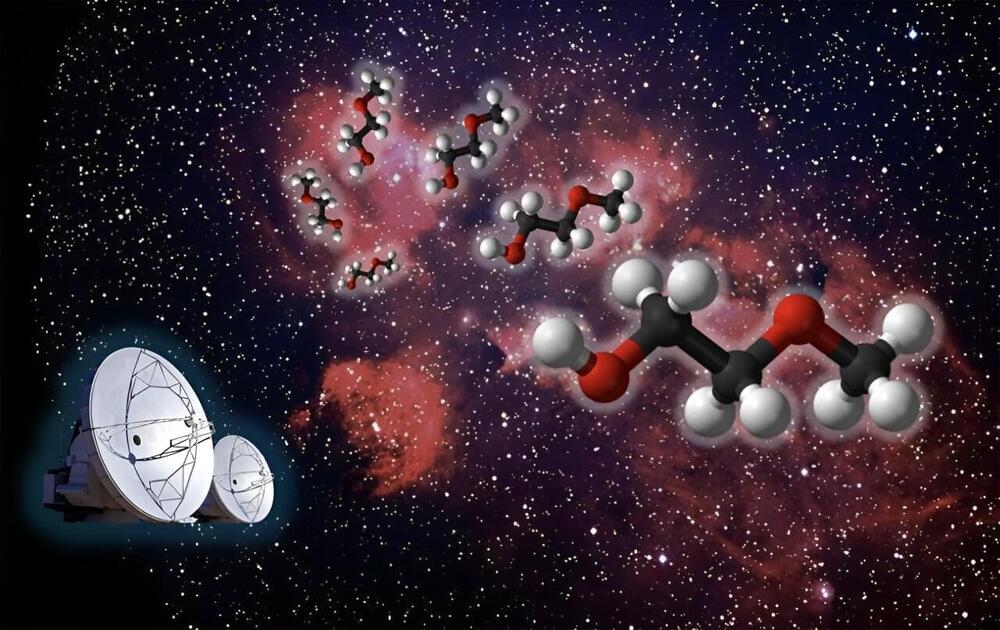
When molecules fall apart, their electric charge doesn’t stay put—it rearranges as bonds stretch and break. An international team of scientists has now tracked these ultrafast changes in the small molecule fluoromethane (CH₃F). It was the first time that the Small Quantum Systems (SQS) instrument at European XFEL could deliver detailed insights into transient states during chemical reactions. The research is published in the journal Physical Review X.

These intermediate states, that only exist temporarily while the reaction is ongoing, are often the key drivers of chemistry and therefore crucial to understand. Over the long term, that kind of insight can support progress in areas such as atmospheric science (where sunlight-driven reactions and fragmentation pathways shape air chemistry), as well as the study of complex molecular systems including biomolecules and proteins, where local excitation and charge transfer can trigger structural change.

In the experiment, the researchers first triggered the reaction with an optical laser pulse. Next, they used the X-ray laser pulses that the European XFEL produces, to eject an electron from the core of either the fluorine or the carbon atom in the molecule. They measured the electron’s kinetic energy, which reveals how strongly it was bound inside the atom. That binding energy is extremely sensitive to the local electrical environment, producing so-called “chemical shifts” that act like a fingerprint of the charge distribution surrounding the atom from which the electron has been ejected.

Electron microscopy maps protein landscapes that drive photosynthesis

Research led by scientists at Washington State University has revealed insights on how plants form a microscopic landscape of proteins crucial to photosynthesis, the basis of Earth’s food and energy chain. The discovery provides a new view of the molecular engine that converts sunlight into bioenergy and could enable future fine-tuning of crops for higher yields and other useful traits.

Colleagues at WSU, the University of Texas at Austin, and the Weizmann Institute of Science in Israel used a novel, technology-powered approach to peer inside plant leaf cells and visualize the landscape of the photosynthetic membrane—the ribbon-like structure where plants harvest sunlight. The findings were recently published in the journal Science Advances.

“These membranes are highly efficient biological solar cells,” said the study’s principal investigator and corresponding author, Helmut Kirchhoff. “They convert sunlight energy into chemical energy that fuels not only the plant’s metabolism but that of most life on Earth.”

JWST Detects Evidence of “Monster Stars” That May Have Created the Universe’s First Giant Black Holes

Using the James Webb Space Telescope, an international team of researchers has discovered chemical fingerprints from enormous primordial stars that were among the first to form after the Big Bang.

Highly efficient expression of DNA-peptide conjugates in growth-arrested cells

Mohamedshah et al. present an enzymatic strategy for covalently linking nuclear localization sequence (NLS) peptides to DNA cassettes by incorporating a strained cyclooctyne and using SPAAC chemistry, greatly enhancing transfection efficiency compared to previous methods. [ https://www.nature.com/articles/s41467-025-68167-5](https://www.nature.com/articles/s41467-025-68167-5)


Efficient nuclear delivery of DNA remains a major challenge in non-viral gene therapy. Here the authors present an improved workflow for generating DNA oligonucleotide-peptide conjugates which are ligated to linear DNA and achieve nuclear localization.

Abstract: BreastCancer is associated with loss of the sirtuin deacetylase SIRT2, which leads to genomic instability and carcinogenesis, but the precise mechanism has been unclear

David S. Yu & team now show SIRT2 deacetylates MRE11 facilitating DNA binding to promote DNA end resection and ATM-dependent DNA damage signaling:

The figure shows MRE11 K393 deacetylation by SIRT2 promotes DNA end resection after ionizing radiation exposure, in the osteosarcoma cell line U20S.


1Department of Radiation Oncology and Winship Cancer Institute, Emory University School of Medicine, Atlanta, Georgia, USA.

2Department of Biology, Clark Atlanta University, Atlanta, Georgia, USA.

3Department of Biochemistry, Emory University School of Medicine, Atlanta, Georgia, USA.

Philip Kitcher — Philosophy of Reductionism & Emergence

Like us on Facebook for daily videos, updates, announcements, and much more: https://shorturl.at/tak4l.

Can biology be explained entirely in terms of chemistry and then physics? If so, that’s “reductionism.” Or are there “emergent” properties at higher levels of the hierarchy of life that cannot be explained by properties at lower or more basic levels?

Wear your support for the show with a Closer To Truth merchandise purchase: https://bit.ly/3P2ogje.

Philip Stuart Kitcher is a British philosopher who is the John Dewey Professor Emeritus of philosophy at Columbia University. He specialises in the philosophy of science, the philosophy of biology, the philosophy of mathematics, and more recently pragmatism.

Donate to help Closer To Truth continue exploring the world’s deepest questions without the need for paywalls: https://closertotruth.com/donate/

Closer To Truth, hosted by Robert Lawrence Kuhn and directed by Peter Getzels, presents the world’s greatest thinkers exploring humanity’s deepest questions. Discover fundamental issues of existence. Engage new and diverse ways of thinking. Appreciate intense debates. Share your own opinions. Seek your own answers.

Bringing the genetically minimal cell to life on a computer in 4D

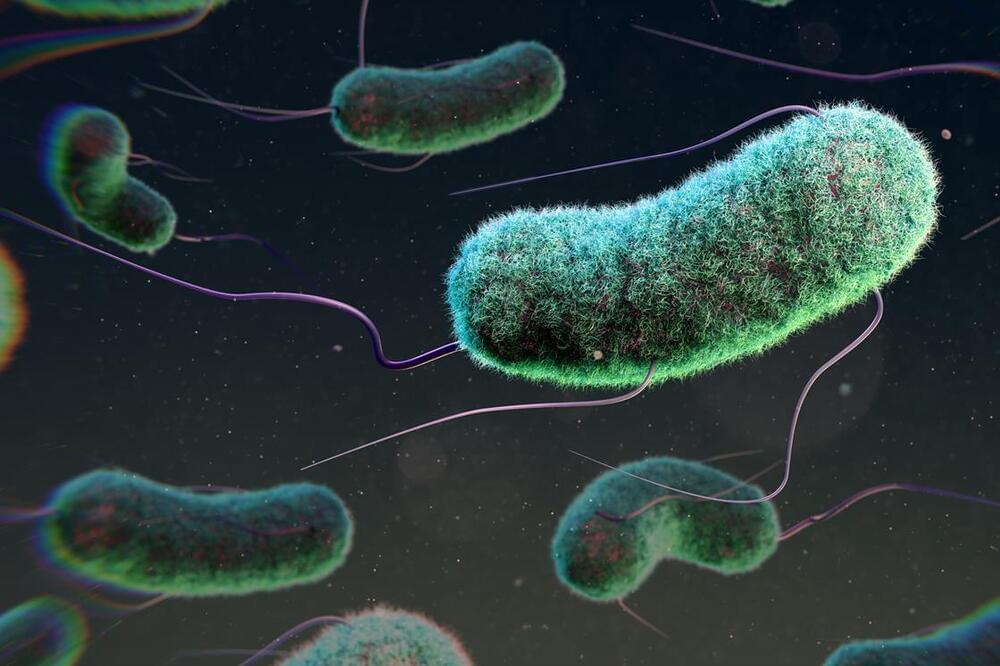
This work represents a fundamental advance in understanding life’s basic principles. By building a cell from the bottom up—specifying every gene, protein, and reaction—researchers can test how life functions with minimal complexity. The simulation serves as a “digital twin” that allows scientists to probe questions impossible to address experimentally, such as how spatial organization affects cellular processes or how subtle parameter changes alter cell cycle timing.


Simulating the complete cell cycle of the minimal cell provides a platform to understand the progression of complete states over time. The spatial heterogeneity of the intracellular environment can strongly affect biochemical reactions that control phenotypes.

Robotic microfluidic platform brings AI to lipid nanoparticle design

AI has designed candidate drugs for antibiotic-resistant infections and genetic diseases. But efforts to incorporate AI into the design of lipid nanoparticles (LNPs), the revolutionary delivery vehicles behind mRNA therapies like the COVID-19 vaccines, have been much more limited.

Designing LNPs is especially challenging: Each formulation combines multiple lipid components whose ratios influence how the particle delivers genetic instructions inside cells. Scientists still lack a clear map connecting those chemical inputs to biological outcomes.

The reason? There simply isn’t enough data.

/* */