Toggle light / dark theme

The Day the Sky Wouldn’t Stop Exploding: the Mystery of the Ultra-Long Gamma-Ray Burst

On July 2, 2025, space telescopes monitoring the sky for brief, one-and-done flashes of high-energy light saw something that nobody expected: a gamma-ray burst (GRB) that came back again and again, stretching what is usually a single “burst” lasting seconds to minutes into an all-day event. NASA’s Fermi spacecraft triggered on multiple gamma-ray episodes from the same patch of sky over several hours, and other satellites soon reported compatible detections. Compared to the known population of GRBs that have been studied for decades, this was an outlier beast of a different species.

At first, the event’s location near the crowded plane of the Milky Way made it tempting to suspect something closer to home, located in our own Galaxy. But follow-up imaging overturned that assumption. Observations with the Very Large Telescope (VLT) in Chile narrowed down the position and, together with Hubble and JWST, revealed that the transient was coincident with a dusty, irregular host galaxy. The distance is extreme: the light from the explosion began its journey roughly 8 billion years ago. In other words, whatever happened was not a local flare—it was a truly cosmic-scale detonation, or, rather, a string of detonations.

The duration of this event was not the only weird thing about it. Archival data showed that low-energy X-rays were already present almost a day before the main gamma-ray fireworks—an “X-ray precursor” that is hard to reconcile with standard models of GRBs. Meanwhile, the gamma-ray behavior itself looked like a stuttering engine. Fermi detected a sequence of short flares separated by long gaps, collectively implying multi-hour activity from a central engine rather than the single, clean explosion typical of such events.
Ancient Greece’s most famous oracle was just high on gas fumes

For centuries, people traveled to Delphi in southern Greece hoping for a glimpse of their future. There, at the temple of the god Apollo, a priestess was said to enter a trance and issue prophecies in the voice of Apollo himself. Everyday people, kings, even Alexander the Great traveled for miles to hear the priestess’s input on important decisions, from personal finance to matters of state.

Known as the Pythia or the Oracle of Delphi, the priestess wasn’t believed to be a psychic. Ancient writers like Plutarch, who served as a priest at Delphi in the first and second centuries, described her as a vessel for a power that came from the Earth.

According to Plutarch’s account, the temple of Delphi was constructed around a natural spring, where the water and fissures in the rock produced a sweet-smelling gas called pneuma. On designated days a few times per year, the chosen priestess sat amidst the pneuma on a tripod stool and inhaled enough to enter her trance. This was an exhausting ordeal for the woman. She might cry out, become hysterical, or collapse.

Inside the push to make ice rinks sustainable

Stefania Impellizzeri, a sustainable-materials chemist at Toronto Metropolitan University, is trying to make ice rinks more efficient and sustainable by fine-tuning water chemistry and rink-related materials.


Rinks use energy, water, and refrigerants, and they create microplastics. People are trying to reduce this footprint by .

BaSi₂-supported nickel catalyst boosts low-temperature hydrogen production

A new catalyst strategy developed at Institute of Science Tokyo uses BaSi2 as a support for nickel and cobalt to decompose ammonia at lower temperatures. By forming unique ternary transition metal–nitrogen–barium intermediates that facilitate nitrogen coupling, the system lowers the energy barrier for ammonia decomposition. This enables nickel-and cobalt-based catalysts to achieve high hydrogen-production activity at reduced temperatures, matching the performance of ruthenium while relying on Earth-abundant metals for cleaner hydrogen generation.

As the world turns toward cleaner energy sources, hydrogen has emerged as a promising alternative to fossil fuels. Hydrogen can be obtained from various sources such as natural gas, water, biomass, and hydrogen-rich carriers. Ammonia is one such source attracting growing attention as an efficient hydrogen carrier because it stores large amounts of hydrogen and is easier to transport. However, releasing hydrogen from ammonia is typically challenging, as it either requires precious metal catalysts such as ruthenium or non-precious metal catalysts operating at very high temperatures.

Addressing this challenge, a team of researchers led by Dr. Qing Guo and Dr. Shiyao Wang, together with Professor Masaaki Kitano and Specially Appointed Professor Hideo Hosono from the MDX Research Center for Element Strategy, Institute of Integrated Research, Institute of Science Tokyo, Japan, developed a new catalyst design strategy for ammonia decomposition. Instead of solely relying on the catalyst metal, this strategy focuses on using barium silicide (BaSi2) as an active support that directly participates in the catalytic process. The study was published in the Journal of the American Chemical Society on February 19, 2026.

Poking a nanostring: Scientists uncover energy cascades in tiny resonators

Scientists at TU Delft have designed a nanostring that, when poked, doesn’t lose its energy to the environment immediately. Instead, the energy leaks out within the string, triggering a cascade of distinct vibrational modes. For the first time, researchers have observed this cascade reaching all the way up to the fifth mode, while only actuating the first mode.

This discovery offers new insights that could benefit the development of extremely sensitive sensors. The results have been published in Physical Review Letters.

“Imagine plucking a guitar string,” associate professor Farbod Alijani begins to explain. “Eventually its energy dissipates into its surroundings and the vibrations slowly die out.” The team engineered a nanoscale string that behaves in a very distinct manner.

Power producers have financial incentives to block market integration despite cost savings, says study

Renewable energy is lowering electricity costs in some parts of the country, but those benefits aren’t being seen by consumers everywhere because they’re typically placed far away from demand centers. Better integrating electricity transmission networks across regions could significantly reduce generation costs, new research from the University of Michigan shows—at the expense of generation companies’ profits. The study is published in the journal Proceedings of the National Academy of Sciences.

Economist Catherine Hausman, associate professor at the Ford School of Public Policy, and colleagues found that improving interregional connectivity could have saved anywhere from $5.8 billion to $7.1 billion in electricity generation costs in 2022, and $3.4 billion to $5 billion in 2023.

At the same time, investing in regional connectivity could cost some power plants over $20 million in annual net revenue—giving them financial incentives to block or delay transmission network improvements.

Liquid crystal phase in antiferromagnets can be detected electrically

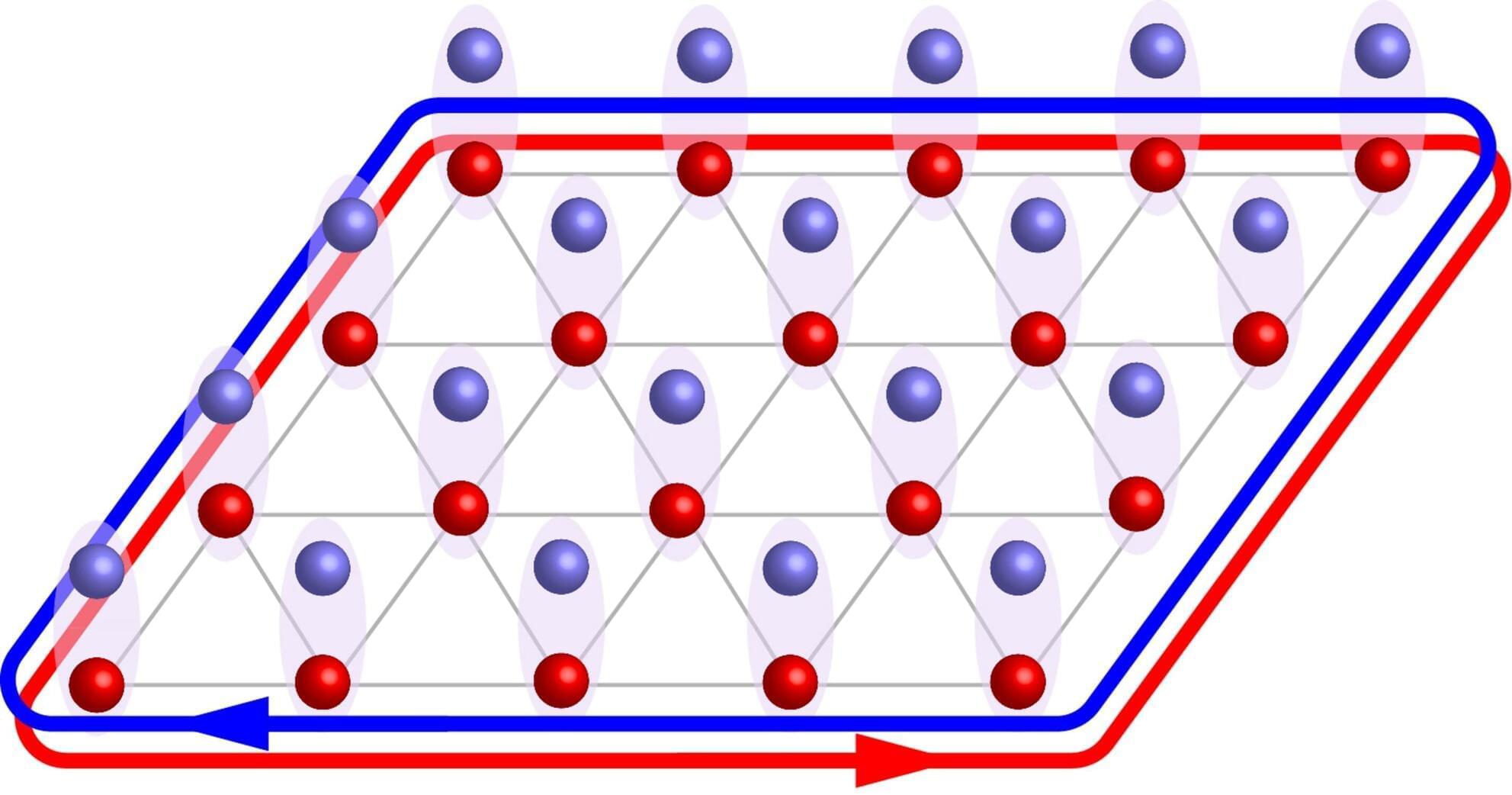
The best candidate for next-generation magnetic devices—technology that can power, store, sense or transport information—may be, counterintuitively, antiferromagnets. Today, the most widely used magnetic materials are ferromagnets, which exhibit permanent magnetization and therefore strongly attract each other. Their opposite, called antiferromagnetic materials, exhibit no net magnetization at all. Despite a net zero magnetic field, they offer appealing properties that would solve the challenges of current magnetic technologies, like stray magnetic field generation or slow operation.

Now, a team led by researchers at Tohoku University has taken the first step toward developing antiferromagnetic technology. The researchers found, for the first time, that under a current, antiferromagnets can exhibit a phase of matter known as “liquid-crystal,” or nematic, that can be electrically detected. Their study is published in Nature Communications.

“The antiferromagnets we work with possess a fundamentally different symmetry from conventional ferromagnets, meaning that they are not simply an alternative material platform, but a new class of magnets expected to host entirely new electronic functionalities,” said corresponding author Hideaki Sakai.

Discovery of energetic ionic cocrystals via high-throughput virtual screening

Researchers developed a faster, more targeted way to design ionic cocrystals (ICCs) of the energetic oxidizer ammonium dinitramide (ADN).

Using high‑throughput virtual screening with the CSD Python interface and RDKit, followed by quick experimental tests, they identified and synthesized a new ADN cocrystal with oxalyl dihydrazide (OHD).

Read the full paper here.


Ionic cocrystals (ICCs) offer a promising strategy to tailor the properties of energetic oxidizers like ammonium dinitramide (ADN). However, the current design process of ADN-based ICCs remains heavily reliant on empirical trial-and-error methods, which significantly impedes development efficiency and presents a fundamental challenge in balancing energy performance and hygroscopicity. Herein, we leverage a high-throughput virtual screening strategy to identify coformers of ADN cocrystals that meet requirements for structures and performances, integrating the CSD Python interface and RDKit via custom Python scripts. Combined with rapid experimental screening, the first ADN cocrystal with balanced hygroscopicity and energy is successfully synthesized using a commercially available coformer oxalyl dihydrazide (OHD). The resulting ADN/OHD cocrystal exhibits a positive oxygen balance of +4.37%, enhanced moisture resistance and thermal stability. Moreover, compared to pure ADN, ADN/OHD delivers a 27.6% higher specific impulse, along with excellent green processability and engineering scalability. This work establishes a rational and scalable approach for developing perchlorate-free oxidizer cocrystals with well-balanced properties, and also provides a generalizable paradigm for the performance-oriented design of ICCs.

3D printing with moon dirt for lunar habitats

“By combining different feedstocks, like metal and ceramics, in the printing process, we found that the final material is really sensitive to the environment,” said Sizhe Xu. [ https://www.labroots.com/trending/space/30260/3d-printing-mo…habitats-2](https://www.labroots.com/trending/space/30260/3d-printing-mo…habitats-2)


How can lunar regolith be used to construct future habitats on the Moon? This is what a recent study published in Acta Astronautica hopes to address as a team of scientists investigated novel methods for using lunar regolith for making structures on the lunar surface. This study has the potential to help scientists, engineers, mission planners, and future astronauts develop methods for working and living on the Moon, which comes as NASA’s Artemis program plans to land humans on the Moon in 2028.

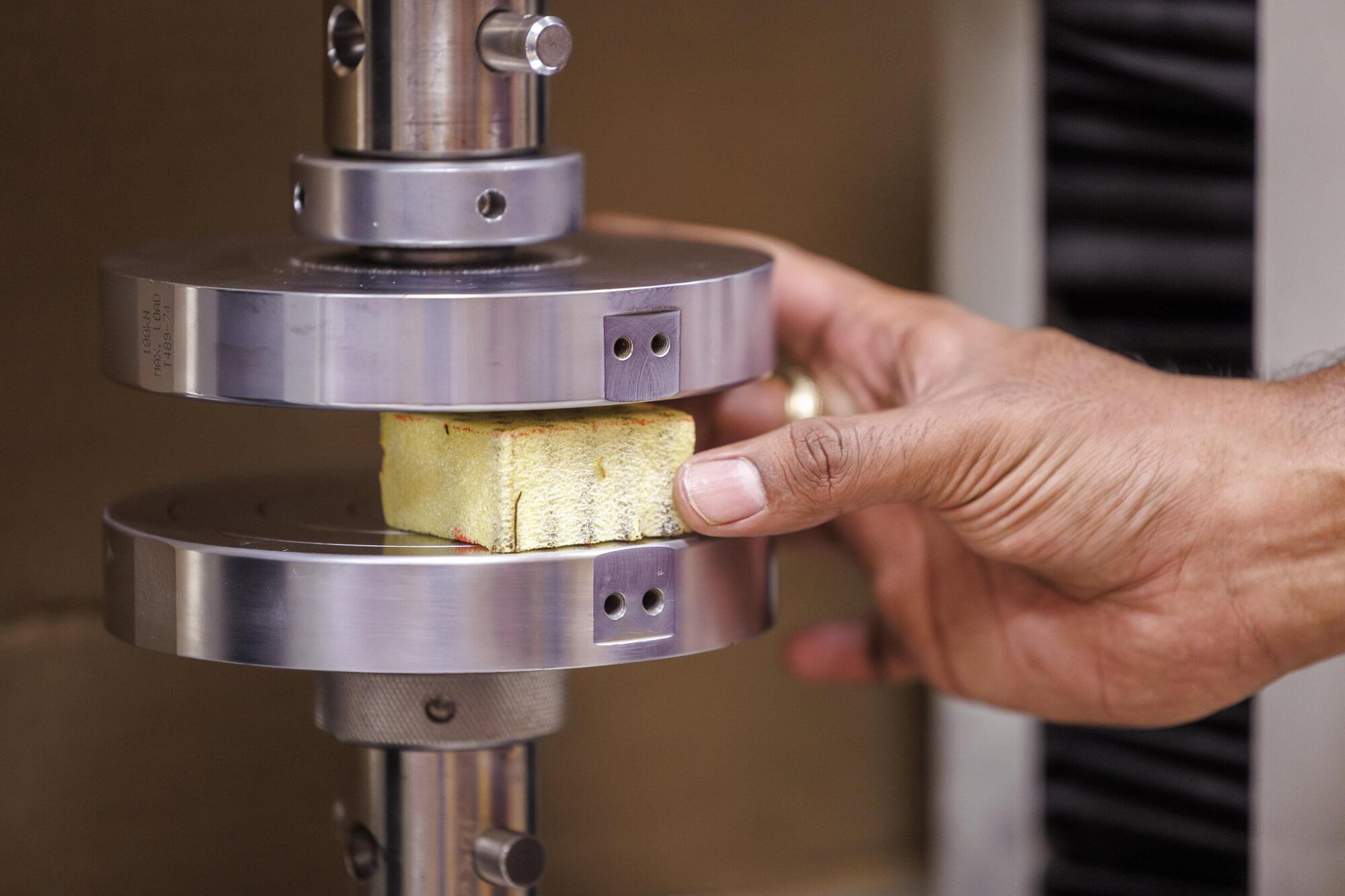
For the study, the researchers examined how a laser 3D printing method called laser directed energy deposition (LDED) could be used for manufacturing structures using lunar simulant under a myriad of environments, specifically lunar conditions of zero atmosphere, oxygen, and complete vacuum. The lunar simulant used for the experiments is known as LHS-1 (lunar highland regolith simulants), with the lunar highlands being the lighter-colored mountainous regions of the Moon as seen from Earth, as opposed to the volcanic regions of the Moon that are darker in appearance.

Along with the environmental conditions, the researchers also examined how printing LHS-1 on various types of surfaces yielded different results. They also examined laser speed, scanning power, and the final microstructure products. In the end, the researchers found that alumina-silicate ceramic surfaces and high temperatures produced the most promising structures but cautioned that laboratory conditions vary from the real-world environment on the Moon.

/* */