Dear Mum,
We’ve missed you over the ten long years since you passed away. You wanted me to write to you to tell you what’s happened, so now in 2030 I am fulfilling that wish.

Dear Mum,
We’ve missed you over the ten long years since you passed away. You wanted me to write to you to tell you what’s happened, so now in 2030 I am fulfilling that wish.
In preparation for writing a review of the Unabomber’s new book, I have gone through my files to find all the things I and others had said about this iconic figure when he struck terror in the hearts of technophiles in the 1990s. Along the way, I found this letter written to a UK Channel 4 producer on 26 November 1999 by way of providing material for a television show in which I participated called ‘The Trial of the 21st Century’, which aired on 2 January 2000. I was part of the team which said things were going to get worse in the 21st century.
What is interesting about this letter is just how similar ‘The Future’ still looks, even though the examples and perhaps some of the wording are now dated. It suggests that there is a way of living in the present that is indeed ‘future-forward’ in the sense of amplifying certain aspects of today’s world beyond the significance normally given to them. In this respect, the science fiction writer William Gibson quipped that the future is already here, only unevenly distributed. Indeed, it seems to have been here for quite a while.
Dear Matt,
Here are the sum of my ideas for the Trial of the 21st Century programme, stressing the downbeat:
Although the use of the internet is rapidly spreading throughout the world, it is also spreading at an alarmingly uneven rate, creating class divisions within nations much sharper than before. (Instead of access to the means of production, it is now access to the means of communication that is the cause of these divisions.) A good example is India, where most of the population continues to live in abject poverty (actually getting poorer relative to the rest of the world), while a Silicon Valley style community thrives in Bangalore with close ties to the West and a growing scepticism toward India’s survival as a democracy that pretends to incorporate the interests of the entire country. (The BBC world service did a story a couple of years ago after one of the elections, arguing that this emerging techno-middle-class is, despite its Western ties, are amongst those most likely to accept the rule of a dictator who could do a ‘Mussolini’ and make the trains run on time, and otherwise protect the interests of these nouveaux riches, etc.) In this respect, the spread of the internet to the Third World is actually a politically destabilizing force, creating the possibility of a new round of authoritarian regimes. This tendency is compounded by a general decline of the welfare state mentality, so that these new dictators wouldn’t even need to pay lip service to taking care of the masses, as long as the middle classes are given preferential tax rates, etc.
But even in the West, the easy access to the internet has political unsavoury consequences. As more people depend on the internet as a provider of goods, information, entertainment, etc., and regulation of the net is devolved into many commercial hands, it will be increasingly tempting for techno-terrorists to strike by: corrupting, stealing and recoding materials stored therein. In other words, we should see a new generation of people who are the spiritual offspring of the Unabomber and average mischievous hacker. Indeed, many of these people may be motivated by a populist, democratic sentiment associated with a particular ethnic or cultural group that is otherwise ‘info-poor’. Such techno-terrorism is likely to be effective when the offending Western parties are far from those of the offended peoples – one wouldn’t need to smuggle people and arms into Heathrow; one could just push the delete button 5000 miles away… I am frankly surprised that the major stock exchanges and the air traffic control system haven’t yet been sabotaged, considering how easy it is for major disruptions to occur even without people trying very hard. These two computerized systems are prime candidates because the people most directly affected are likely to be relatively well-heeled. In contrast, sabotaging various military defence systems could lead to the death of millions of already disadvantaged people, so I doubt that they would be the target of techno-terrorists (though they may be the target of a sociopathic hacker…)
One seemingly good feature of our emerging networked world is that we can customize our consumption better than ever. However, this customization means that we are providing more of our details to sources capable of exploiting them — not only through marketing, but also through surveillance. In this respect, remarks about the ‘interactivity’ of the internet should be seen as implying that others may be able to ‘see ‘through’ you while you are merely ‘looking at’ them. While this opens up the possibility of government censorship, a bigger threat may be the way in which access to certain materials may be ‘implicitly regulated’ by the ‘invisible hand’ of website hits. Thus, if a site gets a consistently large number of hits, it may suddenly start charging a pay-per-view fee, whereas those getting few hits may simply be taken off cyberspace by commercial servers. This could have especially pernicious consequences for the amount and type of news available (think about what sorts of stories would be expensive to access if news coverage were entirely consumer-driven), as well as on-line distance learning courses.
Here we see the dark side of the ‘user friendliness’ of the net: it basically mimics and reinforces what we already do until we get locked in. (In other words: spontaneous preferences are turned into prejudices and perhaps even addictions.) In the past, government and even businesses saw themselves in the role of educating or, in some other way, challenging people to change their habits. But this is no longer necessary, and may be even inconvenient as a means to a docile citizenry. (Aldous Huxley’s Brave New World was ahead of the curve here.)
There are also some problems arising from advances in biotechnology:
1. As we learn more about people’s genetic makeup, that information will become part of the normal ways we account for ourselves – especially in legal settings. For example, you may be guilty of alcohol-related offences even if you are below the ‘legal limit’, if it’s shown that you’re genetically predisposed to get drunk easily. (Judges have already made such rulings in the US.) Ironically, then, although we have no say in our genetic makeup, we will be expected not only to know it, but also to take responsibility for it.
2. In addition, while our personal genetic information will be generally available (e.g. used by insurance companies to set premiums), it may also be patented as intellectual property legislation seems to be allowing the patenting of substances that already exist in nature as long as the means is artificial (e.g. biochemical synthesis of genetic material for medical treatments).
3. This fine-grained genetic information will refuel the fires of the politics of discrimination, both in its negative and positive extremes: i.e. those who want to take a distinctive genetic pattern as the basis of extermination or valorization. (A good case in point is the drive to recognize homosexuality as genetically based: both pro- and anti-gay groups seem to embrace this line, even though it could mean either preventing the birth of gay children or accepting gayness as a normal tendency in humanity)
Finally, there are some general problems with the future of knowledge production:
1. It will become increasingly difficult to find support – both intellectual and financial — for critical work that aims to overturn existing assumptions and open up new lines of inquiry. This is because current lines of research – especially in the experimentally driven side of the natural sciences – have already invested so much money, people and other resources that to suggest that, say, high-energy physics is intellectually bankrupt or that the human genome project isn’t telling us much more than we already know would amount to throwing lots of people out of work, ruining reputations and perhaps even causing a general backlash against science in society at large (since public conceptions of science are so closely tied to these high-profile projects).
2. Traditionally radical ideas have been promoted in science – at least in part –- because the research behind the ideas did not cost much to do, and not much was riding on who was ultimately correct. However, this idyllic state of affairs ended with World War II. Indeed, it has gotten so bad – and will get worse in the future – that one can speak of a kind of ‘financial censorship’ in science. For example, Peter Duesberg, who discovered the ‘retrovirus’, lost his grants from the US National Institute of Health because he publicly denied the HIV-AIDS link. One result of this financial censorship is that radical researchers will migrate to private funders who are willing to take some risks: e.g. cold fusion research continues today in this fashion. The big downside of this possibility, though, is that if this radical research does bear fruit, it’s likely to become the intellectual property of the private funder and not necessarily used for the public good.
I hope you find these remarks helpful. Leave a message at … when you’re able to talk.
Yours,
Steve
Bioquark, Inc., (http://www.bioquark.com) a company focused on the development of novel biologics for complex regeneration and disease reversion, and Revita Life Sciences, (http://revitalife.co.in) a biotechnology company focused on translational therapeutic applications of autologous stem cells, have announced that they have received IRB approval for a study focusing on a novel combinatorial approach to clinical intervention in the state of brain death in humans.
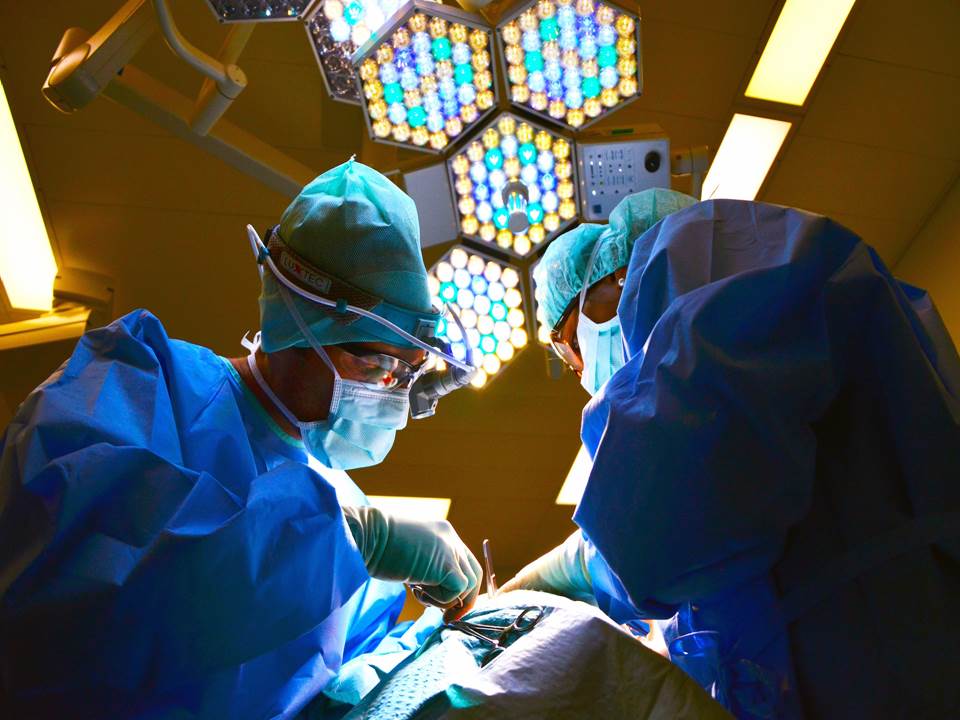
This first trial, within the portfolio of Bioquark’s Reanima Project (http://www.reanima.tech) is entitled “Non-randomized, Open-labeled, Interventional, Single Group, Proof of Concept Study With Multi-modality Approach in Cases of Brain Death Due to Traumatic Brain Injury Having Diffuse Axonal Injury” (https://clinicaltrials.gov/ct2/show/NCT02742857?term=bioquark&rank=1), will enroll an initial 20 subjects, and be conducted at Anupam Hospital in Rudrapur, Uttarakhand India.
“We are very excited about the approval of our protocol,” said Ira S. Pastor, CEO, Bioquark Inc. “With the convergence of the disciplines of regenerative biology, cognitive neuroscience, and clinical resuscitation, we are poised to delve into an area of scientific understanding previously inaccessible with existing technologies.”
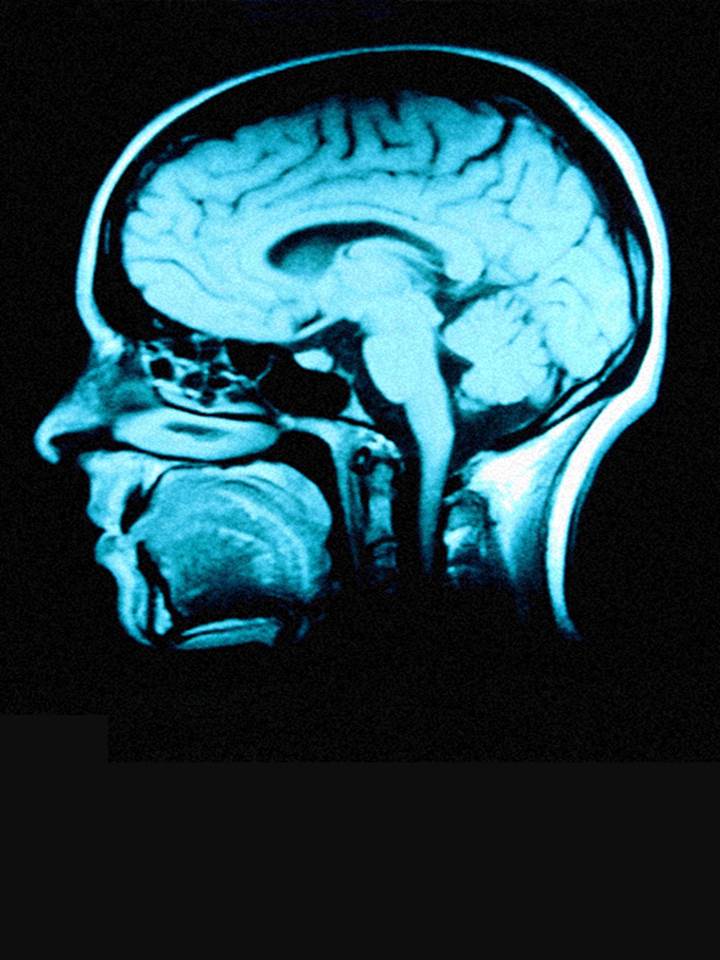
Death is defined as the termination of all biological functions that sustain a living organism. Brain death, the complete and irreversible loss of brain function (including involuntary activity necessary to sustain life) as defined in the 1968 report of the Ad Hoc Committee of the Harvard Medical School, is the legal definition of human death in most countries around the world. Either directly through trauma, or indirectly through secondary disease indications, brain death is the final pathological state that over 60 million people globally transfer through each year.
While human beings lack substantial regenerative capabilities in the CNS, many non-human species, such as amphibians, planarians, and certain fish, can repair, regenerate and remodel substantial portions of their brain and brain stem even after critical life-threatening trauma.
Additionally, recent studies on complex brain regeneration in these organisms, have highlighted unique findings in relation to the storage of memories following destruction of the entire brain, which may have wide ranging implications for our understanding of consciousness and the stability of memory persistence.
“Through our study, we will gain unique insights into the state of human brain death, which will have important connections to future therapeutic development for other severe disorders of consciousness, such as coma, and the vegetative and minimally conscious states, as well as a range of degenerative CNS conditions, including Alzheimer’s and Parkinson’s disease,” said Dr. Sergei Paylian, Founder, President, and Chief Science Officer of Bioquark Inc.
Over the years, clinical science has focused heavily on preventing such life and death transitions and made some initial progress with suspended animation technologies, such as therapeutic hypothermia. However, once humans transition through the brain death window, currently defined by the medical establishment as “irreversible”, they are technically no longer alive, despite the fact that human bodies can still circulate blood, digest food, excrete waste, balance hormones, grow, sexually mature, heal wounds, spike a fever, and gestate and deliver a baby. It is even acknowledged by thought leaders that recently brain dead humans still may have residual blood flow and electrical nests of activity in their brains, just not enough to allow for an integrated functioning of the organism as a whole.
“We look forward to working closely with Bioquark Inc. on this cutting edge clinical initiative,” said Dr. Himanshu Bansal, Managing Director of Revita Life Sciences.
About Bioquark, Inc.
Bioquark Inc. is focused on the development of natural biologic based products, services, and technologies, with the goal of curing a wide range of diseases, as well as effecting complex regeneration. Bioquark is developing both biological pharmaceutical candidates, as well as products for the global consumer health and wellness market segments.
About Revita Life Sciences
Revita Life Sciences is a biotechnology company focused on the development of stem cell therapies that target areas of significant unmet medical need. Revita is led by Dr. Himanshu Bansal MD, PhD. who has spent over two decades developing novel MRI based classifications of spinal cord injuries as well as comprehensive treatment protocols with autologous tissues including bone marrow stem cells, dural nerve grafts, nasal olfactory tissues, and omental transposition.
In the Galactic Public Archives film Click Here for Happiness Prof. Yair Amichai-Hamburger contends that even though technology allows us to connect with one another in unprecedented ways, “loneliness is the disease of the 21st century.” From Hamburger’s perspective, communication technology (coupled with human nature) tempts us to mistake superficial connections for meaningful ones, urges us to value quantity over quality. It creates new opportunities for experiencing the best of what it means to be human, but often our interaction with technology suggests something more akin to an addict on a new drug.
Therapist and author Esther Perel uses this film to explore our ‘existential aloneness’ through a different lens. Much as technology continues to open new doors for connection, the rapid cultural changes of the past 100 years allow us to choose the sort of life we wish to live. We make our most important connections by choice instead of having them mandated to us by tradition. But as is the case with technology, sometimes it isn’t clear if we are primed to use these new opportunities to build more fulfilling lives or simply to frustrate ourselves, building a world where more people feel alone.
Has our increased valuing of independence and self-fulfillment created a fatal conflict with the romantic ideal of ‘the couple?’ Can we have it all or do we need to choose between freedom and belonging? Perel isn’t sure that we can have it all, but she thinks that we can carve out a path that delivers more to more of us than would a retreat into tradition. “Let’s not romanticize the past. I don’t think that the fate of women in those marriages was particularly glorious. It seems that quite a few people were waiting to get out.” Perel argues that the only way that the future of ‘the couple’ can be navigated satisfactorily is if we continue to build upon the social progress of the past century. “You need two people who have equal power to have this communication, or to have this negotiation even able to take place without it being a power maneuver. If it doesn’t happen between two emancipated people it [becomes] a power system, which it was throughout history.”
What do you hope to build in a relationship? What connections do you value? What are your boundaries?
What do you hope to find in a relationship? Security or freedom? Adventure or Intimacy? Do you want the connections in your life to serve as aides on your personal journey or do you want to feel you belong to a larger endeavor?
The future is often discussed in regard to technology, but when we look towards our personal futures we tend to think not of gizmos but of relationships. We think of the connections we want to build and experience, and the things that we wish to give the world in return. We think about how the world could be a better place for ourselves as well as those around us. The change we envision is not technological; rather it reflects what we value. In this film, therapist and author Esther Perel argues that the patterns in which we connect, and the conventions that guide how we couple present a window into what our culture really values.
When Perel looks at the ways in which we connect in early the 21st century she sees contradictions. The rapid technological and social shifts of the previous centuries have created conflicts not only within our cultures but also in the hopes and desires of the individual. She finds us looking with one eye to the secure and charted path that the norms of the past seem to offer us. With the other eye we look to the opportunities and fluid freedoms that now seem open to us. Can we coherently (and satisfactorily) reconcile these desires?
What connections do you value?
Find more great videos on the Galactic Public Archives.
It may be possible one day to use effective biotechnological therapies in order to achieve extreme lifespans. In the meantime, instead of just waiting for these therapies, it may be more fruitful to live a life of constant stimulation, hyper-connection and avoidance of regularity. This is something that everybody can do today, and may have a direct impact upon radical life extension, not only for the individual but also for society.
For some time now I have been advocating the notion that exposure to meaningful information may be one way of achieving radical life extension. By meaningful information I mean anything that requires action, and not just feeding your brain with routine sets of data. Examples of this include being hyper-connected in a digital world, an enriched environment (both in the personal space and in society as a whole), a hormetic lifestyle, behavioural models such as a goal-seeking behaviour, search for excellence, and a bias for action, as well as the pursuit innovation, diversification, creativity and novelty. Most importantly, the avoidance of routine and mediocrity.
This information-rich lifestyle up-regulates the function of the brain and may have an impact upon cell immortalisation. In my latest paper (http://arxiv.org/abs/1306.2734 I provide an explanation of the exact mechanisms. I argue that the relentless exposure to useful information creates new and persisting demands for energy resources in order for this information to be assimilated by the neurons. If this process continues for some time, there will come a point where our biological mechanisms will undergo a phase transition, in effect creating a new biology. Not one based on sex and reproduction but one based on information and somatic survival.
One possible mechanism involves the immortalisation sequences of germ cells. As we know, the DNA in germ cells is essentially immortal because it is somehow able to repair age-related damage effectively. Recent research shows that some of these immortalisation mechanisms do not originate from the germ cells but from the somatic cells! In other words, our bodily cells create biological material such as error-free sequences of DNA and instead of using this themselves for their own survival, they pass it on to the germ cells to assure the survival of the species. This means that the germ-line remains immortal whereas the bodily cells eventually age and die.
The process may be forcibly changed, by overloading the system with high quality actionable information. As explained above, the assimilation of this information demands so much energy and resources from the organism that there will come a point when nature will have to make a choice: is it more economical from the thermodynamic point of view to continue the current cycle of birth, aging and death (with an immortal DNA), or is it better to downgrade this model and favour a new process of somatic survival and improved development in the same individual who would be able to live much longer? The force of evolution in a modern technological, information-laden niche may eventually favour the latter.
Also see here: http://hplusmagazine.com/2012/12/06/the-longevity-of-real-human-avatars/
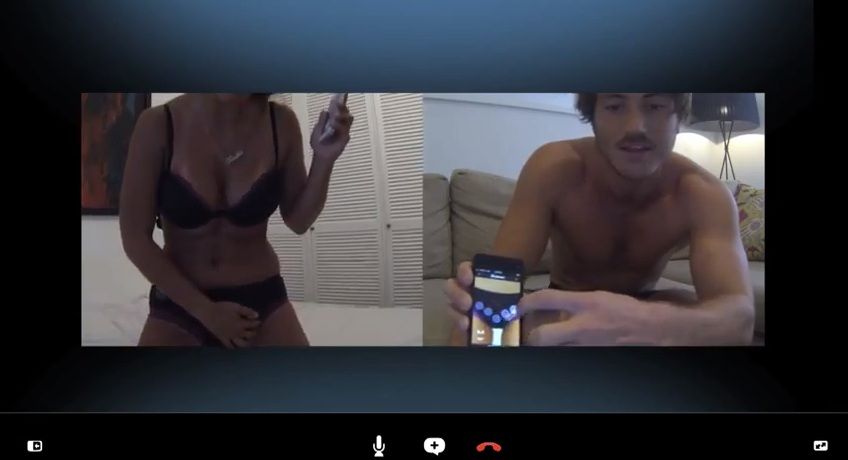
Emotions and Longevity:
If the picture header above influenced you to click to read more of this article, then it establishes at least part of my hypothesis: Visual stimuli that trigger our primal urges, supersede all our senses, even over-riding intellect. By that I mean, irrespective of IQ level, the visual alone and not the title of the essay will have prompted a click through –Classic advertising tactic: Sex sells.
Yet, could there be a clue in this behavior to study further, in our quest for Longevity? Before Transhumanism life extension technology such as nano-tech and bio-tech go mainstream… we need to keep our un-amped bodies in a state of constant excitement, using visual triggers that generate positive emotions, thereby hopefully, keeping us around long enough to take advantage of these bio-hacks when they become available.
Emotions on Demand — The “TiVo-ing” of feelings:
From the graphic above, it is easy to extrapolate that ‘positive’ emotions can contribute significantly to Longevity. When we go on a vacation, we’re experiencing the world in a relaxed frame of mind and encoding these experiences, even if sub-consciously, in our brains (minds?). Days, or even years later we can call on these experiences, on-demand, to bring us comfort.
Granted, much like analog recordings… over time, these stored copies of positive emotions will deteriorate, and just as we can today digitize images and sounds, making for pristine everlasting copies… can we digitize Emotions for recall and to experience them on-demand?
How would we go about doing it and what purpose does it serve?
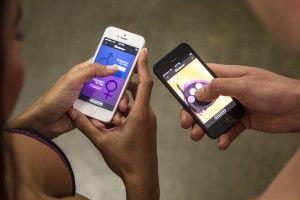
Digitizing Touch: Your Dirrogate’s unique Emotional Signature:
Can we digitize Touch; a crucial building block that contributes to the creation of Emotions? For an answer, we need to look to the (and to some, the questionable) technology behind Teledildonics.
While the tech to experience haptic feed-back has been around for a while, it’s been mostly confined to Virtual Reality simulations and for training purposes. Crude haptic-force feedback gaming controllers are available on the market, but advances in actuators, and nano-scale miniaturization are soon to change that, even going as far as to give us tactile imaging capability — “Smart Skin”
Recently, Durex announced “Fundawear”. It’s purpose? To experience the “touch” of your partner in a fun light-hearted way. Yet, what if a Fundawear session could be recorded and played back later? The unique way your partner touches, forever digitized for playback when desired… allowing you to experience the emotion of joy and happiness at will?
Fundawear can be thought of as a beta v1.0 of something akin to smart-skin in reverse, which could eventually allow a complete “feel-stream” to be digitized and played back on-demand.
Currently we are already able to digitize some faculties that stimulate two of our primary senses:
So how do we go about digitizing and re-creating the sense of Touch?
Solutions such as the one from NuiCapture shown in the video above, in combination with off the shelf game hardware such as the Kinect, can Digitize a whole body “performance” — Also known as performance capture.
Dirrogates and 3D Printing a Person:
In the near future if we get blue-prints to 3D print a person, ready for re-animation and complete with “smart-skin”… such a 3D printed surrogate could reciprocate our touch.
It would be an exercise in imagination, to envision 3D printing your partner, if they couldn’t be with you when you wanted them, or indeed it could raise moral and ethical issues such as ‘adultery’ if an un-authorized 3D printed copy was produced of a person, and their “signature” performance files was pirated.
But with every evil, there is also the good. 3D printers can print guns, or as seen in the video above: a prosthetic hand, allowing a child to experience life the way other children do — That is the ethos of Transhumanism.
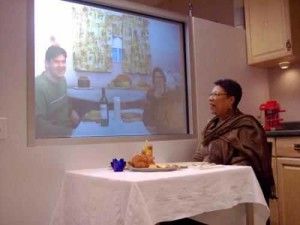
Loneliness can kill you:
Well maybe not exactly kill you, but it can negatively impact your health, says The World of Psychology. That would be counterproductive in our quest for Longevity.
A few years ago, companies such as Accenture introduced family collaboration projects. I recommend clicking on the link to read the article, as copyright restrictions prevent including it in this essay. In essence, it allows older relatives to derive emotional comfort from seeing and interacting with their families living miles away.
At a very basic level, we are already Transhuman. No stigma involved… no religious boundaries crossed. This ethical use of technology, can bring comfort to an aging section of society, bettering their condition.
In a relationship, the loss of a loved one can be devastating to the surviving partner, even more so, if the couple had grown old together and shared their good and bad times. Experiencing and re-living memories that transcend photographs and videos, could contribute towards generating positive emotions and thus longevity in the person coping with his/her loss.
While 3D printing and re-animating a person is still a few years away, there is another stop-gap technology: Augmented Reality. With AR visors, we can see and interact with a “Dirrogate” (Digital Surrogate) of another person as though they were in the same room with us. The person’s Dirrogate can be operated in real-time by another person living thousands of miles away… or a digitized touch stream can be called on… long after the human operator is no more.
In the story: “Memories with Maya”, the context and it’s repercussion on our evolution into a Transhuman species, is explored in more detail.
The purpose of this essay is to seed ideas only, and is not to be taken as expert advice.
A widely accepted definition of Transhumanism is: The ethical use of all kinds of technology for the betterment of the human condition.
This all encompassing summation is a good start as an elevator pitch to laypersons, were they to ask for an explanation. Practitioners and contributors to the movement, of course, know how to branch this out into specific streams: science, philosophy, politics and more.
- This article was originally published on ImmortalLife.info
We are in the midst of a technological revolution, and it is cool to proclaim that one is a Transhumanist. Yet, many intelligent and focused Transhumanists are asking some all important questions: What road-map have we drawn out, and what concrete steps are we taking to bring to fruition, the goals of Transhumanism?
Transhumanism could be looked at as culminating in Technological Singularity. People comprehend the meaning of Singularity differently. One such definition: Singularity marks a moment when technology trumps the human brain, and the limitations of the mind are surpassed by artificial intelligence. Being an Author and not a scientist myself, my definition of the Singularity is colored by creative vision. I call it Dirrogate Singularity.
I see us humans, successfully and practically, harnessing the strides we’ve made in semiconductor tech and neural networks, Artificial intelligence, and digital progress in general over the past century, to create Digital Surrogates of ourselves — our Dirrogates. In doing so, humans will reach pseudo-God status and will be free to merge with these creatures they have made in their own likeness…attaining, Dirrogate Singularity.
So, how far into the future will this happen? Not very far. In fact it can commence as soon as today or as far as, in a couple of years. The conditions and timing are right for us to “trans-form” into Digital Beings; Dirrogates.
I’ll use excerpts from the story ‘Memories with Maya’ to seed ideas for a possible road-map to Dirrogate Singularity, while keeping the tenets of Transhumanism in focus on the dashboard as we steer ahead. As this text will deconstruct many parts of the novel, major spoilers are unavoidable.
Dirrogate Singularity v/s The Singularity:
The main distinction in definition I make is: I don’t believe Singularity is the moment when technology trumps the human brain. I believe Singularity is when the human mind accepts and does not discriminate between an advanced “Transhuman” (effectively, a mind upload living in a bio-mechanical body) and a “Natural” (an un-amped homo sapien)
This could be seen as a different interpretation of the commonly accepted concept of The Singularity. As one of the aims of this essay is to create a possible road-map to seed ideas for the Transhumanism movement, I choose to look at a wholly digital path to Transhumanism, bypassing human augmentation via nanotechnology, prosthetics or cyborg-ism. As we will see further down, Dirrogate Singularity could slowly evolve into the common accepted definitions of Technological Singularity.
What is a Dirrogate:
A portmanteau of Digital + Surrogate. An excerpt from the novel explains in more detail:
“Let’s run the beta of our social interaction module outside.”
Krish asked the prof to follow him to the campus ground in front of the food court. They walked out of the building and approached a shaded area with four benches. As they were about to sit, my voice came through the phone’s speaker. “I’m on your far right.”
Krish and the prof turned, scanning through the live camera view of the phone until they saw me waving. The phone’s compass updated me on their orientation. I asked them to come closer.
“You have my full attention,” the prof said. “Explain…”
“So,” Krish said, in true geek style… “Dan knows where we are, because my phone is logged in and registered into the virtual world we have created. We use a digital globe to fly to any location. We do that by using exact latitude and longitude coordinates.” Krish looked at the prof, who nodded. “So this way we can pick any location on Earth to meet at, provided of course, I’m physically present there.”
“I understand,” said the prof. “Otherwise, it would be just a regular online multi-player game world.”
“Precisely,” Krish said. “What’s unique here is a virtual person interacting with a real human in the real world. We’re now on the campus Wifi.” He circled his hand in front of his face as though pointing out to the invisible radio waves. “But it can also use a high-speed cell data network. The phone’s GPS, gyro, and accelerometer updates as we move.”
Krish explained the different sensor data to Professor Kumar. “We can use the phone as a sophisticated joystick to move our avatar in the virtual world that, for this demo, is a complete and accurate scale model of the real campus.”
The prof was paying rapt attention to everything Krish had to say. “I laser scanned the playground and the food-court. The entire campus is a low rez 3D model,” he said. “Dan can see us move around in the virtual world because my position updates. The front camera’s video stream is also mapped to my avatar’s face, so he can see my expressions.”
“Now all we do is not render the virtual buildings, but instead, keep Daniel’s avatar and replace it with the real-world view coming in through the phone’s camera,” explained Krish.
“Hmm… so you also do away with render overhead and possibly conserve battery life?” the prof asked.
“Correct. Using GPS, camera and marker-less tracking algorithms, we can update our position in the virtual world and sync Dan’s avatar with our world.”
“And we haven’t even talked about how AI can enhance this,” I said.
I walked a few steps away from them, counting as I went.
“We can either follow Dan or a few steps more and contact will be broken. This way in a social scenario, virtual people can interact with humans in the real world,” Krish said. I was nearing the personal space out of range warning.
“Wait up, Dan,” Krish called.
I stopped. He and the prof caught up.
“Here’s how we establish contact,” Krish said. He touched my avatar on the screen. I raised my hand in a high-five gesture.
“So only humans can initiate contact with these virtual people?” asked the prof.
“Humans are always in control,” I said. They laughed.
“Aap Kaise ho?” Krish said.
“Main theek hoo,” I answered a couple of seconds later, much to the surprise of the prof.
“The AI module can analyze voice and cross-reference it with a bank of ten languages.” he said. “Translation is done the moment it detects a pause in a sentence. This way multicultural communication is possible. I’m working on some features for the AI module. It will be based on computer vision libraries to study and recognize eyebrows and facial expressions. This data stream will then be accessible to the avatar’s operator to carry out advanced interaction with people in the real world–”
“So people can have digital versions of themselves and do tasks in locations where they cannot be physically present,” the prof completed Krish’s sentence.
“Cannot or choose not to be present and in several locations if needed,” I said. “There is no reason we can’t own several digital versions of ourselves doing tasks simultaneously.”
“Each one licensed with a unique digital fingerprint registered with the government or institutions offering digital surrogate facilities.” Krish said.
“We call them di-rro-gates.” I said.
One of the characters in the story also says: “Humans are creatures of habit.” and, “We live our lives following the same routine day after day. We do the things we do with one primary motivation–comfort.”
Whether this is entirely true or not, there is something to think about here… What does ‘improving the human condition’ imply? To me Comfort, is high on the list and a major motivation. If people can spawn multiple Dirrogates of themselves that can interact with real people wearing future iterations of Google Glass (for lack of a more popular word for Augmented Reality visors)… then the journey on the road-map to Dirrogate Singularity is to see a few case examples of Dirrogate interaction.
Evangelizing Transhumanism:
In writing the novel, I took several risks, story length being one. I’ve attempted to keep the philosophy subtle, almost hidden in the story, and judging by reviews on sites such as GoodReads.com, it is plain to see that many of today’s science fiction readers are after cliff hanger style science fiction and gravitate toward or possibly expect a Dystopian future. This root craving must be addressed in lay people if we are to make Transhumanism as a movement, succeed.
I’d noticed comments made that the sex did not add much to the story. No one (yet) has delved deeper to see if there was a reason for the sex scenes and if there was an underlying message. The success of Transhumanism is going to be in large scale understanding and mass adoption of the values of the movement by laypeople. Google Glass will make a good case study in this regard. If they get it wrong, Glass will quickly share the same fate and ridicule as wearing blue-tooth headsets.
One of the first things, in my view, to improving the human condition, is experiencing pleasure… of every kind, especially carnal.
In that sense, we already are Digital Transhumans. Long distance video calls, teledildonics and recent mainstream offerings such as Durex’s “Fundawear” can bring physical, emotional and psychological comfort to humans, without the traditional need for physical proximity or human touch.

(Durex’s Fundawear – Image Courtesy Snapo.com)
These physical stimulation and pleasure giving devices add a whole new meaning to ‘wearable computing’. Yet, behind every online Avatar, every Dirrogate, is a human operator. Now consider: What if one of these “Fundawear” sessions were recorded?
The data stream for each actuator in the garment, stored in a file – a feel-stream, unique to the person who created it? We could then replay this and experience or reminisce the signature touch of a loved one at any time…even long after they are gone; are no more. Would such as situation qualify as a partial or crude “Mind upload”?
Mind Uploading – A practical approach.
Using Augmented Reality hardware, a person can see and experience interaction with a Dirrogate, irrespective if the Dirrogate is remotely operated by a human, or driven by prerecorded subroutines under playback control of an AI. Mind uploading [at this stage of our technological evolution] does not have to be a full blown simulation of the mind.
Consider the case of a Google Car. Could it be feasible that a human operator remotely ‘drive’ the car with visual feedback from the car’s on-board environment analysis cameras? Any AI in the car could be used on an as-needed basis. Now this might not be the aim of a driver-less car, and why would you need your Dirrogate to physically drive when in essence you could tele-travel to any location?
Human Shape Shifters:
Reasons could be as simple as needing to transport physical cargo to places where home delivery is not offered. Your Dirrogate could drive the car. Once at the location [hardware depot], your Dirrogate could merge with the on-board computer of an articulated motorized shopping cart. Check out counter staff sees your Dirrogate augmented in the real world via their visor. You then steer the cart to the parking lot, load in cargo [via the cart’s articulated arm or a helper] and drive home. In such a scenario, a mind upload has swapped physical “bodies” as needed, to complete a task.
If that use made your eyes roll…here’s a real life example:
Devon Carrow, a 2nd grader has a life threatening illness that keeps him away from school. He sends his “avatar” a robot called Vigo.
In the case of a Dirrogate, if the classroom teacher wore an AR visor, she could “see” Devon’s Dirrogate sitting at his desk. A mechanical robot body would be optional. An overhead camera could project the entire Augmented classroom so all children could be aware of his presence. As AR eye-wear becomes more affordable, individual students could interact with Dirrogates. Such use of Dirrogates do fit in completely with the betterment-of-the-human-condition argument, especially if the Dirrogate operator is a human who could come into harm’s way in the real world.
While we simultaneously work on longevity and eliminating deadly diseases, both noble causes, we have to come to terms with the fact that biology has one up on us in the virus department as of today. Epidemic outbreaks such as SARS can keep schools closed. Would it not make sense to maintain the communal ethos of school attendance and classroom interaction by transhumanizing ourselves…digitally?
Does the above example qualify as Mind Uploading? Not in the traditional definition of the term. But looking at it from a different perspective, the 2nd grader has uploaded his mind to a robot.
Dirrogate Immortality via Quantum Archeology:
Below is a passage from the story. The literal significance of which, casual readers of science fiction miss out on:
“Look at her,” I said. “I don’t want her to be a just a memory. I want to keep her memory alive. That day, the Wizer was part of the reason for three deaths. Today, it’s keeping me from dying inside.”
“Help me, Krish,” I said. “Help me keep her memory alive.” He was listening. He wiped his eyes with his hands. I took the Wizer off. “Put it back on,” he said.

A closer look at the Wizer – [visor with Augmented Intelligence built in.]
The preceding excerpt from the story talks about resurrecting her; digital-cryonics.
So, how would Quantum Archeology techniques be applied to resurrect a dead person? Every day we spend hours uploading our stream-of-consciousness to the “cloud”. Photos, videos, Instagrams, Facebook status updates, tweets. All of this is data that can be and is being mined by Deep Learning systems. There’s no prize for guessing who the biggest investor and investigator of Deep Learning is.
Quantum Archeology gets a helping hand with all the digital breadcrumbs we’re leaving around us in this century. The question is: Is that enough information for us to Create a Mind?
Mind Uploading – Libraries and Subroutines:
A more relevant question to ask is, should we attempt to build a mind from the ground up, or start by collecting subroutines and libraries unique to a particular person? Earlier on in the article, it was suggested that by recording a ‘Fundawear’ session, we could re-experience someone’s signature intimate touch. Using Deep Learning, can personality libraries be built?
A related question to answer is: Wouldn’t it make everything ‘artificial’ and be a degraded version of the original? To attempt to answer such a question, let’s look around us today. Aren’t we already degrading our sense of hearing for instance, when we listen to hour after hour of MP3 music sampled at 128kHz or less? How about every time we’ve come to rely on Google’s “did you mean” or Microsoft’s red squiggly line to correct even our simple spellings?
Now, it gets interesting… since we have mind upload “libraries”, we are at liberty to borrow subroutines from more accomplished humans, to augment our own intelligence.
Will the near future allow us to choose a Dirrogate partner with the creative thinking of one person’s personality upload, the intimate skill-set of another and… you get the picture. Most people lead routine 9 to 5 lives. That does not mean that they are not missed by loved ones after they have completed their biological life-cycle. Resurrecting or simulating such minds is much easier than say re-animating Einstein.
In the story, Krish, on digitally resurrecting his father recounts:
“After I saw Maya, I had to,” he said. “I’ve used her same frame structure for the newspaper reading. Last night I went through old photos, his things, his books,” his voice was low. “I’m feeding them into the frame. This was his life for the past two years before the cancer claimed him. Every evening he would sit in this chair in the old house and read his paper.”
I listened in silence as he spoke. Tactile receptors weren’t needed to experience pain. Tone of voice transported those spores just as easily.
“It was easy to create a frame for him, Dan,” he said. “In the time that the cancer was eating away at him, the day’s routine became more predictable. At first he would still go to work, then come home and spend time with us. Then he couldn’t go anymore and he was at home all day. I knew his routine so well it took me 15 minutes to feed it in. There was no need for any random branches.”
I turned to look at him. The Wizer hid his eyes well. “Krish,” I said. “You know what the best part about having him back is? It does not have to be the way it was. You can re-define his routine. Ask your mom what made your dad happy and feed that in. Build on old memories, build new ones and feed those in. You’re the AI designer… bend the rules.”
“I dare not show her anything like this,” he said. “She would never understand. There’s something not right about resurrecting the dead. There’s a reason why people say rest in peace.”
Who is the real Transhuman?
Is it a person who has augmented their physical self or augmented one of their five primary senses? Or is it a human who has successfully re-wired their brain and their mind to accept another augmented human and the tenets of Transhumanism?
“He said perception is in the eye of the beholder… or something to that effect.”
“Maybe he said realism?” I offered.
“Yeah. Maybe. Turns out he is a believer and subscribes to the concept of transhumanism,” Krish said, adjusting the Wizer on the bridge of his nose. “He believes the catalyst for widespread acceptance of transhumanism has to be based on visual fidelity or the entire construct will be stymied by the human brain and mind.”
“Hmm… the uncanny valley effect? It has to be love at first sight, if we are to accept an augmented person huh.”
“Didn’t know you followed the movement,” he said.
“Look around us. Am I really here in person?”
“Point taken,” he said.
While taking the noble cause of Transhumanism forward, we have to address one truism that was put forward in the movie, The Terminator: “It’s in your nature to destroy yourselves.”
When we eventually reach a full mind-upload stage and have the ability to swap or borrow libraries from other ‘minds’, will personality traits of greed still be floating around as rogue libraries? Perhaps the common man is right – A Dystopian future is on the cards, that’s why science fiction writers gravitate toward dystopia worlds.
Could this change as we progress from transhuman to post-human?
In building a road-map for Transhumanism, we need to present and evangelize more to the common man in language and scenarios they can identify with. That is one of the main reasons Memories with Maya features settings and language that at times, borders on juvenile fiction. Concepts such as life extension, reversal of aging and immortality can be made to resound better with laypeople when presented in the right context. There is a reason that Vampire stories are on the nation’s best seller lists.
People are intrigued and interested in immortality.
Memories with Maya – The Dirrogate on Amazon: http://www.amazon.com/Memories-With-Maya-Clyde-Dsouza/dp/148…atfound-20
For more on the science used in the book, visit: Http://www.dirrogate.com

Of the two images above, as a typical Science Fiction reader, which would you gravitate towards? In designing the cover for my book I ran about 80 iterations of 14 unique designs through a group of beta readers, and the majority chose the one with the Green tint. (design credit: Dmggzz)
No one could come up with a satisfying reason on why they preferred it over the other, except that it “looked more sci-fi” I settled for the design on the right, though it was a very hard decision to make. I was throwing away one of the biggest draws to a book — An inviting Dystopian book cover.
As an Author (and not a scientist) myself, I’ve noticed that scifi readers seem to want dystopian fiction –exclusively. A quick glance at reader preferences in scifi on sites such as GoodReads shows this. Yet, from noticing Vampire themed fiction rule the best seller lists, and from box office blockbusters, we can assume, the common man and woman is also intrigued by Longevity and Immortality.
Why is it so hard for sci-fi fans to look to the “brighter side” of science. Look at the latest Star Trek for instance…Dystopia. Not the feel good, curiosity nurturing theme of Roddenberry. This is noted in a post by Gray Scott on the website ImmortalLife.
I guess my question is: Are there any readers or Futurology enthusiasts that crave a Utopian future in their fiction and real life, or are we descending a spiral staircase (no pun) into eventual Dystopia. In ‘The Dirrogate — Memories with Maya’, I’ve tried to (subtly) infuse the philosophy of transhumanism — technology for the betterment of humans.
At Lifeboat, the goal is ‘encouraging scientific advancements while helping humanity survive existential risks and possible misuse of increasingly powerful technologies.’ We need to reach out to the influencers of lay people, the authors, the film-makers… those that have the power to evangelize the ethos of Transhumanism and the Singularity, to paint the truth: Science and Technology advancement is for the betterment of the human race.
It would be naive to think that technology would not be abused and a Dystopia world is indeed a scary and very real threat, but my belief is: We should guide (influence?) people to harness this “fire” to nurture and defend humanity, via our literature and movies, and cut back on seeding or fueling ideas that might lead to the destruction of our species.
Your thoughts?
http://www.sciencedaily.com/releases/2012/09/120905134912.htm
It is a race against time- will this knowledge save us or destroy us? Genetic modification may eventually reverse aging and bring about a new age but it is more likely the end of the world is coming.
The Fermi Paradox informs us that intelligent life may not be intelligent enough to keep from destroying itself. Nothing will destroy us faster or more certainly than an engineered pathogen (except possibly an asteroid or comet impact). The only answer to this threat is an off world survival colony. Ceres would be perfect.
