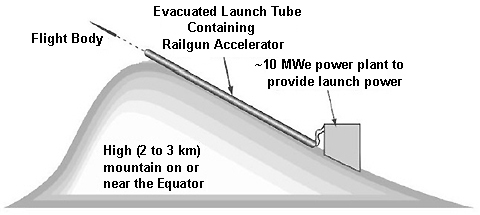
Artist’s rendering of a full size EM Launcher capable of launching payloads into orbit. Courtesy, IEEE.
Overview
The intent of this proposal is to hold an electromagnetic (EM) launch competition, in which entrants design and build small-scale EM launchers that boost gliders. The entrant that launches his or her glider to the highest apogee is awarded a $1,000 prize. In addition, all approved entrants are given $1,000 to help them build their EM launchers.
Background
All space development efforts are hindered by the cost of placing payloads in orbit. Reducing launch costs specifically aids space station development by allowing more mass to be placed into orbit for a given budget, increasing safety factors and redundancy, and facilitating unanticipated repair.
Most of the power in any rocket is used to launch the fuel and not the payload. Electromagnetic (EM) railguns would avoid that problem and would cost “<$600/kg, compared with the Space Shuttle (>$20,000/kg), provided that acceptable launch rates can be achieved”, according to Ian R. McNab, Senior Member, IEEE (Launch to Space With an Electromagnetic Railgun, IEEE Transactions on Magnetics, Vol. 39, No. 1, January 2003.)
Furthermore, EM launch technology could be deployed within the time of interest to the Lifeboat Foundation, as evidenced by the U.S. Navy’s intent to replace steam catapults on aircraft carriers with the Electromagnetic Aircraft Launch System. The technology has been demonstrated to continue working efficiently at high speeds, and thus can be applied to boost of spacecraft. Mature EM launch technology would serve as a complement to the rocket designs that were produced through the X Prize, with rocket launch for passengers and EM launch for cargo.
The Competition
The competition will be announced through various media outlets, with emphasis on informing university students and faculty. A tutorial on design and construction of small-scale EM launchers will be made available on the web. Teams wishing to enter the competition submit proposals to be reviewed by a committee chosen by the Lifeboat Foundation. The committee selects eight groups to award $1000 each for construction of a launcher. This money is considered a seed; entrants are not limited by this amount, but rules are intended to make this amount sufficient to build a competitive launcher. Approximately six months after the entrants are selected, the contest will be held.
There are minimal restrictions on the entries, as follows:
- Energy supplied to the launcher, from capacitors, batteries, a flywheel/generator, or other power supply, is limited to 2000 J. This rule prevents unlimited expenditures on power supplies, and focuses the design work on improving the efficiency of the launcher.
- All contestants must use the same glider, which will be supplied by the organizers at the time of contestant selection. This likewise focuses effort on launcher design.
- Groups that use voltages higher than 120 V must submit a circuit diagram and an additional waiver.
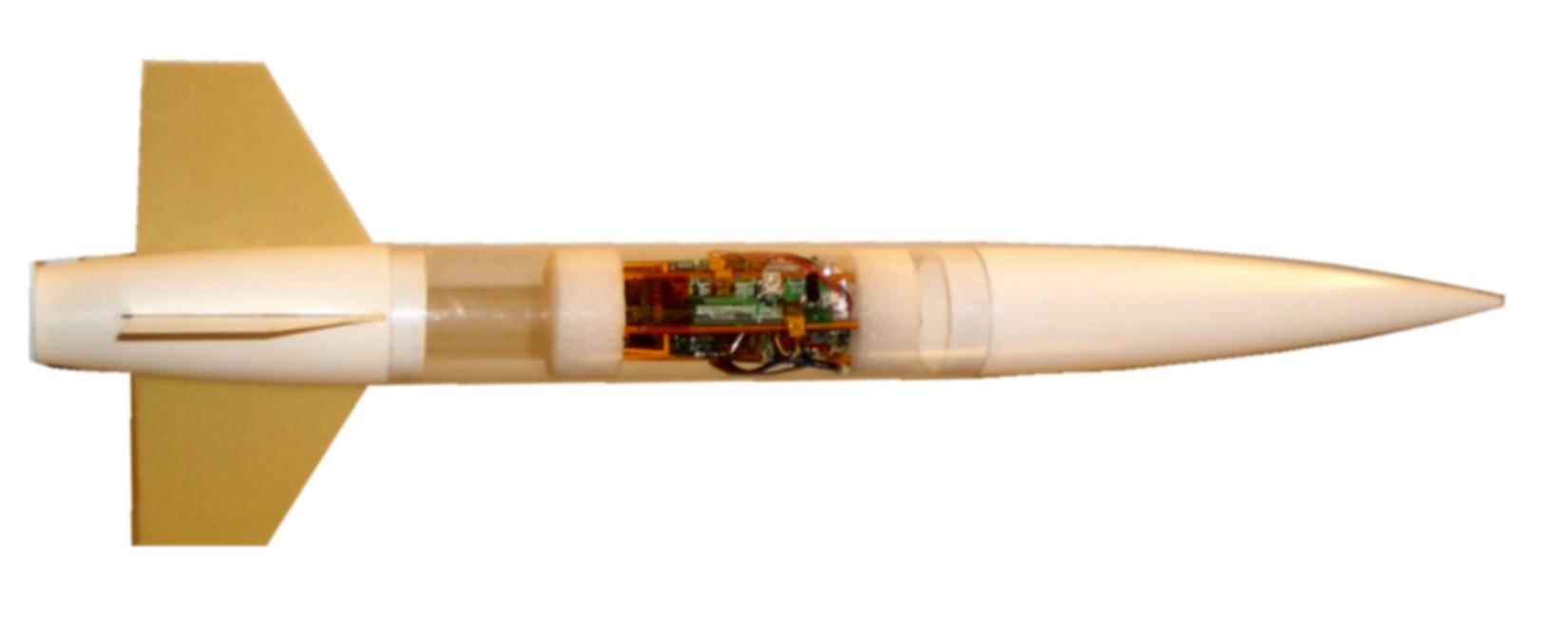
- The projectiles will be Estes Gnome rocket bodies ballasted to 25 g. They’re 14 mm in diameter and 260 mm long, with larger diameter fins. Replacing the original fins with pop-up fins will be permitted. “Regulation” gliders will be supplied on the day of the competition, but obtaining gliders for practice is the responsibility of the competitors.
This project advances both of the Foundation’s short-term goals, public education and advancement of space technology. The competitive nature of the event increases public interest, while the potential for improvement of the technology is great — many known launcher configurations have not been explored in depth, and other possibilities no doubt exist. If the contest is repeated annually, the energy limit and funding can be increased each year, up to levels useful for placing payloads into orbit.
Administration
Administration will be carried out by Dr. Phil Putman in conjunction with Lifeboat Foundation. Dr. Putman will prepare the design tutorial. Volunteers will assist with staffing the competition.
Budget
$8000 – Eight groups are given $1000 each for EM launcher
construction.
$1000 – Prize money.
$1000 – Misc. expenses, such as publicity, providing tutorial materials
and gliders, and rental fees associated with the
event.
Bio
Dr. Phil Putman has Bachelor’s and Master’s degrees in Electrical Engineering from Cornell University, and a Ph.D. in Materials Engineering from the University of Houston. He is currently at the Texas Center for Superconductivity and has competed in events such as the Ford Hybrid Electric Vehicle Challenge and the robot combat tournaments Robot Wars and BattleBots.