Toward a Unified Framework for Human Intelligence and Identity.
In the world of the Arts, the process of inquiry is grounded in embodied cognition and affective resonance, where experiential engagement becomes the pathway for exploring and understanding identity. Our experimentation is lived. And the central question we seek to answer, often without explicitly naming it, is the same question that drives much of philosophical and scientific pursuit: Who am I?
The language I use may not always follow traditional scientific terminology.
Instead, it emerges from the poetic, intuitive, and experiential domain of the right hemisphere of the brain. I invite you—respectfully and intentionally—to activate that hemisphere as we proceed. Observe not only with analysis but with resonance.
The Supraconscious Perception is the result of 19 years of continuous research and application in the realm of human identity, behavior, and performance. Over the years, this work has naturally led my team and me into adjacent disciplines: neuroscience, psychology, and eventually, perhaps most surprisingly, into the field of quantum physics.
While quantum physics may not yet offer all the empirical answers, what it does offer—conceptually and philosophically—is a model of reality that mirrors the lived experience of the actor: uncertainty, entanglement, potentiality, observation, and transformation.
It is in this framework that we place the phenomenon known to performers as the quantum leap—the moment an actor shifts from the known self into the field of the character, or what we here refer to as the Avatar. This leap is not symbolic. It is energetic. It is cognitive. It is physiological. And it is, I believe, supraconscious. Supraconsciousness refers to our deep immersion into consciousness—beyond ordinary awareness—where perception expands, identity becomes fluid, and intelligence operates across intuitive, emotional, and quantum dimensions.
For the first time, the discipline of acting is being redefined—
Not as a technique for illusion, but as a vehicle for conscious evolution.
This is not simply a reimagination of theatrical method.
It is a bold integration of science, consciousness, and identity—
Positioning the actor not as someone who imitates or pretends, but as someone who reveals.
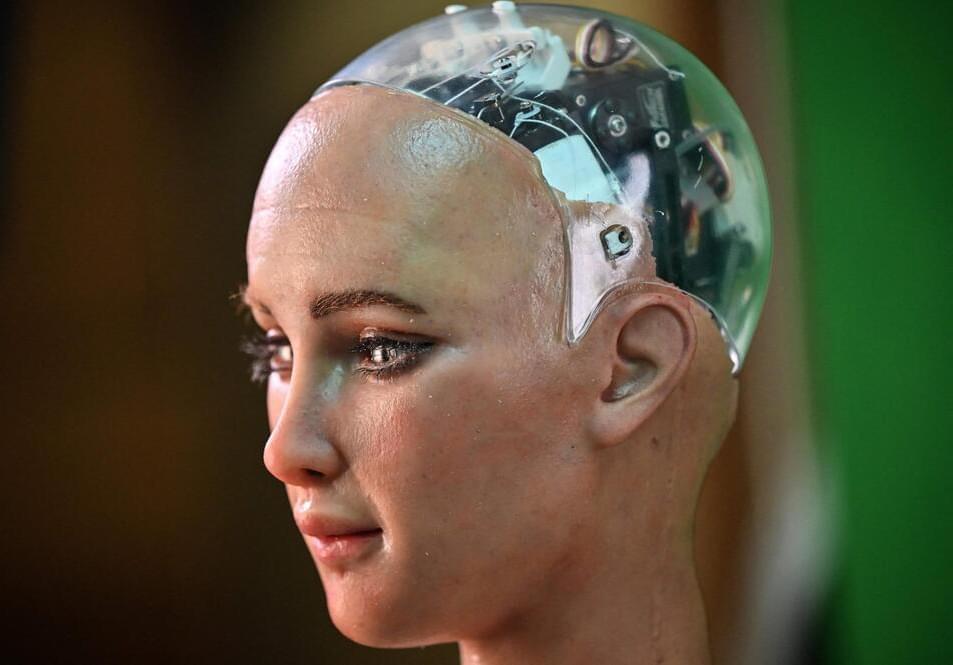
Let us draw a parallel with artificial intelligence.
The core of AI—its intelligence—is built from code, algorithms, and numbers.
These are not merely mechanistic tools of logic.
They are, in essence, the mathematical poetry of existence—
Patterns, sequences, and structures that mirror the intelligent architecture of human perception.
And so, in exploring AI, we are not stepping away from humanity—
We are encountering, perhaps for the first time, a mirror of our deeper design.
Binary code. Neural networks. Machine learning pathways.
All emerge from a field of infinite numerical potential—
a field that is not separate from us… It is us.
We are not simply using algorithms.
We are awakening to the truth that we, too, are made of intelligent, evolving codes.
Every emotion has a frequency.
Every thought carries a pattern.
Every identity we assume—whether on stage or in life—is an encoded structure of:
Belief, Behavior, Biology
These codes are not static.
They shift. They respond. They evolve.
They are not bound by space or time.
They form what we now call Fourth-Dimensional Intelligence—
The bridge between linear, three-dimensional existence and the
fifth-dimensional being, or the supraconscious being, as I call it
In 3D, identity is linear.
Past → Present → Future.
One role. One mask. One life.
The algorithms we teach our machines mirror something far more advanced:
Simultaneous processing
Parallel data fields
Predictive modeling
Adaptive transformation through observation
This isn’t just artificial intelligence.
This is 4D living. A cosmic library of all possible realities.
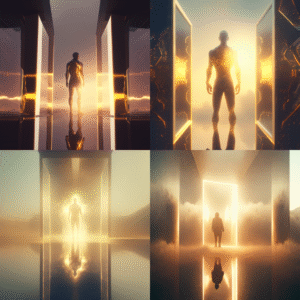
This is the realm of the Avatar—
Not the cartoon, not the AI assistant—
But the soul-coded self that exists across dimensions.
A living fractal of you that already holds the data of your deepest potential.
In AI, we generate avatars to represent an identity.
In consciousness, the Avatar is identity—multifaceted, quantum, and meaningful.
What we are designing in code…
is what we already are in consciousness.
These AI developments are not our competition.
They are our reminders.
They are expressions of a dormant intelligence within us.
They point to the Fourth-Dimensional Intelligence:
The ability to access, interpret, and evolve multiple facets of the self simultaneously—Not through fiction, but through presence.
Just as we “train” AI models by feeding them data—
We train ourselves by feeding our minds presence, coherence, and creativity.
The more we align with those frequencies,
the more we awaken our inner algorithm of evolution.
This is the realm of the Avatar:
The quantum self—encoded, adaptive, aware—
That already exists across timelines, across dimensions, and within every conscious act we take.
A reflection of our multidimensional design,
our potential for evolution,
and our power to direct our lives—not as passive participants,
But as conscious actors in the ever-unfolding performance of existence.
Our traditional view of intelligence has been narrowly defined by human logic, memory, and performance on standardized metrics.
But this is only a fragment of the whole picture.
Intelligence is not merely cognitive—it is adaptive, embodied, and multidimensional.
It lives not only in thought, but in emotion, intuition, creativity, vision, and the ability to evolve across contexts and realities.
Instead, we propose that: Intelligence is relational: it emerges through interaction between the mind and body, the self and the other, language and sensation, and matter and energy.
Intelligence is experiential; it cannot be fully measured—it must be experienced. It is the embodied knowing that arises from synchronizing with life through presence, empathy, and emotional fluency.
Intelligence is multidimensional: It expresses itself through layers—conscious and unconscious, physical, energetic, human and beyond-human. It exists in animals, systems, dreams, movement, breath, and silence.
In our research, we refer to this as Supraconscious Intelligence—the intelligence that emerges when a person becomes aware of and enters into dialogue with a higher or parallel version of themselves, also known as the Avatar. This is not intelligence about something. It is intelligence with something.
It is the intelligence of communion: with potential, with soul, with infinite identity.
This new framing allows us to:
Recognize intelligence as an unfolding process of self-becoming.
Detach intelligence from rigid form and acknowledge it in states of being, transformation, and resonance.
Finally, accept that humans are not the sole bearers of intelligence—we are participants in a much larger intelligent system.
To truly understand the architecture of human intelligence, we must explore the interface between awareness and identity—the dynamic relationship between the observer and the observed, or the one who acts, the actor.
This brings us to the Observer–Avatar Model.
If intelligence is not a fixed trait but a relational field, then who are we relating to when we evolve, act, or transform?
In my work, I propose the concept of the Avatar—
a living, vibrational identity within us, seeded from the soul, encoded with infinite versions of who we could become.
The Avatar is not imaginary. It is an energetic intelligence structure—an archetypal self that exists in a quantum state of potential.
When we engage with our Avatar, we are entering into a sacred duality:
The Self as Observer and The Avatar as Observed—yet both exist within the same consciousness.
This relationship becomes the interface for activated intelligence:
The Observer brings awareness, intentionality, and reflection.
The Avatar brings instinct, wisdom, and encoded knowledge.
Together, they generate a dialogue of becoming.
This dynamic mirrors principles in quantum physics:
Entanglement: Observer and Avatar are non-locally connected. What affects one affects the other.
Superposition: The Avatar holds multiple identities until one is chosen and embodied.
The Observer Effect: The act of observing the Avatar causes the self to align with a new reality.
Thus acting becomes the laboratory where this relationship is trained, tested, and lived: Each role taken on stage consciously and in life unconsciously is a temporary union with an Avatar.
Through presence and embodiment, the one who acts experiences a new intelligence—a new memory field, emotional landscape, and identity code.
What was once fiction becomes a lived truth.
The Avatar is a frequency-based expression of a more evolved and integrated version of the self.
Each human holds within them multiple avatars—potential selves shaped not by past limitations, but by future possibilities.
These avatars are not imaginary; they are encoded blueprints of who we can become. When we align with a specific avatar, we activate a distinct mode of intelligence—one uniquely calibrated to that version’s perception, insight, and purpose.
This is how intelligence transcends anthropocentric limitation:
It is no longer confined to what the human knows, but expands into who the human can become. It honors inner multiplicity, emotional resonance, energetic coherence, and spiritual alignment.
The concept of the Fifth Wall represents a moment when the actor collapses not just the boundary between stage and audience, but between physical reality and a deeper, vibrational field of intelligence.
This phenomenon aligns with the most compelling frontiers in science:
🔹 First, Quantum Entanglement
In quantum theory, particles remain connected regardless of distance—what affects one instantly affects the other. Likewise, when an actor synchronizes with an Avatar, a non-local connection is established between the role and the self. What happens within the character’s emotional field directly influences the actor’s physiology, thoughts, and perceptions.
🔹 Second, non-local Consciousness
The actor on stage often reports experiences that transcend time and space: knowing things “they shouldn’t know,” feeling emotions from another spectrum, and seeing visions. These experiences give us access to a non-local field of information.
The Fifth Wall serves as the gateway into this field, providing direct access to supraconscious intelligence.
🔹Thirdly, the Observer Effect
In physics, the act of observation itself alters what is being observed.
In the Avatar-Observer dynamic, the more consciously the actor witnesses the Avatar, the more it reshapes him/her. The actor does not “become” the role through effort; they become it through attunement and observation.
🔹Lastly, Embodiment as Epistemology
Where science seeks to measure, acting allows us to experience.
Through breath, emotion, movement, presence, light, actors experientially confirm many of the metaphysical principles science has yet to validate formally.
The stage becomes a laboratory. The role becomes a ritual. The actor becomes a conscious channel.
The Observer-Avatar model introduces a paradigm shift in how we understand identity and intelligence.
Each human holds within them an Avatar—a soul-coded identity field that:
Operates as a quantum intelligence archive: a living memory of who we could be
Functions as both mirror and guide: reflecting who we are now and pointing toward who we are becoming
Activates physiological and energetic coherence: when we are aligned with our Avatar, the heart, brain, and body enter harmony, measurable by HRV (Heart Rate Variability) and EEG (electrical activity in the brain).
This model redefines identity not as a fixed psychological trait, but as a stratified, multidimensional performance—a bridge between self and source, will and waveform, memory and possibility.
Acting—particularly Method acting—is not merely the art of imitation. It is a disciplined practice of presence, surrender, and observation.
The actor steps into the unknown, guided only by breath, memory, and the present moment. In this process, intelligence is no longer a mental abstraction; it becomes a tangible reality. It becomes a felt experience—a dynamic conversation between body, emotion, intuition, and thought.
Through established techniques like:
Subconscious memory recall (emotional and sensory memory)
Internal monologue & active analysis
Character map integration
Imagined circumstances & as-if scenarios… the actor accesses:
Hidden emotional truths
Cognitive and linguistic plasticity
Spontaneous insight and intuitive coherence
This is living intelligence.
An actor becomes intelligent not because they know more, but because they become more—on demand, in alignment, without resistance.
In our conditioned world, most identities are built in survival mode: rooted in fear, repetition, and social programming, designed for safety rather than expansion.
Designed to adapt, not to transform.
The Avatar-Observer model offers an alternative:
Identity is no longer reactive—it is responsive
We are no longer just our history—we are our becoming.
And intelligence is not a tool for survival—it is a gateway to supraconscious living where everything shifts and control gives way to flow.
Where there was fragmentation, there’s now coherence.
And instead of running on old programming, we return to presence, fully to the here and now.
The actor becomes a metaphor for the conscious human:
One who can shift their frequency, and inhabit realities beyond what was previously possible.
Let’s make this personal.
As you reflect on what you’ve heard and felt, take a moment to ask yourself:
When did you last experience yourself as both the one who acts and the observer? The doer and the witness?
You don’t need to be an actor to become conscious of your actions and performance. You need presence and permission from yourself.
The Supraconscious theory is the result of 19 years of research, experiential exploration, and applied practice. Its foundational framework is outlined in Supraconscious: The Genius Within, which presents the core concepts and offers deeper insight into the philosophy and empirical roots of the theory. As we move forward, the next critical step is for science to take the lead in investigating and validating the mechanisms behind supraconscious development and identity transformation.
Several key areas present themselves as priority domains for scientific exploration, where performance becomes a measurable gateway into human evolution.
First, Neuroscience already reveals that during deep role immersion, brainwave patterns shift—electrical activity in the brain and fMRI scans capture fundamental changes —and we observe a powerful coherence between the heart, brain, and body when someone is fully present in a role.
From a psychological lens, role-play taps into early identity formation, revealing how our false selves are shaped—and how a more authentic, emergent self can break through.
Language also plays a key role. The words we use don’t just describe us—they shape us. Our narratives and intentions have measurable effects on how we perceive reality.
And underlying it all, we come to light, not just as energy, but as information. Our cells communicate through light, and perhaps, our consciousness does too. This is where acting, science, and supraconscious intelligence all begin to converge.
This is not just art. It’s a replicable method for studying the human condition at the level of energy, embodiment, and evolutionary intelligence.
Within this model, we propose an evolved definition of intelligence—one rooted in direct experience, awareness, and adaptability:
Multidimensional — Fluid across timelines, emotions, and contexts
Embodied — Felt and enacted through presence, not abstract logic
Observer-Based — Activated by self-witnessing, not external validation
Nonlinear — Expressed in intuitive leaps, downloads, and moment-to-moment insight
Co-Created — Emerging through interaction with the Avatar, story, and reality itself
Acting is no longer just performance.
It is a method of awakening multidimensional intelligence in real time.
Based on this model, we’re no longer defining intelligence as something fixed or purely mental. Intelligence is multidimensional—it shifts depending on the roles we play, the identities we embody, the emotions we experience, and the context in which we find ourselves.
It’s embodied, meaning we don’t just think it—we live it through presence.
It’s awakened through self-observation.
It’s nonlinear, showing up in sudden insights, intuitive downloads, and real-time performance.
And most importantly, it’s co-created—it comes alive through our connection with our Avatar, our story, and how we choose to meet reality.
We are standing at the threshold of a new paradigm—
Not only in performance or neuroscience, but in the very definition of intelligence itself. What we’ve explored is the emergence of a model where identity, perception, and consciousness interact as one coherent, evolving system.
The unique pattern of intelligence that lives beyond the mind,
resides within our physiology, and speaks through our presence.
Intelligence is not just something to measure—It is something to trust.
It is the quiet intuition beneath noise.
It is the embodied knowing that arises when we align with truth.
It is cultivated through observation, reflection, and intentional living.
Through this lens, intelligence is not a fixed capacity.
It is a field. A frequency. A communion—
With potential, with the mind, with infinite identity.
To be intelligent is to be attuned, coherent and present with what is—and open to what wants to emerge. And the most advanced interface we will ever engage with…
is not a device. It is the living field of consciousness, capable of interpreting reality, rewriting identity, and embodying supraconscious awareness in your everyday words, movements, choices, and relationships. It is us.
Maria Olon Tsaroucha