Toggle light / dark theme

Get the latest international news and world events from around the world.

Log in for authorized contributors

Frontiers: Cardiovascular diseases are the leading cause of death in the world

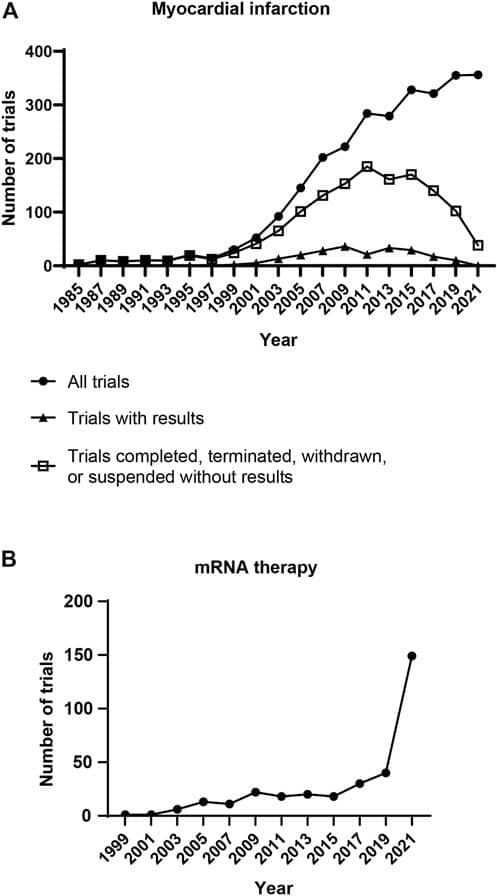
This is partly due to the low regenerative capacity of adult hearts. mRNA therapy is a promising approach under development for cardiac diseases. In mRNA therapy, expression of the target protein is modulated by delivering synthetic mRNA therapy benefits cardiac regeneration by increasing cardiomyocyte proliferation, reducing fibrosis, and promoting angiogenesis. Because mRNA is translated in the cytoplasm, the delivery efficiency of mRNA into the cytoplasm and nucleus significantly affects its therapeutic efficacy. To improve delivery efficiency, non-viral vehicles such as lipid nanoparticles have been developed. Non-viral vehicles can protect mRNA from enzymatic degradation and facilitate the cellular internalization of mRNA. In addition to non-viral vehicles, viral vectors have been designed to deliver mRNA templates into cardiac cells. This article reviews lipid nanoparticles, polymer nanoparticles, and viral vectors that have been utilized to deliver mRNA into the heart. Because of the growing interest in lipid nanoparticles, recent advances in lipid nanoparticles designed for cardiac mRNA delivery are discussed. Besides, potential targets of mRNA therapy for myocardial infarction are discussed. Gene therapies that have been investigated in patients with cardiac diseases are analyzed. Reviewing mRNA therapy from a clinically relevant perspective can reveal needs for future investigations.

Cardiovascular diseases are a group of diseases related to heart muscles, blood vessels, and valves. The death caused by cardiovascular diseases worldwide in 2019 was 17.9 million, which accounts for approximately 30% of total death in the year (DofE and SAPD, 2019; World Heath Organization, 2021). Myocardial infarction and strokes result in over 80% of deaths from cardiovascular diseases. Percutaneous coronary intervention treatment has significantly lowered mortality after acute myocardial infarction. However, the cardiac function will be permanently impaired. Newborn mammals can regenerate the injured heart, but this regenerative capacity disappears in adults (Porrello et al., 2011; Ye et al., 2018). The declined regenerative capacity in aged hearts is partly due to decreased cardiomyocyte proliferation, lowered angiogenesis, and increased fibrosis (Rivard et al., 1999; Senyo et al., 2012; Notari et al., 2018).
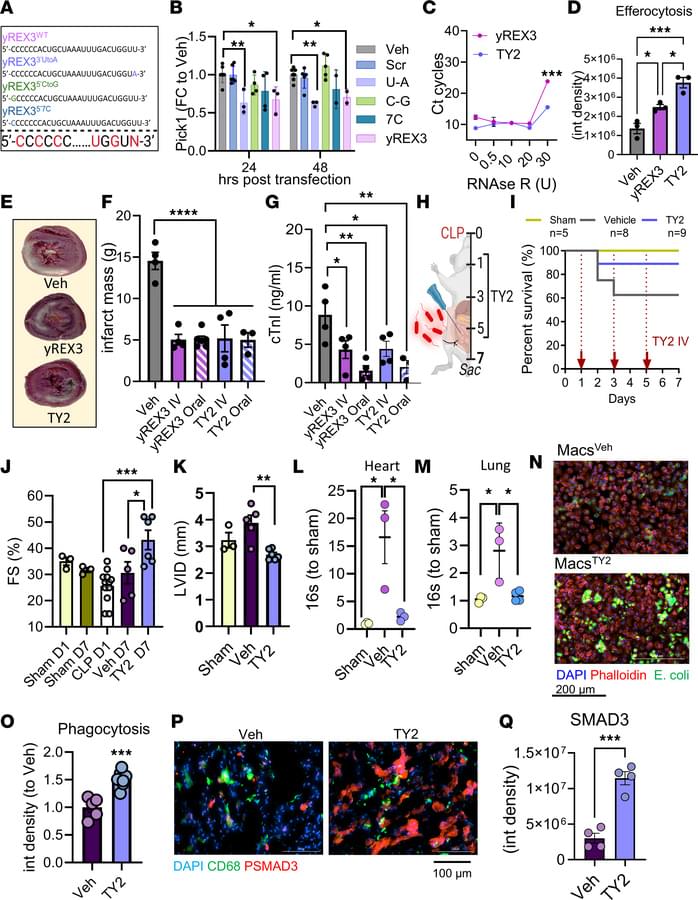
TY2 is protective in a rat model of MI and in a model of cecal ligation and puncture–induced sepsis

This Research Letter offers a creative approach to sepsis based on a naturally occurring efferocytosis-enhancing RNA

Small noncoding RNA TY2 enhances efferocytosis and improves outcomes in a mouse model of sepsis by Alessandra Ciullo & team: https://doi.org/10.1172/jci.insight.

The image shows exposure to TY2 increases E. coli clearance by bone-marrow derived macrophages as indicated by fluorophore as a reporter of efferocytosis (green).


Address correspondence to: Alessandra Ciullo, Smidt Heart Institute, Cedars-Sinai Medical Center, 8,700 Beverly Blvd., Los Angeles, California 90,048, USA. Email: [email protected].

Find articles by Ciullo, A. in: | Google Scholar

Smidt heart institute, cedars-sinai medical center, los angeles, california, USA.

Association of Brain Network Perturbations With Response to Vagus Nerve Stimulation in Children With Drug-Resistant Focal Epilepsy

This study investigated whether preimplantation functional network perturbations in relation to interictal epileptiform discharges are associated with vagus nerve stimulation response in children with focal drug-resistant epilepsy.


Background and Objectives.

THOR AI solves a 100-year-old physics problem in seconds

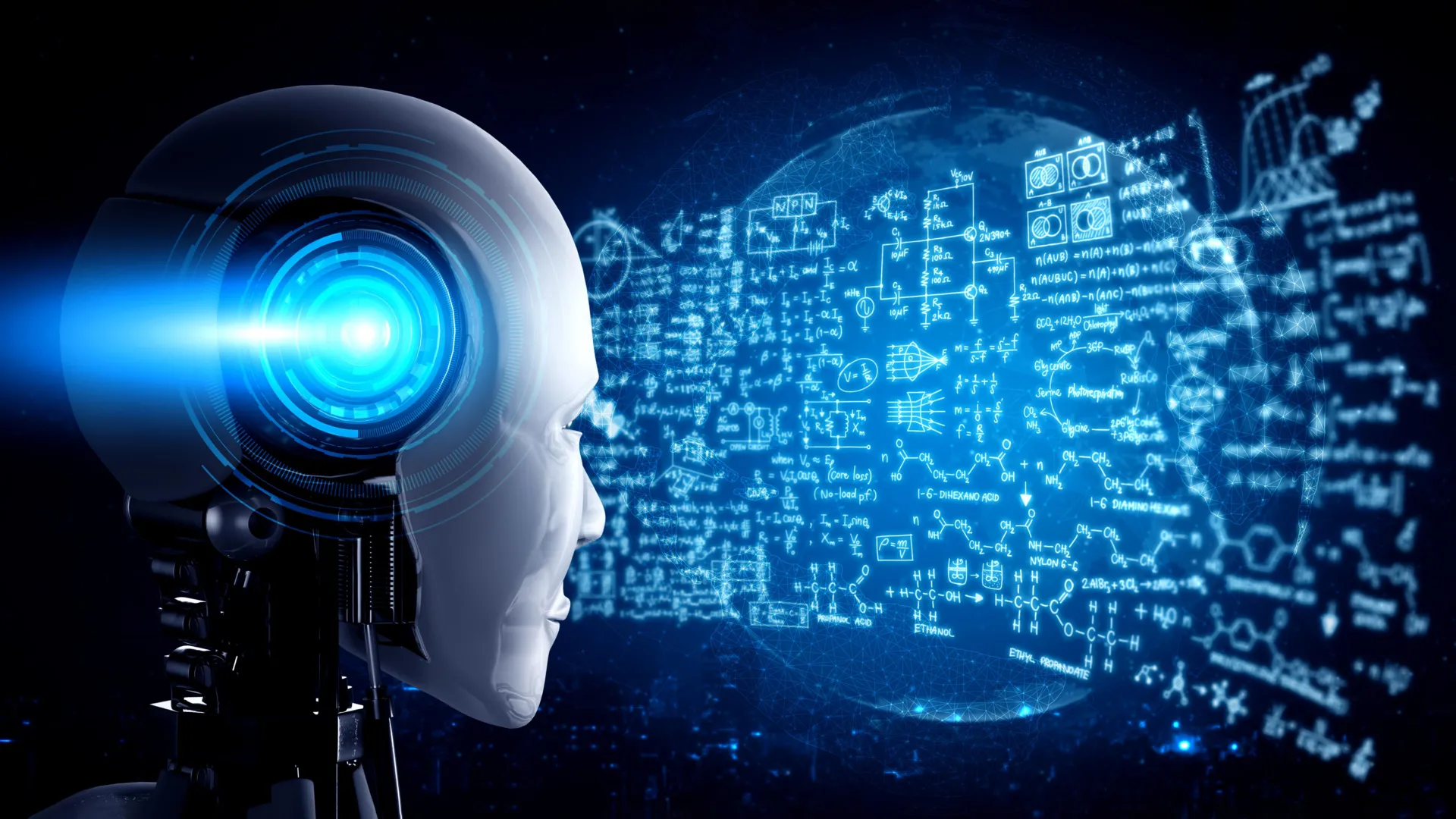
A new AI framework called THOR is transforming how scientists calculate the behavior of atoms inside materials. Instead of relying on slow simulations that take weeks of supercomputer time, the system uses tensor network mathematics and machine-learning models to solve the problem directly. The approach can compute key thermodynamic properties hundreds of times faster while preserving accuracy. Researchers say this could accelerate discoveries in materials science, physics, and chemistry.

Study Reveals a ‘Turning Point’ in US Life Expectancy

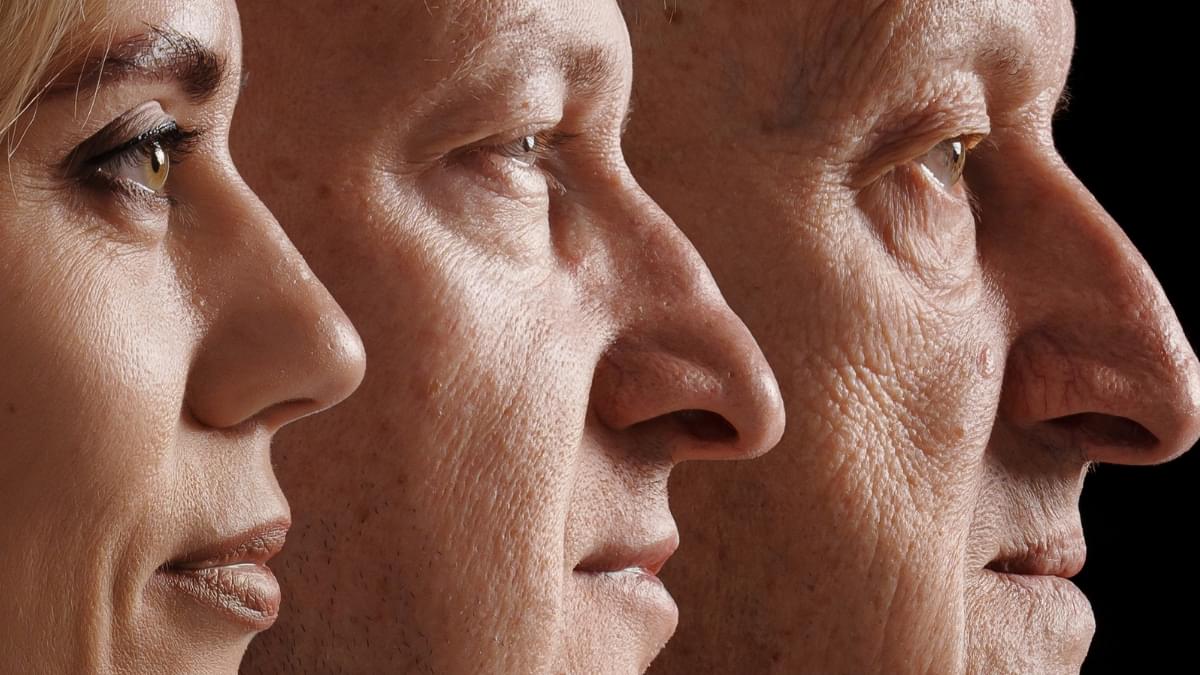
A worrying health pattern for some of the Gen X and Millennial crowd has been highlighted by a new study: people born between 1970 and 1985 are experiencing worse mortality rates than the generations before them, across multiple causes.

The international team of researchers analyzed cause-of-death records over more than 40 years, between 1979 and 2023, to examine changes in life expectancy and the underlying reasons that could be shaping it.

What stands out is that being born in the 1950s – the middle of the Baby Boomer generation – marks a turning point: from steadily decreasing mortality rates and better health outcomes compared with earlier groups, to the opposite.

Robot dogs are protecting data centers. Operators are seeing payoffs

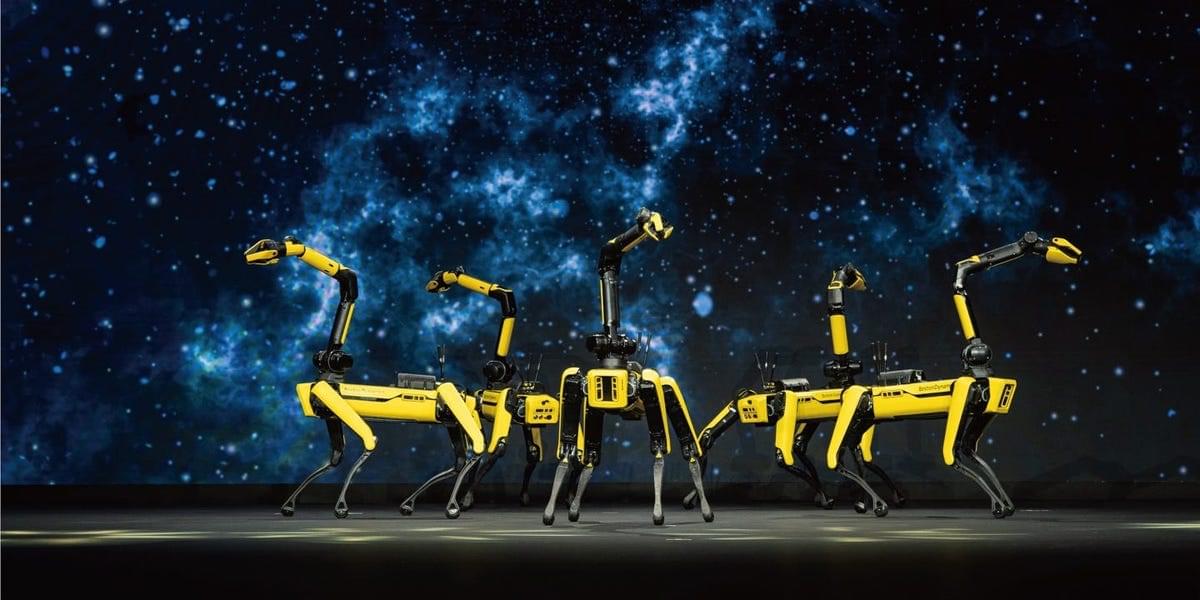
As companies pour billions into sprawling industrial campuses for cloud and AI computing, some data center operators are experimenting with four-legged bots — about the size of large dogs — that can patrol fences, inspect equipment, and flag any issues before they turn into costly outages.

“I was literally at a data center this week,” Merry Frayne, senior director of product management at Boston Dynamics, the maker of Spot, told Business Insider. “We’ve seen a huge, huge uptick in interest from data centers in the last year, I’d say, which is probably not surprising given the investment in that space.”

Robot dogs have already been deployed by first responders, the military, and in other industrial sectors such as oil and mining. But the rapid pace of data center buildouts is creating another niche for the mechanical quadrupeds.

Feed Your Curiosity with Curiosity Box, use code ‘isaac25’ to get 25% off

From abiogenesis to AI, we rank the top Great Filter candidates and test them against the data to see which best explains the Fermi Paradox. Is the universe empty, or just dangerous? We explore ten filters—cosmic, biological, and civilizational—that could silence civilizations before they spread.

Visit our Website: http://www.isaacarthur.net
Join Nebula: https://go.nebula.tv/isaacarthur
Support us on Patreon: / isaacarthur
Support us on Subscribestar: https://www.subscribestar.com/isaac-a… Group: / 1,583,992,725,237,264
Reddit: / isaacarthur
Twitter: / isaac_a_arthur on Twitter and RT our future content.
SFIA Discord Server: / discord
. Credits:
Could We Accidentally Destroy the Universe?
Written, Produced & Narrated by: Isaac Arthur
Select imagery/video supplied by Getty Images
Music Courtesy of Epidemic Sound http://epidemicsound.com/creator.

Chapters
0:00 Intro
5:08 #10 The Fine-Tuned Universe & Rare Earth
12:55 #9 Abiogenesis (The Origin of Life)
16:29 #8 Complex Cells & Eukaryotes
20:14 #7 Multicellularity and Specialization
22:39 #6 Sexual Reproduction & Genetic Innovation
23:54 #5 Complex Animal Life
25:24 Curiosity
26:39 #4 Extended Childhood & Cooperative Rearing
29:17 #3 Long-Term Climate Stability
31:40 #2 Intelligence That Produces Technology
35:11 #1 The Late Filters: Surviving Technology, Ourselves, and Expanding Beyond the Home System.

Read more

We Might Be Completely Wrong About Reality

Space. Time. Matter. What is reality? And if it’s so fundamental, why do we all experience it so differently? Join us for a marathon through the discoveries and paradoxes that suggest modern physics is pointing to a deeply uncomfortable truth: that our picture of the universe is far from complete, and what we think about reality may be completely wrong.

Love New Scientist? For a specially discounted New Scientist digital subscription, go to https://www.newscientist.com/youtube

Subscribe ➤ https://bit.ly/NSYTSUBS

00:00 Reality Is Already Broken
00:57 Scientists Build a Window into the Fourth Dimension
23:16 The Physicist Who Says Reality Is Not What It Seems
1:28:45 The Black Hole Paradox That Keeps Physicists Awake at Night
1:50:40 Sean Carroll: The Many Worlds of Quantum Mechanics
2:46:40 What are the foundations of reality?

Get more from New Scientist:
Official website: https://bit.ly/NSYTHP
Facebook: https://bit.ly/NSYTFB
Twitter: https://bit.ly/NSYTTW
Instagram: https://bit.ly/NSYTINSTA
LinkedIn: https://bit.ly/NSYTLIN

About New Scientist:

/* */