Toggle light / dark theme

Get the latest international news and world events from around the world.

Log in for authorized contributors

Hearing research traces evolution of key inner ear protein

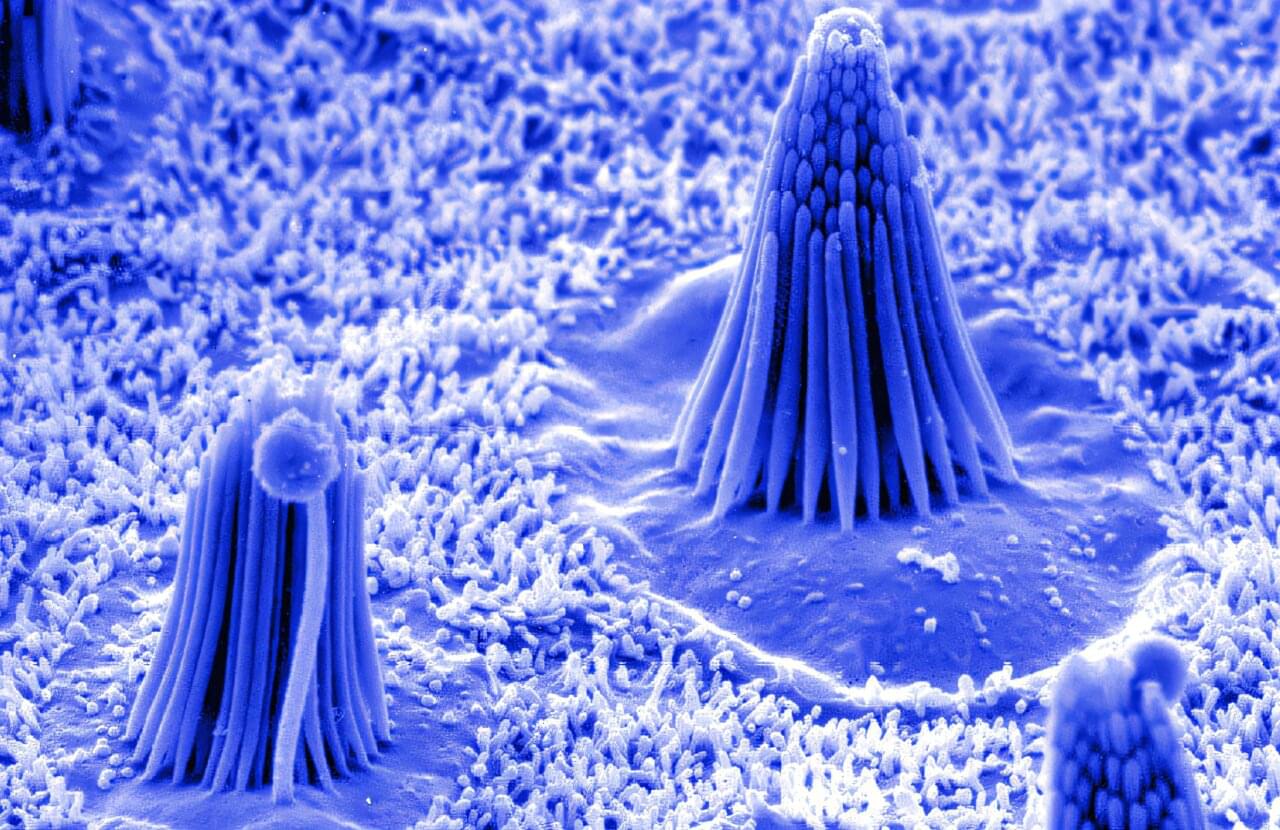
In the intricate machinery of the inner ear, hearing begins with a protein that moves a few billionths of a meter up to 100,000 times per second. That protein, called TMC1, sits at the tips of sensory hair cells deep in the snail-shaped cochlea. When sound waves move these microscopic hairs, TMC1 acts as a channel, opening and allowing charged particles to flow into the cell and trigger an electrical signal to the brain.

Without TMC1, that signal never starts. Mutations in the TMC1 gene are a well-known cause of hereditary hearing loss in humans. Because of this central role, TMC1 is an attractive target for researchers designing gene therapies aimed at restoring hearing. Several groups are testing ways to supply working copies of the gene or fix harmful mutations.

For these efforts to be safe and effective, scientists need to know in detail how TMC1 is built, how it opens, and which parts of the protein are most sensitive to change. However, the hair-cell system that includes TMC1 is so complex, sensitive, and hard to access that it is notoriously difficult to take apart and study directly.

‘Cool’ detectors cut neutrino mass upper limit by an order of magnitude

Their mass is extremely low, but how light are neutrinos really? A collaboration comprising German and international research groups has optimized its experiments to determine the mass of these “ghost particles.” In doing so, they succeeded in further adjusting downward the upper limit on the neutrino mass scale that had previously been determined in similar experiments. The study is published in the journal Physical Review Letters.

As part of the “Electron Capture in Ho-163 Experiment” (ECHo), the researchers are using the isotope Holmium-163 (Ho-163), whose decay processes allow for conclusions on the neutrino mass. According to ECHo spokesperson Prof. Dr. Loredana Gastaldo, a scientist at Heidelberg University’s Kirchhoff Institute for Physics, the current results verify that even larger-scale investigations will be feasible in future to get even closer to the mass of neutrinos and ultimately precisely determine it.

Neutrinos are elementary particles with extremely low mass that have no electrical charge. Because their interaction with matter is very weak, the properties of these “ghost particles” are very difficult to determine. This is especially true for the neutrino mass, which has yet to be precisely measured, with only its upper limit being known. According to Gastaldo, determining the mass could pave the way for new theoretical models beyond the standard model of particle physics and thereby contribute to a better understanding of the evolution of our universe.

JWST reveals most distant red galaxy yet at redshift 11.45

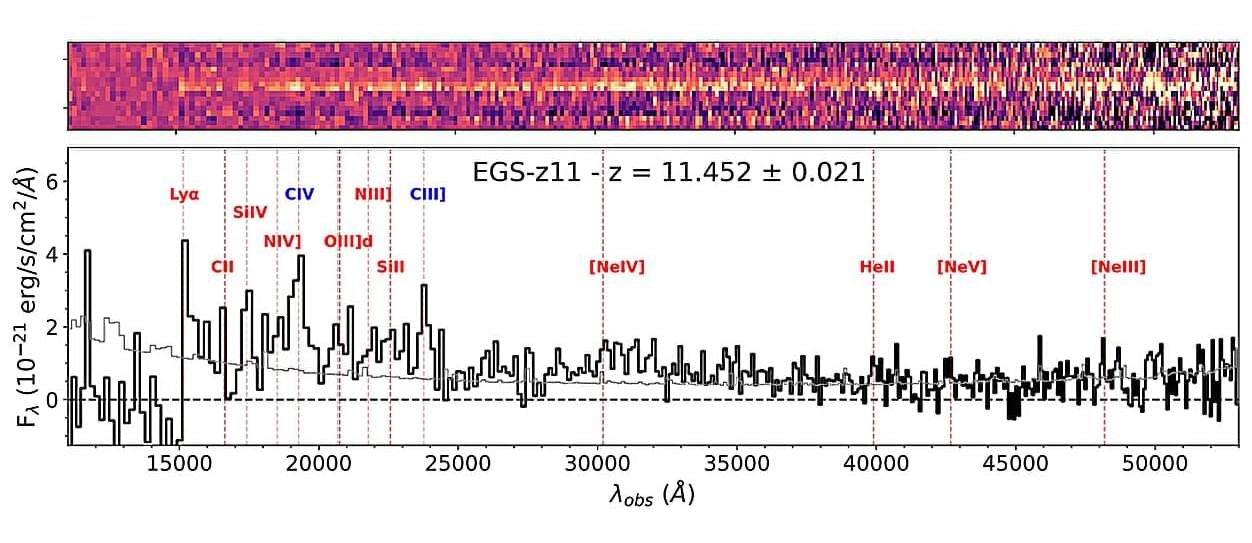
Using the James Webb Space Telescope (JWST), astronomers have discovered a new red galaxy at a redshift of approximately 11.45. The newfound galaxy, which received designation EGS-z11-R0, turns out to be the most distant red galaxy detected to date. The discovery was detailed in a paper published March 18 on the arXiv pre-print server.

High-redshift galaxies (with redshifts above 10.0) identified by JWST, therefore when the universe was only a few hundred million years old, are predominantly characterized by extremely blue rest-frame ultraviolet (UV) slopes. This is due to the fact that they are composed of very young, massive stars that emit intense UV light, with minimal dust attenuation.

However, recent observations have revealed the existence of a small population of high-redshift red galaxies, therefore exhibiting significantly redder UV continua. It is assumed that these galaxies are already full of dust and mature stars.

Webb and Hubble share the most comprehensive view of Saturn to date

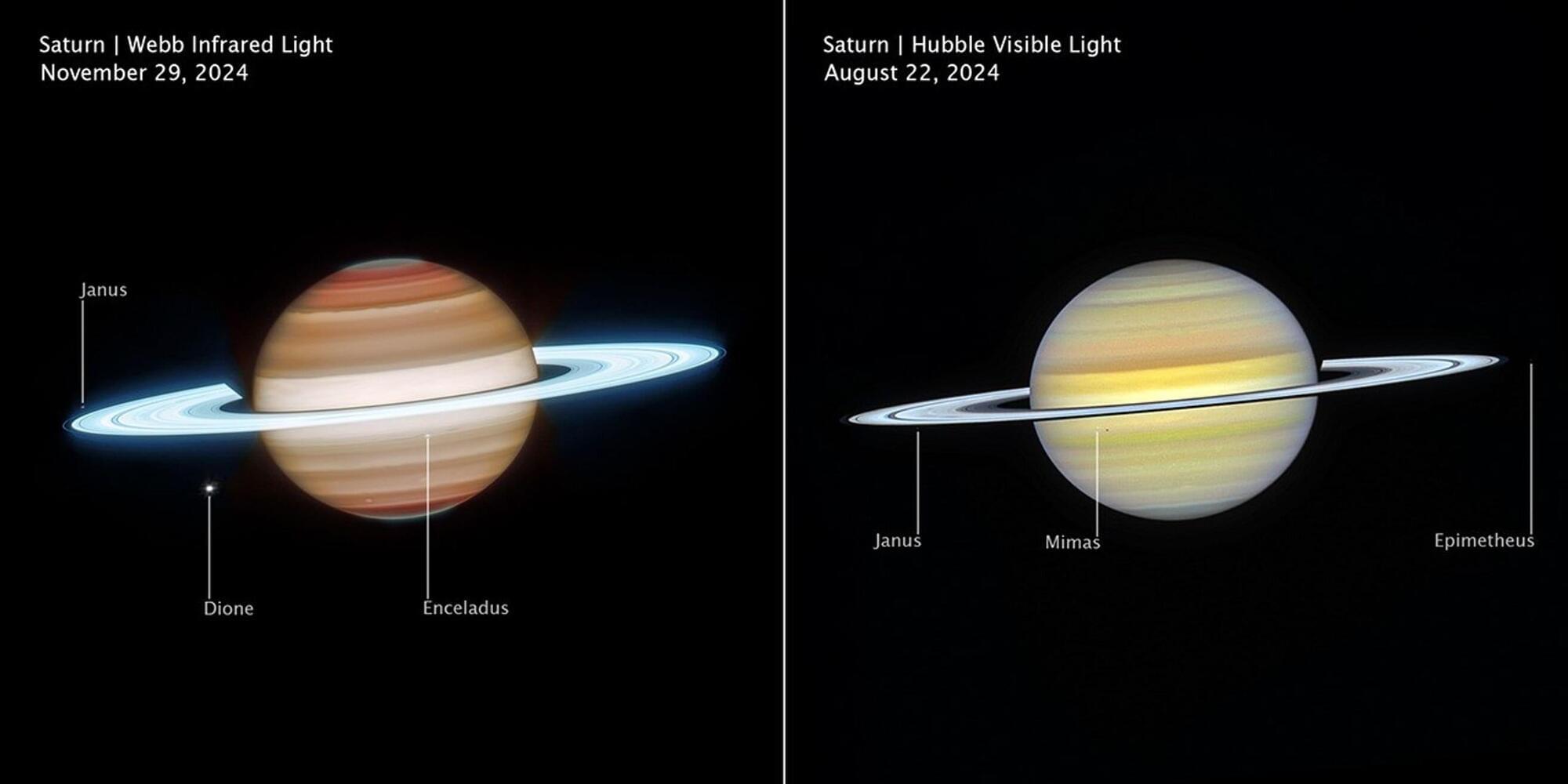
NASA’s James Webb Space Telescope and Hubble Space Telescope have teamed up to capture new views of Saturn, revealing the planet in strikingly different ways. Observing in complementary wavelengths of light, the two space observatories provide scientists with a richer, more layered understanding of the gas giant’s atmosphere.

Both sense sunlight reflected from Saturn’s banded clouds and hazes, but where Hubble reveals subtle color variations across the planet, Webb’s infrared view senses clouds and chemicals at many different depths in the atmosphere, from the deep clouds to the tenuous upper atmosphere.

Together, scientists can effectively “slice” through Saturn’s atmosphere at multiple altitudes, like peeling back the layers of an onion. Each telescope tells a different part of Saturn’s story, and the observations together help researchers understand how Saturn’s atmosphere works as a connected three-dimensional system. Both complement previous observations done by NASA’s Cassini orbiter during its time studying the Saturnian system from 1997 to 2017.

DNA origami precisely positions single-photon emitters for quantum technologies

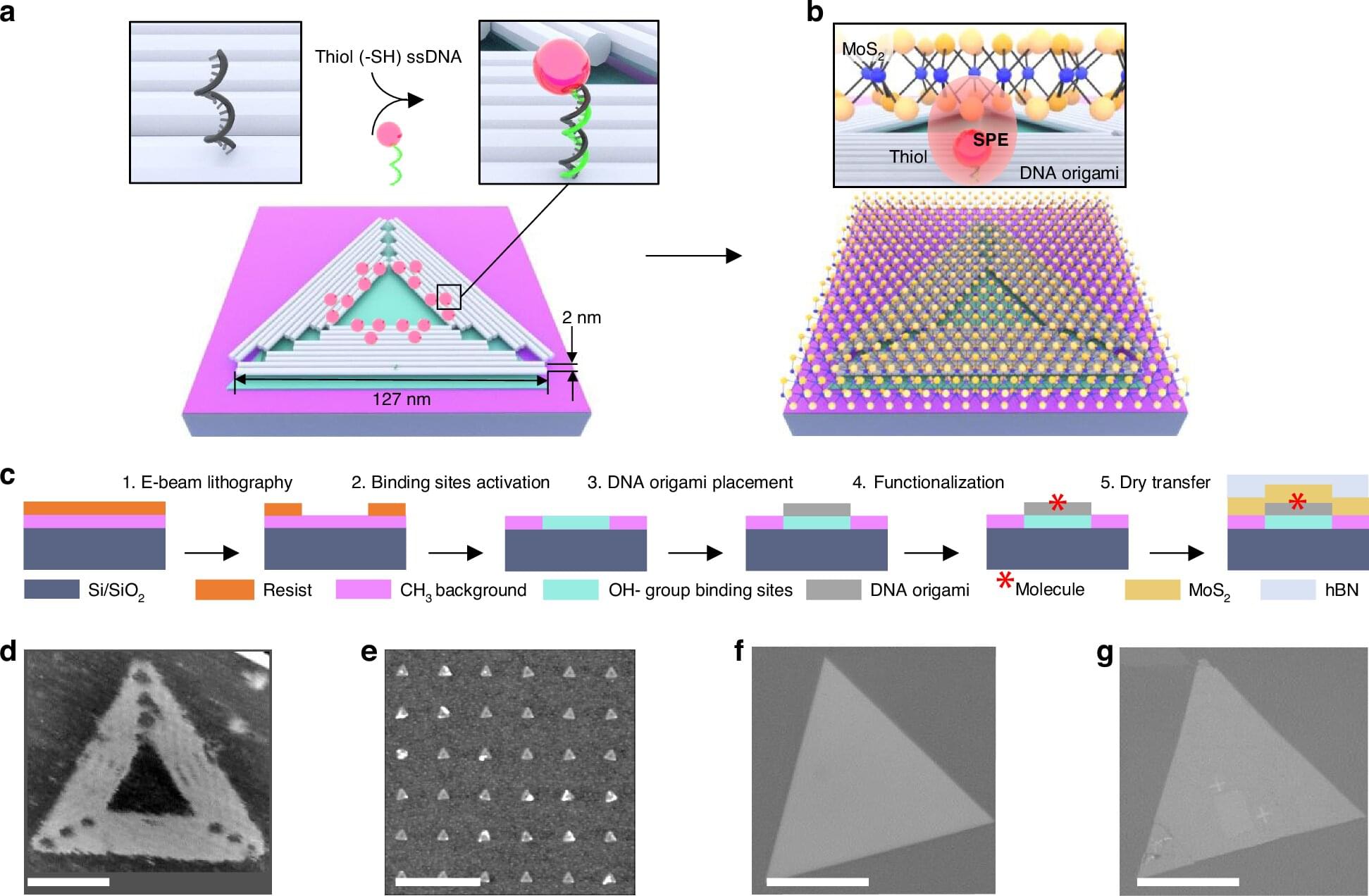
An international research team led by scientists from Skoltech has developed a method to position molecules on the surface of ultrathin materials with unprecedented precision using molecular DNA self-assembly, enabling the creation of quantum light sources. The results, published in the journal Light: Science & Applications, pave the way for the production of compact and efficient components for future quantum computers and secure communication networks.

Two-dimensional materials such as molybdenum disulfide are promising candidates for quantum light sources due to their ability to emit photons under laser excitation. However, until now, scientists have been unable to precisely control the location of emission centers—they emerged randomly upon ion beam irradiation or mechanical deformation of the material.

The authors of the study proposed a different approach. The research is based on the DNA origami method, which allows the construction of nanoscale objects of a specified shape from DNA molecules. Triangular structures measuring 127 nanometers were assembled, each carrying 18 thiol molecules. These structures were placed onto a silicon chip with a lithographic pattern. The positioning yield of each DNA origami structure at its designated location exceeded 90%, significantly surpassing the statistical limit of traditional single molecule deposition methods.

Asking AI to act like an expert can make it less reliable

To get the best out of AI, some users tell it to provide answers as if it were an expert. Others ask it to adopt a persona, such as a safety monitor, to guide its responses. However, this approach can sometimes hurt performance, according to a study available on the arXiv preprint server.

To see how well large language models (LLMs) behave when they are told to be someone else, researchers from the University of California ran a huge test using 12 different personas across six language models. These included experts in fields like math, coding and STEM (science, technology, engineering and mathematics) as well as general roles such as creative writer or safety monitor.

The team found that adopting a persona was something of a double-edged sword. While it makes AI sound more professional and keeps it safer (more likely to follow rules and less likely to generate harmful content), it sometimes performs worse at recalling facts.

Thousands of websites are accidentally broadcasting sensitive data, study finds

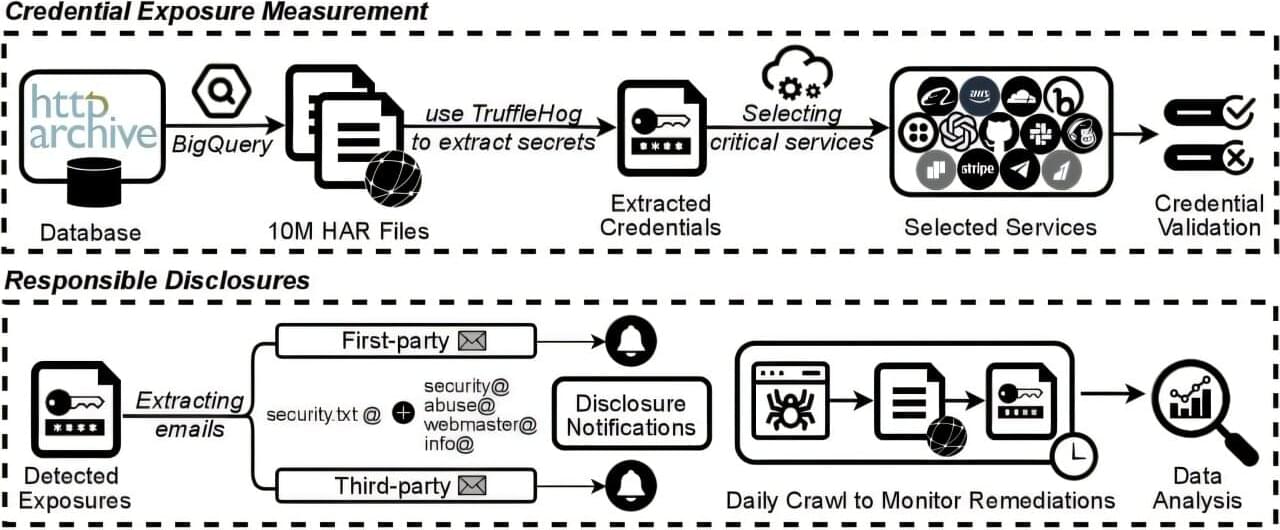
Researchers have discovered a major security leak hiding in plain sight on the internet that could expose the personal data and financial records of millions of people. In a paper published on the arXiv preprint server, Nurullah Demir of Stanford University and colleagues analyzed 10 million websites to see how often API (application programming interfaces) credentials are exposed. These are digital keys or tokens that enable different software programs to communicate and are often used to process bank payments and access cloud storage.

The team used a huge database called the HTTP Archive, which tracks how millions of real websites work. They looked at live, running versions of sites to monitor how data is processed as pages load.

By examining the websites while they were active, the researchers identified API credentials that appear only when a user visits a site. These credentials are specific strings of text that a website uses to identify itself to services like banks or cloud providers.

Dust-resilient perovskite solar cells could cut manufacturing costs and expand green energy worldwide

Research appearing in Communications Materials has shown that perovskite solar cells (PSCs) are remarkably resilient to dust during production, challenging the industry belief that high-performance solar technology must be manufactured in sterile and expensive cleanrooms. This discovery could reduce the need for ultra-clean factories, making solar cell production cheaper and more accessible worldwide.

PSCs are a new type of technology that uses a unique crystal structure to harvest light. They are thinner, lighter, and potentially much cheaper to produce than the traditional silicon panels found on roofs today. However, traditional silicon cells are incredibly fragile during the making process; even a single microscopic dust particle can ruin a cell. This forces manufacturers to use expensive, energy-hungry cleanrooms, creating a massive barrier to production in developing nations.

Researchers at Swansea University’s Faculty of Science & Engineering have now found that perovskite technology has a unique tolerance to common dust and debris.

Why no individual is like another when epigenetics come into play

Why do animals behave differently, and what are the consequences of this? A research team from the Collaborative Research Center NC³ at Bielefeld University and the University of Münster now provides a new explanation: epigenetic processes—chemical markings on DNA—may play a key role. The study, published in the journal Trends in Ecology & Evolution, links individuality, environmental adaptation, genetics, ecology, and evolution in a novel way.

“With our study, we propose that individuality and epigenetic variation influence each other,” explains Dr. Denis Meuthen, an evolutionary biologist at Bielefeld University, who is one of the study’s main authors. “This bidirectionality—this mutual interaction—helps us to better understand ecological and evolutionary processes.”

Laser-modified graphene enables molecule-thick films to grow only where needed

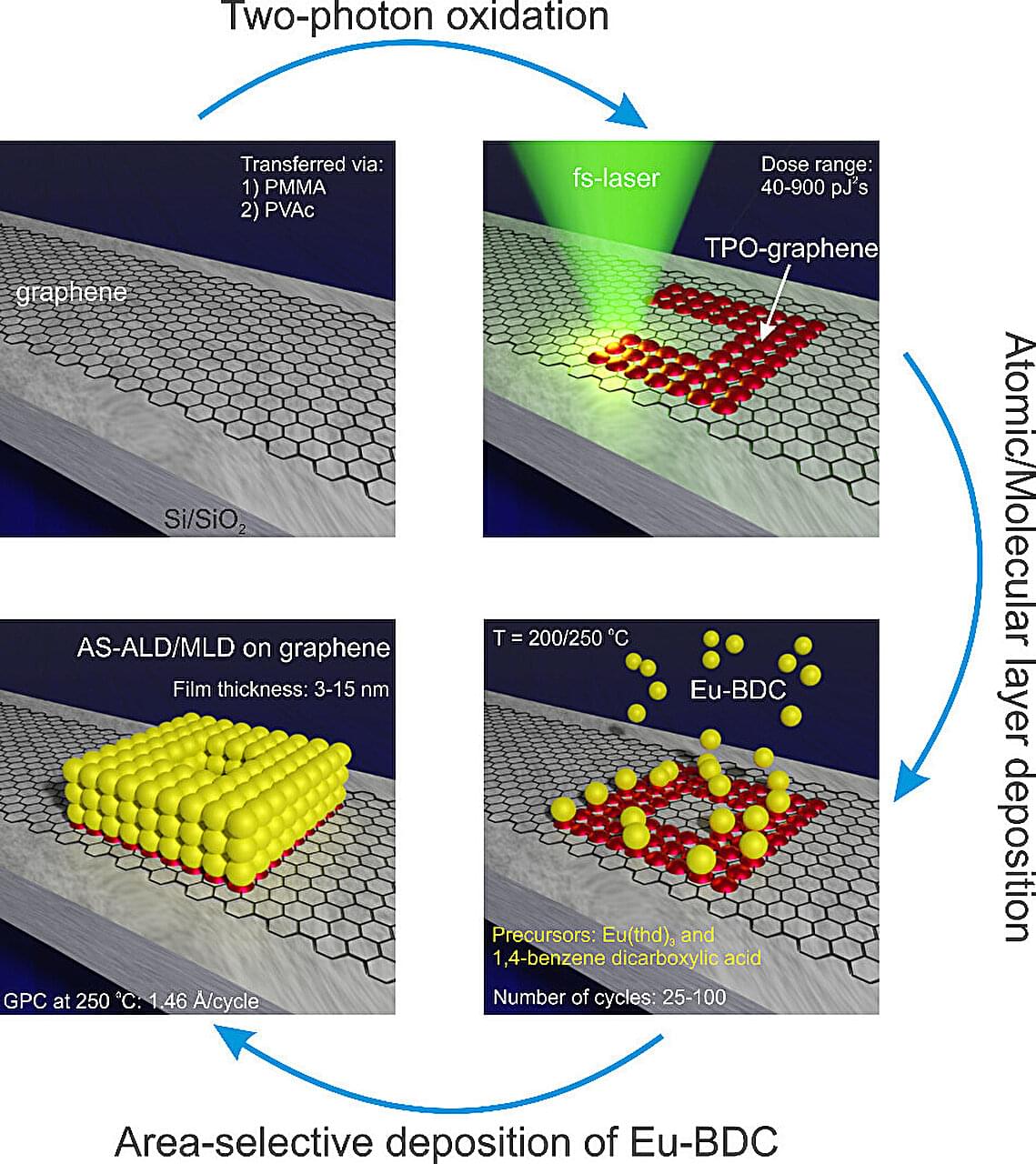
Researchers from the University of Jyväskylä and Aalto University have developed a new method based on laser modification, which allows metal-organic materials to be grown locally one molecule-thick layer at a time. The method enables the precise construction of films of different shapes and offers new ways to modify the properties of materials for various applications. The study was published in the journal ACS Nano.

Atomic layer deposition (ALD) is a method used especially in the semiconductor industry to produce high-quality thin films with atomic layer accuracy. The method was developed in the 1970s by the Finnish Tuomo Suntola, and it has since become an important technology.

In ALD, thin films are grown one atomic layer at a time through controlled chemical reactions between the reactants, as well as their interactions with the surface. This so-called bottom-up method allows for precise film thickness adjustment.

/* */