Toggle light / dark theme

Kimwolf Android botnet abuses residential proxies to infect internal devices

The Kimwolf botnet, an Android variant of the Aisuru malware, has grown to more than two million hosts, most of them infected by exploiting vulnerabilities in residential proxy networks to target devices on internal networks.

Researchers observed increased activity for the malware since last August. Over the past month, Kimwolf has intensified its scanning of proxy networks, searching for devices with exposed Android Debug Bridge (ADB) services.

Common targets are Android-based TV boxes and streaming devices that allow unauthenticated access over ADB. Compromised devices are primarily used in distributed denial-of-service (DDoS) attacks, proxy resale, and monetizing app installations via third-party SDKs like Plainproxies Byteconnect.

AI-powered ECG analysis shows promise for early COPD detection

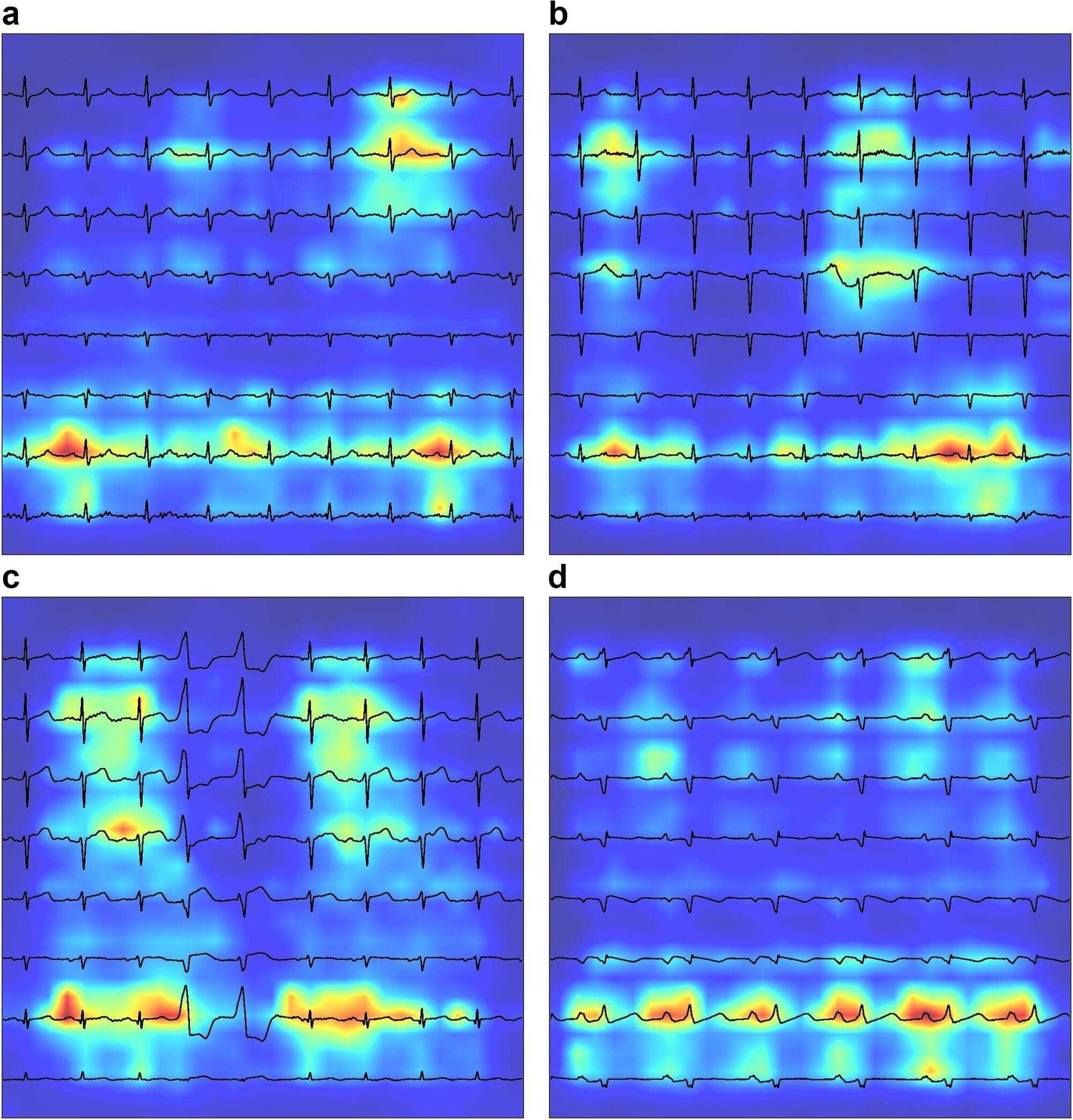
Chronic obstructive pulmonary disease (COPD) is a leading cause of morbidity and mortality globally. Effective management hinges on early diagnosis, which is often impeded by non-specific symptoms and resource-intensive diagnostic methods. A study published in the journal eBioMedicine assesses the effectiveness of electrocardiograms (ECGs) analyzed via deep learning as a tool for early COPD detection.

Mount Sinai researchers utilized a Convolutional Neural Network model to analyze ECGs, or medical tests that record the heart’s electrical activity, and can detect COPD. The primary outcome was the accuracy of a new clinical COPD diagnosis, as determined by International Classification of Disease codes. They performed an evaluation using Area-Under-the-Curve (AUC) metrics, derived by testing against ECGs from patients at five hospitals within the Mount Sinai Health System who represented a demographically diverse patient population in New York City.

They examined data from 2006 to 2023 within the GE MUSE system that exports electrocardiograms as individual XML files containing raw waveforms. The experts also used ECGs from patients at another hospital and ECGs of patients with COPD within the UK BioBank to expand the cohort and validate the analysis.

When the Dead Built Gods: The Mechanical Messiah and Humanity’s Ancient Obsession with Creating Life

It may not be long before Artificial Intelligence creates access to God via modern technology, however during the 19th century, a spiritualist by the name of John Murray Spear was inspired to build a Mechanical Messiah.

Elon Musk on AGI Timeline, US vs China, Job Markets, Clean Energy & Humanoid Robots

Questions to inspire discussion.

🤖 Q: How quickly will AI and robotics replace human jobs? A: AI and robotics will do half or more of all jobs within the next 3–7 years, with white-collar work being replaced first, followed by blue-collar labor through humanoid robots.

🏢 Q: What competitive advantage will AI-native companies have? A: Companies that are entirely AI-powered will demolish competitors, similar to how a single manually calculated cell in a spreadsheet makes it unable to compete with entirely computer-based spreadsheets.

💼 Q: What forces companies to adopt more AI? A: Companies using more AI must outcompete those using less, creating a forcing function for increased AI adoption, as inertia currently keeps humans doing AI-capable tasks.

📊 Q: How much of enterprise software development can AI handle autonomously? A: Blitzy, an AI platform using thousands of specialized agents, autonomously handles 80%+ of enterprise software development, increasing engineering velocity 5x when paired with human developers.

Energy and Infrastructure.

Mondays With Phil | Why 2026 Changes Everything for Tesla, Grok & SpaceX

Why 2026 Changes Everything for Tesla, Grok & SpaceX

## Elon Musk’s companies, including Tesla and SpaceX, are expected to experience significant breakthroughs and growth in 2026, driven by advancements in AI, robotics, and space technology.

## Questions to inspire discussion.

Tesla Robotaxi & Cybercab Strategy.

🚖 Q: When will Tesla’s Cybercab production begin and what regulatory hurdle must be cleared first? A: Cybercab production is set to begin on April 1, 2026, but requires federal regulations on autonomous ride-hailing since current rules mandate steering wheels and pedals for non-experimental vehicles.

🚗 Q: How will Tesla’s robotaxis function as an advertising strategy? A: Robotaxis will serve as Tesla’s primary advertising strategy by acting as an Uber-like service that demonstrates the cars’ capabilities and encourages personal ownership, potentially reducing the need for traditional advertising.

AMD at CES® 2026

Join AMD Chair and Chief Executive Officer, Dr. Lisa Su, for her keynote at CES 2026, the most powerful technology event in the world. Dr. Su returns to the CES stage in Las Vegas to highlight, alongside partners and customers, the AMD vision for delivering future AI solutions – from cloud to enterprise, edge and devices.

Discover more: https://www.amd.com/en/corporate/even… Subscribe: https://bit.ly/Subscribe_to_AMD Join the AMD Gaming Discord Server: / discord Visit the AMD Gaming Community Website: https://www.amdgaming.com/ Like us on Facebook: https://bit.ly/AMD_on_Facebook Follow us on Twitter: https://bit.ly/AMD_On_Twitter Follow us on Twitch: / amd Follow us on LinkedIn: https://bit.ly/AMD_on_Linkedin Follow us on Instagram: https://bit.ly/AMD_on_Instagram ©2025 Advanced Micro Devices, Inc. AMD, the AMD Arrow Logo, and combinations thereof are trademarks of Advanced Micro Devices, Inc. in the United States and other jurisdictions. Other names are for informational purposes only and may be trademarks of their respective owners.

Subscribe: https://bit.ly/Subscribe_to_AMD
Join the AMD Gaming Discord Server: / discord.
Visit the AMD Gaming Community Website: https://www.amdgaming.com/
Like us on Facebook: https://bit.ly/AMD_on_Facebook.
Follow us on Twitter: https://bit.ly/AMD_On_Twitter.
Follow us on Twitch: / amd.
Follow us on LinkedIn: https://bit.ly/AMD_on_Linkedin.
Follow us on Instagram: https://bit.ly/AMD_on_Instagram.

©2025 Advanced Micro Devices, Inc. AMD, the AMD Arrow Logo, and combinations thereof are trademarks of Advanced Micro Devices, Inc. in the United States and other jurisdictions. Other names are for informational purposes only and may be trademarks of their respective owners.

Memory chip giants spark global semiconductor rally as shortages stoke price hikes

Semiconductor stocks rallied to start the year, led by the world’s biggest memory chip firms that are getting a boost from continued artificial intelligence-related demand.

South Korea’s SK Hynix and Samsung Electronics, the world’s two biggest memory makers, are up 11.5% and 15.9% respectively year-to-date. Micron is 9% higher this year.

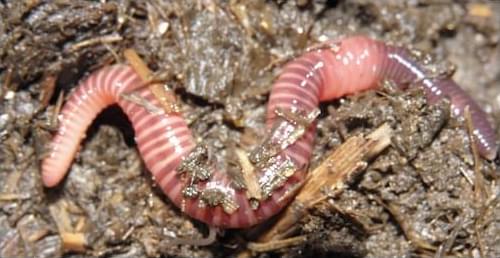
Worm-Inspired Active Filaments Sweep Disorder into Order

The ability of single active filaments to cluster smaller particles could inspire new materials for building soft robots that perform biological functions.

Every teenager knows that their room will not tidy up by itself. Without intervention, it will inevitably become messier, and they will need to do some work to turn disorder into order. When faced with a similar problem—particle collection—scientists have tried to get individual bacteria, robots, or other self-propelling units to put in the work [1, 2]. But unlike a teenager, a single such unit is usually insufficient to get the job done. Now Rosa Sinaasappel of the University of Amsterdam and her collaborators have proposed and tested a strategy that enables a single active filament to act as a sweeping agent [3]. Thanks to the versatility of polymer architectures, the investigation opens up a huge molecular-design space.

One of life’s most defining properties is its constant struggle against the second law of thermodynamics. At different scales, living organisms need to maintain complex structures or perform directed and persistent motion, feats that would be extraordinarily improbable in thermal equilibrium [4]. Organisms are able to sustain order against entropy by means of constant energy consumption, a feature called “activity.” Conceptually, the sweeping of small objects into piles is a similar problem. The goal is to reach a low-entropy state that is highly disfavored at equilibrium. Bacteria and other active particles, driven by their persistent motion, spontaneously aggregate, and they have been shown to induce clustering of passive particles [1, 2]. However, successful clustering typically requires using a large number of active particles or engineering a complex setting with a favorable geometry [5, 6].

/* */