Enjoy the videos and music you love, upload original content, and share it all with friends, family, and the world on YouTube.
Get the latest international news and world events from around the world.
The Race to Harness Quantum Computing’s Mind-Bending Power | The Future With Hannah Fry
Get “The AI Career Survival Guide” here: https://technomics.gumroad.com/l/ai-survival-guide.
What happens when human labor becomes mathematically obsolete? For thousands of years, the global economy has run on the biological engine of human workers. But a new era has arrived: The Physical Singularity.
In this video, we break down the brutal thermodynamics of the labor inversion, revealing how major AI companies are mass-producing humanoid robots that operate for just 57 cents an hour. We expose the massive industry shift from digital generation to “World Models,” and how China’s manufacturing miracle is driving hardware costs to zero. With 10 billion robots projected by the 2040s, experts like Geoffrey Hinton are warning of a hive-mind “alien intelligence.” The digital era is over. The physical agent era has begun.
Welcome to Technomics. If you want to stay ahead of the curve and understand the real impact of the AI revolution, hit that subscribe button.
Sources & Research Links:
The 57¢ / Hour Labor Inversion Math: https://www.ark-invest.com/articles/valuation-models/ark-pub…oid-robots.
Unitree G1 Official $16,000 Pricing: https://www.unitree.com/g1/
China’s 2024 Robotics Dominance (IFR Report): https://ifr.org/ifr-press-releases/news/china-dominates-industrial-robot-market.
Elon Musk’s 10 Billion Robot Prediction: https://www.youtube.com/watch?v=ODsjGOGX_oM
Geoffrey Hinton on AI Hive Mind (“Immortality, but it’s not for us”): https://www.youtube.com/watch?v=qpoRO378qRY
Geordie Rose on Alien Intelligence (“The same way you don’t care about an ant”): https://www.youtube.com/watch?v=1pd4i2YlGmc.
DeepSeek AI Cost Efficiency Breakthroughs: https://www.deepseek.com/
Timestamps:
00;00 — The 57¢ Workforce & The Great Deception.
02;48 — The Math of the Labor Inversion.
05;01 — Why OpenAI Killed Sora (World Models)
09;16 — The Manufacturing Miracle: China’s Hardware Collapse.
12;53 — 10 Billion Robots & Alien Intelligence.
15;58 — How to Survive the Singularity.
Disclaimer:
The content in this video is for educational and informational purposes only and does not constitute financial or investment advice. The views and opinions expressed in this video are based on current research and industry trends, which are subject to rapid change. We do not guarantee the accuracy or completeness of the projections discussed. Copyright Disclaimer under section 107 of the Copyright Act 1976, allowance is made for “fair use” for purposes such as criticism, comment, news reporting, teaching, scholarship, education, and research.
#PhysicalSingularity #HumanoidRobots #ArtificialIntelligence #OpenAI #FutureOfWork #TechTrends
Read more

Space Updates / Overmedicated Children
In the first half, space historian and author Rod Pyle discussed the renewed U.S. lunar ambitions under NASA’s Artemis program, along with other space news. Describing the recent Artemis rocket launch as “smooth as silk,” he praised the Space Launch System (SLS), though he acknowledged its high cost and reliance on shuttle-era technology. He explained that the SLS was built under NASA’s traditional cost-plus contracting model, contrasting it with private-sector efforts like SpaceX and Blue Origin, which assume more financial risk. Comparing Artemis to the Apollo-era Saturn V, Pyle noted both rockets are “remarkable machines” suited to their missions, but highlighted that Artemis cannot carry both the lunar module and capsule in a single launch as Saturn V did.
He outlined the Artemis timeline, with Artemis III originally planned for a Moon landing next year, now delayed to Artemis IV in 2028. Pyle also commended NASA chief Jared Isaacman for navigating budgetary challenges and advancing the Artemis program despite delays. Reflecting on the historic Apollo 8 mission as “a remarkably daring and dangerous mission” driven by Cold War geopolitics, he recalled the iconic “reading of Genesis from lunar orbit” and the transformative Earthrise photo. Elon Musk’s pivot from Mars to the Moon was driven by financial incentives and NASA funding delays, he suggested, noting that lunar missions are “a few days away, instead of seven or eight months,” making the Moon a more achievable target.
Addressing current spacefaring nations, the guest identified the U.S., Russia, China, Japan, and India as major players, with China rapidly advancing. China’s lunar program is “very steady and consistent,” Pyle said, and is aiming for a 2029–2030 landing that will replicate Apollo 11’s short visit, with longer-term plans for a lunar base. He raised the question of whether the U.S. and China can coexist on the Moon if both establish bases. On technology, he cited AI’s role in rover autonomy despite hardware limitations, noting successful AI-driven test drives on Mars. Looking further ahead, he projected human Mars missions in the mid-2030s, contingent on nuclear propulsion and necessary infrastructure.
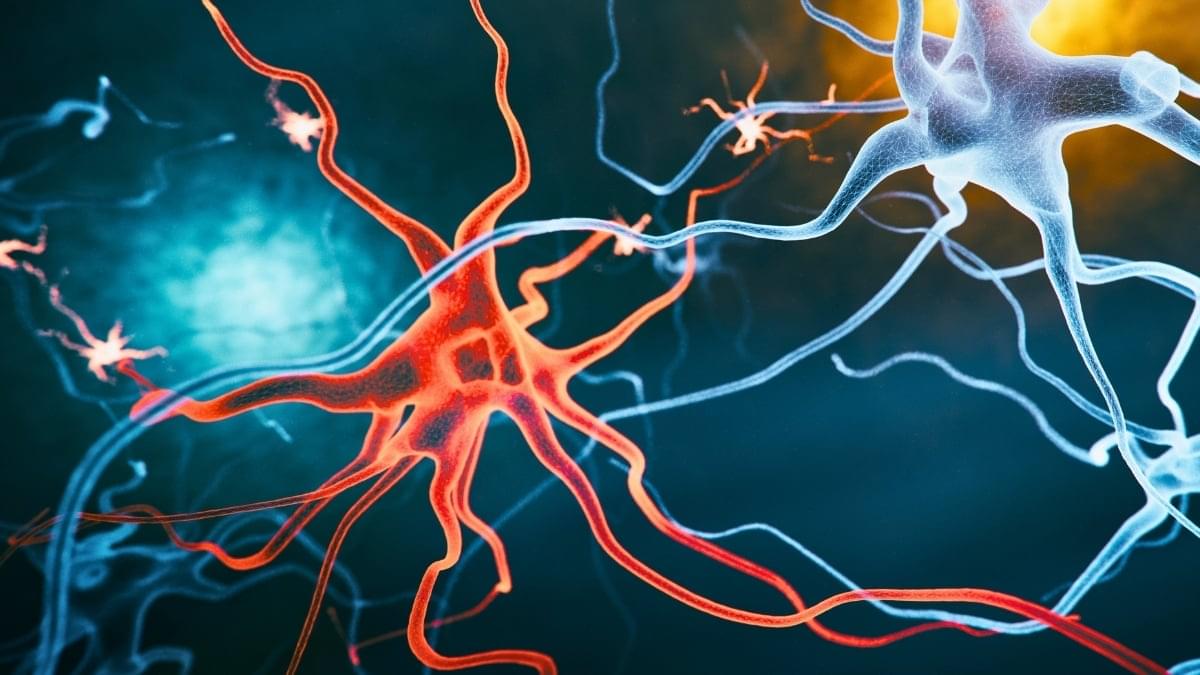
New Alzheimer’s Treatment Strategy Reverses Cognitive Decline in Mice
Researchers have developed a novel compound that could transform the way we treat Alzheimer’s disease, offering not just a new weapon but potentially a new strategy for battling the most common form of dementia worldwide.
While current drugs for Alzheimer’s mostly focus on removing amyloid-beta plaques associated with the disease, the new compound takes a fundamentally different approach, instead targeting a specific enzyme to therapeutically reprogram the epigenome of neurons – a series of molecular marks that can be added to or removed from DNA, to change the way genes work.
Monoclonal antibody drugs such as lecanemab and donanemab, which target amyloid-beta proteins, help somewhat to slow the progression of the disease when treatment is started early, but there is still no proven way to reverse cognitive decline from Alzheimer’s in humans.

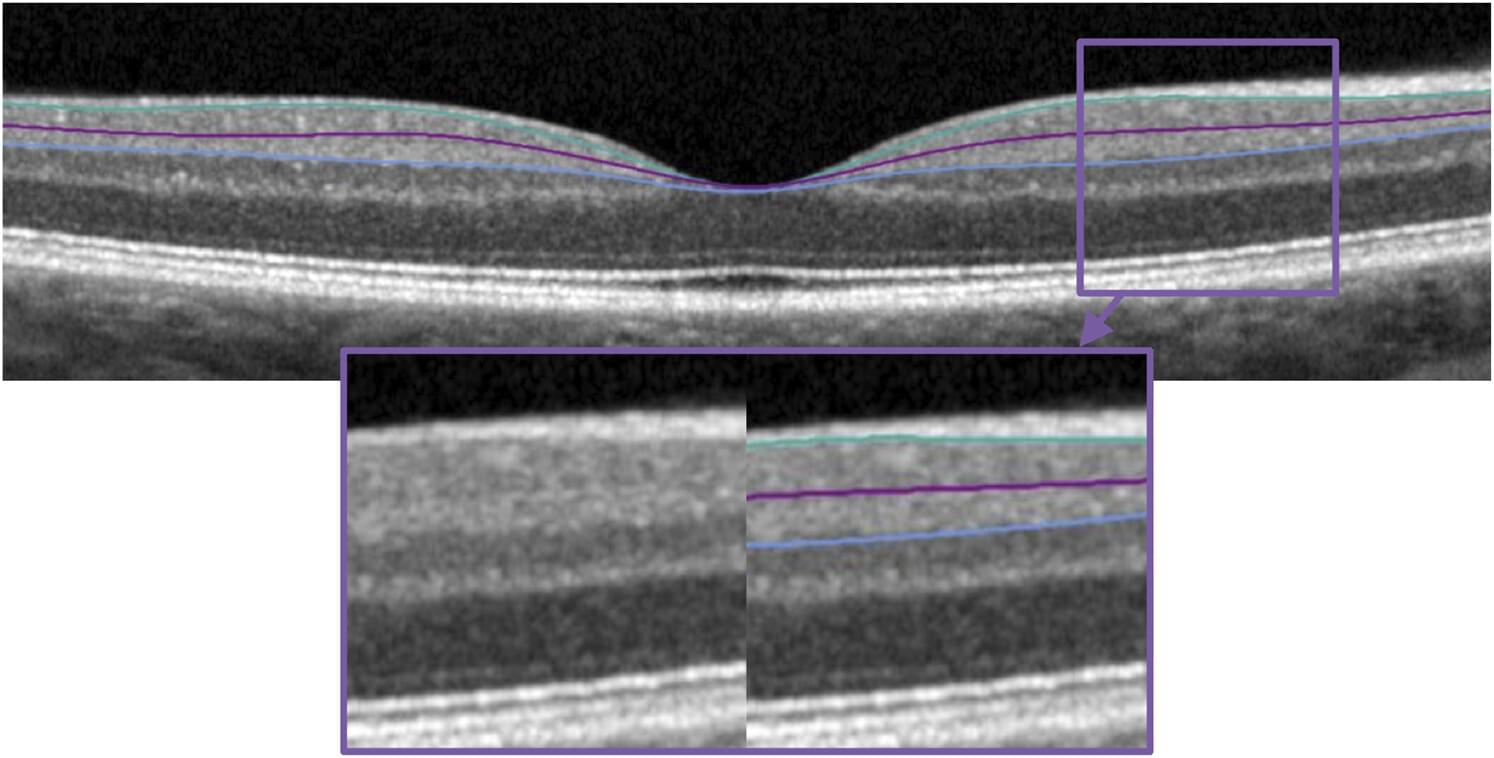
Ganglion Cell Layer Compared With Inner Plexiform Layer Atrophy After Optic Neuritis Associated With NMOSD, MOGAD, and MS
In a phase 3 randomized clinical trial of adults with ParkinsonDisease experiencing motor fluctuations despite stable levodopa therapy, adjunctive tavapadon—a once-daily, selective D1/D5 dopamine agonist—significantly increased daily on-time without troublesome dyskinesia and reduced off-time compared with placebo over 27 weeks.
Most adverse events, including nausea, dyskinesia, and dizziness, were mild to moderate. Tavapadon showed a favorable safety profile and provided clinically meaningful motor improvements as adjunctive therapy.
Question Can adjunctive tavapadon—an oral, once-daily, selective dopamine (D) D1/D5 agonist—improve motor control for people with Parkinson disease (PD) experiencing motor fluctuations while minimizing risk of adverse events?
Findings In this phase 3, double-blind, placebo-controlled, 27-week randomized clinical trial of 507 participants with PD, tavapadon significantly increased daily on-time without troublesome dyskinesia (good-on-time) vs placebo. Most adverse events were mild to moderate in severity with nausea, dyskinesia, and dizziness most common with tavapadon.
Meaning Results show that tavapadon adjunctive to levodopa provided clinically meaningful motor improvements and an acceptable safety profile in adults with PD experiencing motor fluctuations while receiving oral levodopa.

A galaxy next door is transforming, and astronomers can see it happening
The Small Magellanic Cloud (SMC) is one of the Milky Way’s closest galactic neighbors—a small, gas-rich galaxy visible to the naked eye from the southern hemisphere, and bound to our galaxy by gravity, alongside its companion, the Large Magellanic Cloud (1¹LMC). All three galaxies have been interacting for hundreds of millions of years.
The SMC is also one of the most studied galaxies in the sky. Astronomers have catalogued its stars, mapped its gas and tracked its motion for more than half a century. Yet a basic question about it has remained. The galaxy’s stars do not orbit around its center the way stars in most galaxies do, and it has been challenging to explain why.
Collision reveals a galaxy in flux In a study published in The Astrophysical Journal, University of Arizona astronomers have traced the lack of rotation in stars to a direct collision between the SMC and its larger companion, the LMC. The findings also raise questions about how scientists use the SMC as a reference point for understanding galaxies across the history of the universe.
New genetic risk score better predicts diabetes, obesity and downstream complications
Type 2 diabetes (T2D) and obesity are metabolic conditions with many causes, including overlapping and distinct genetic features. A polygenic risk score (PRS) can capture multiple genetic risk factors to provide an estimate for whether a person may develop a complex medical condition and how they might fare long-term.
Building stronger genetic risk scores By integrating genetic findings from several of the world’s largest biobanks, investigators from Mass General Brigham built metabolic PRSs for predicting obesity and T2D, which outperformed existing disease-prediction models and predicted downstream morbidity and clinical interventions. Findings are published in Cell Metabolism.
“Our intention was to not only capture the risk of being diagnosed with obesity or diabetes, but also to better predict health consequences across the life course by integrating many aspects of metabolic function,” said co-first author Min Seo Kim, MD, MSc.
Aging Can be Slowed Down
Scientists are studying a protein called HMGB1 that’s released by damaged or stressed cells and can trigger inflammation in nearby healthy cells, accelerating the aging process. If this research holds up, it could completely change how we think about aging and disease.
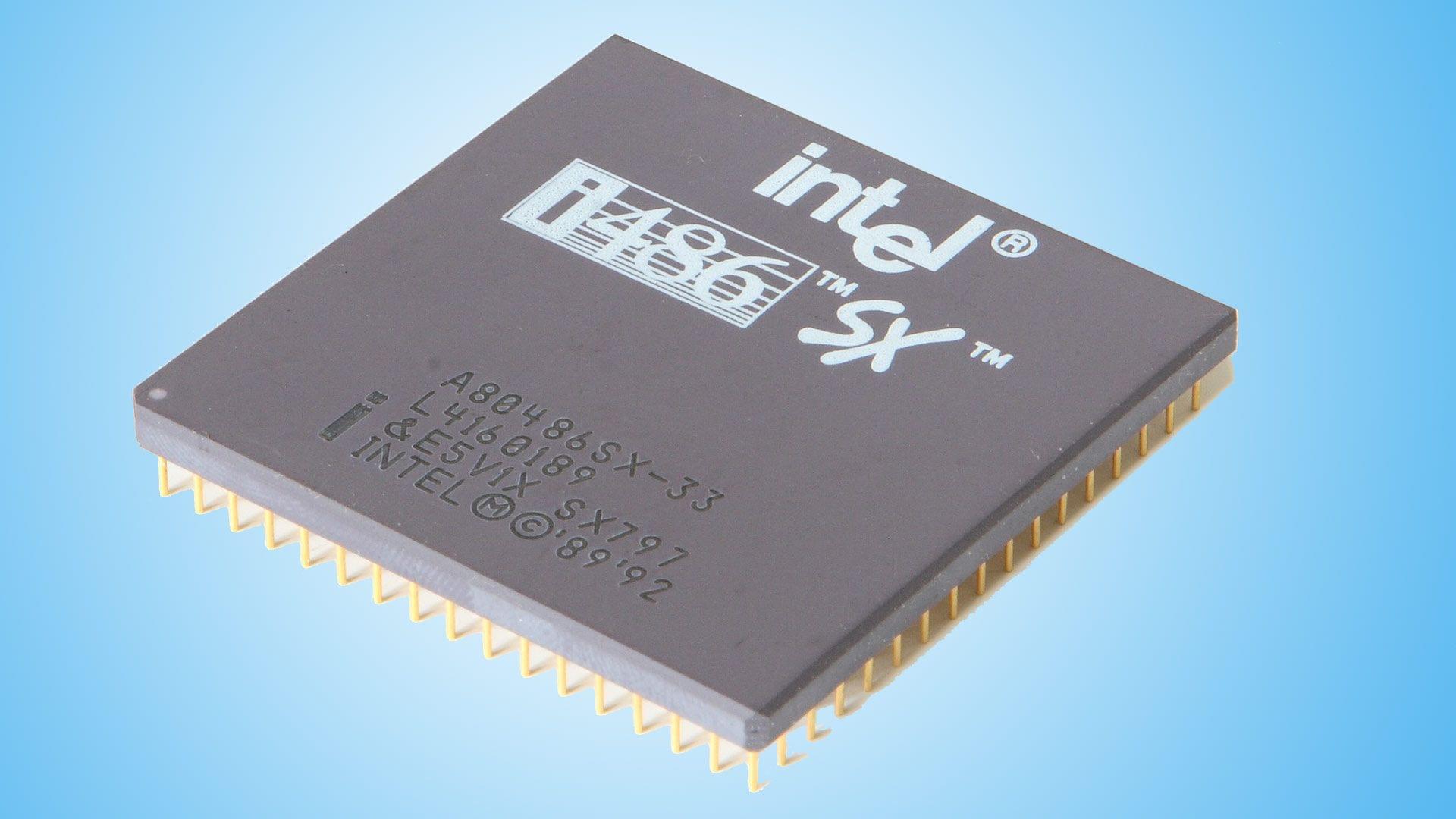
Linux devs start removing support for 37-year-old Intel 486 CPU — head honcho Linus Torvalds says ‘zero real reason’ to continue support
Perhaps it is time to send your 37-year-old Intel 486 system into retirement, as far as modern Linux goes, as OS kernel developers appear to have started to dismantle support for this legendary CPU. Phoronix reports that the change seems to have been confirmed in patches destined for the Linux 7.1 kernel. So, those still cherishing their 486 PCs and using them to run a modern version of Linux should probably now make sure they run one of the existing Linux LTS kernels to squeeze a few more years from the platform. Alternatively, they could upgrade to a Pentium or even one of the best CPUs available in 2026.
The patching out of 486 support isn’t really a surprise. Firstly, it is ancient, with the first examples released in 1989, and modern Linux distros continue to grow more resource-hungry. Secondly, Linux creator Linus Torvalds hinted not long ago that 486 support may get the axe. The Linux mogul said that there was “zero real reason” to continue support for the 486 CPU. In fact, he indicated that continuing support for it was detrimental to upstream Linux kernel development efforts.