Does mono cause MS? A new study shows that people with a history of infectious mononucleosis are three times more likely to develop Multiple Sclerosis.
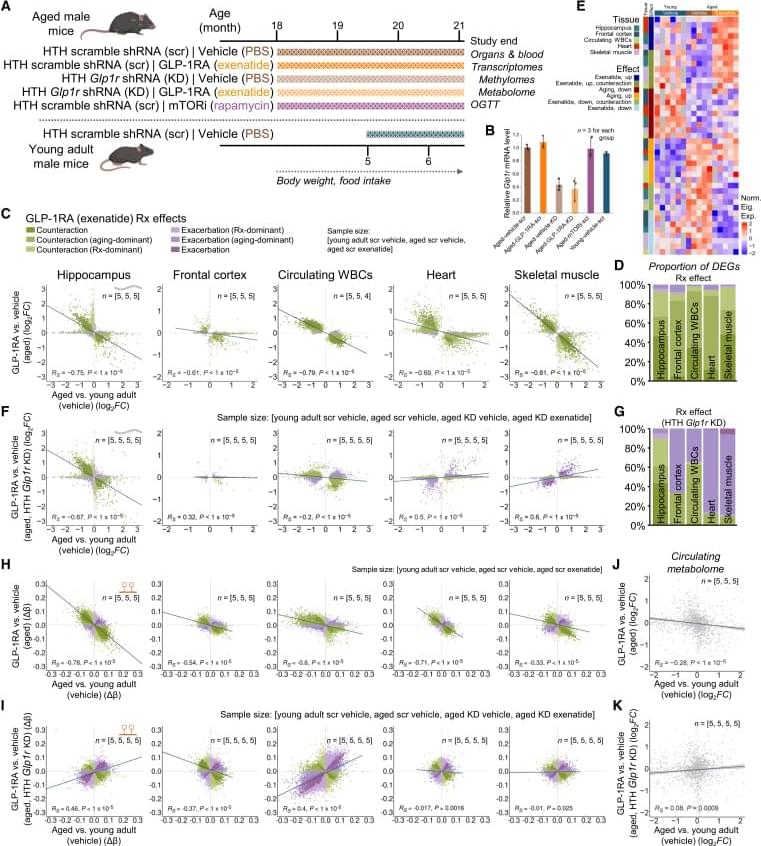
Online now: Body-wide multi-omic counteraction of aging with GLP-1R agonism: (Cell Metabolism 37, 2362–2380.e1–e8; December 2, 2025)
Online now: (Cell Metabolism 37, 2362–2380.e1–e8; December 2, 2025)
Following publication, Steve Horvath and colleagues at the Clock Foundation alerted us to a platemap error in the DNA methylation (DNAm) data. Our investigation pinpointed the potential source of this error. We provided samples on 96-well plates in a row-wise orientation instead of the column-wise orientation specified in the Clock Foundation’s protocol. Subsequently, incorrect assignment of metadata for 36 samples (out of 459) that contributed data to the paper likely occurred during the transposition and rearrangement of a subset of samples on two incompletely filled plates prior to the assay. Working with Clock Foundation colleagues, we have corrected the metadata for 33 samples and discarded 3 samples for which we could not retrieve the metadata with total certainty.
This error impacted DNAm data for the following tissues:
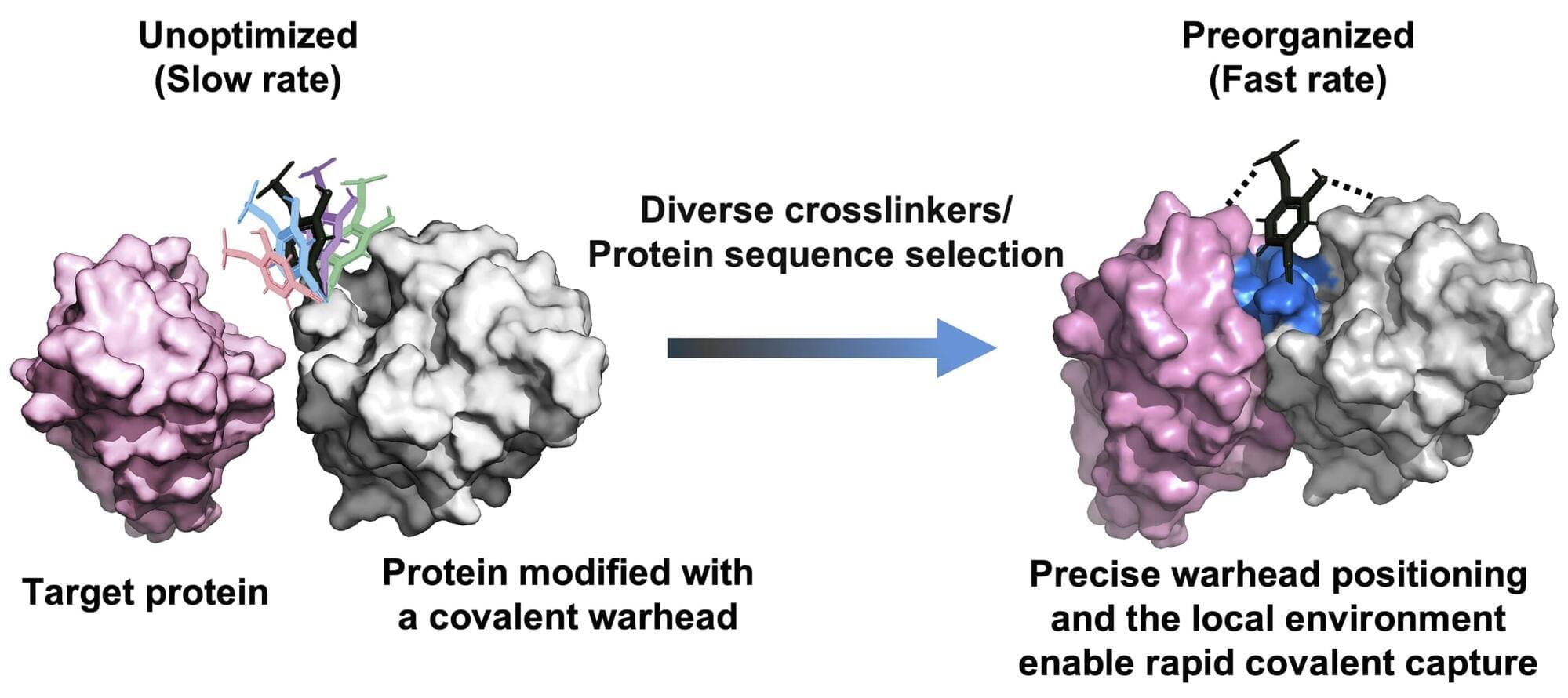
A team led by principal investigators Bobo Dang and Ting Zhou at Westlake University/Westlake Laboratory have developed a high-throughput platform for engineering fast-acting covalent protein therapeutics. Their study, titled “A high-throughput selection system for fast-acting covalent protein drugs” published in Science, opens new avenues for next-generation biologics.
Covalent small-molecule drugs have shown great success in cancer therapy by forming irreversible bonds with their targets. This has inspired efforts to extend covalent strategies to protein therapeutics, especially engineered miniproteins. However, their development is limited by a kinetic mismatch: Miniproteins are rapidly cleared in vivo, whereas covalent bond formation is typically slow. In addition, high-throughput platforms for systematically optimizing covalent protein reactivity have been lacking.
To address this challenge, the researchers proposed that precise spatial positioning of chemical warheads within protein scaffolds could enable molecular preorganization, thereby accelerating covalent bond formation without increasing intrinsic reactivity.
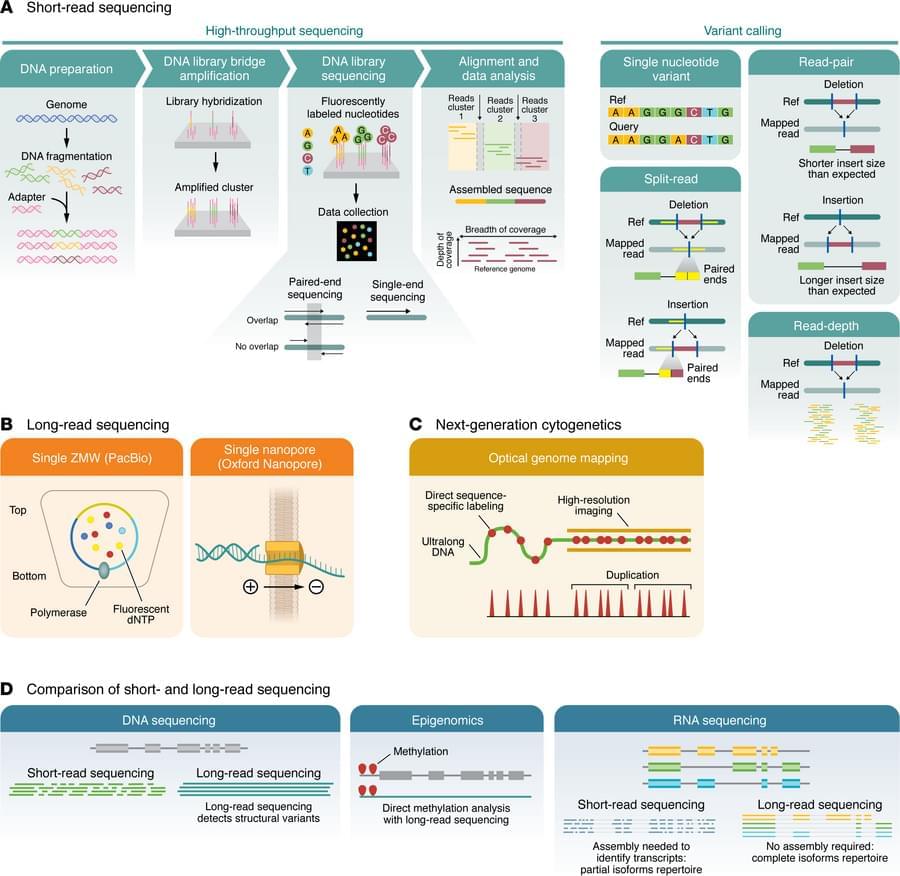
As part of the JCI’s Review Series on Neurodegeneration, Sonja W. Scholz and colleagues highlight key genomic technologies advancing diagnosis and research in neurodegeneration.
1Neurodegenerative Diseases Research Section, National Institute of Neurological Disorders and Stroke;
2Neurogenetics Branch, National Institute of Neurological Disorders and Stroke; and.
3Neuromuscular Diseases Research Section, National Institute on Aging, National Institutes of Health (NIH), Bethesda, Maryland, USA.

Researchers Soma Chiyoda, Ko Mochizuki, and Atsushi Kawakita from the University of Tokyo have discovered that nocturnal hawkmoths are the main pollinators of Jasminanthes mucronata, a plant species native to Japan that produces black nectar. This is the first time that a colored nectar flower has been confirmed to be mainly pollinated by nocturnal insects. The discovery thus promotes further research into this so far unexplored ecology. The findings were published in the journal Ecology.
In ancient Greek mythology, nectar was the drink of the gods, the key to their immortality. Real-life nectar might not confer immortality to its consumers, but it certainly helps many a creature stay alive by providing them with rich nutrition. The creatures feeding on these plants then unwittingly carry their pollen across the landscape. To draw a map of this complex web of co-existence, we must discern whether species interact with one another.
As nectar is generally transparent, flowers that produce colored nectar have garnered particular attention in the research community. However, due to the visual nature of colored nectar, researchers have focused mostly on daytime animals as potential pollinators.
Jack Dorsey (Block CEO) and Roelof Botha (Sequoia partner and Block board member) on Rewriting the CEO playbook for the AI era.
• Manager mode = Pyramid (command & control)
• Founder mode = Flat (founders decide fast)
• Dorsey mode = Circle w/ AI at the center, humans at the edge, and decisions flow from customer inputs → AI → humans steering it.
00:00 Existential Dread & Hope.
02:56 AI Replaces Hierarchy.
Plant roots don’t have a nervous system, yet can produce sophisticated responses. What does that say about intelligence?
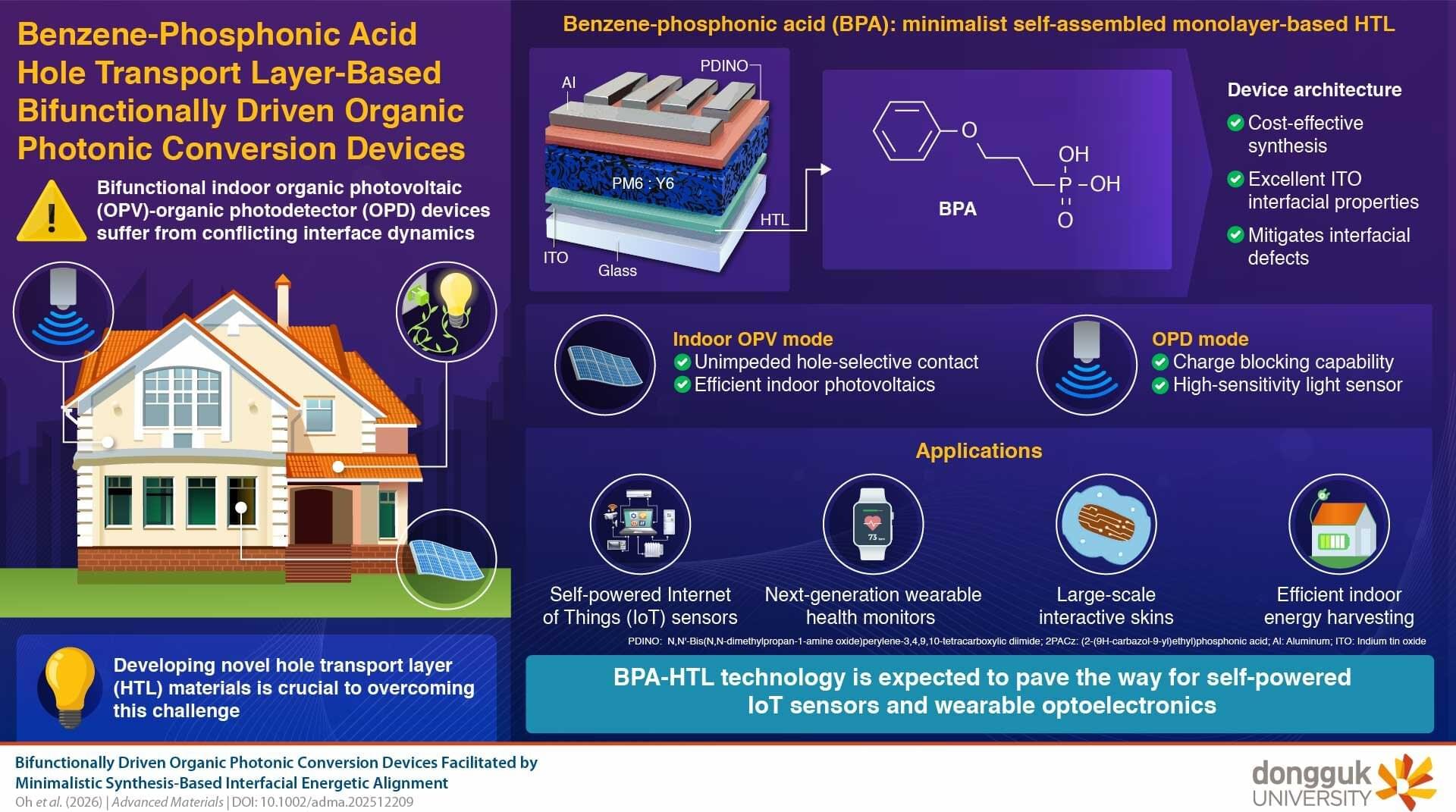
Next-generation optoelectronic systems (devices that convert light to electrical energy) leverage organic semiconductor-based indoor energy-autonomous architectures for cutting-edge applications. Notably, organic semiconductors possess mechanical flexibility, solution processability, and bandgap-tunable optoelectronic properties, making them highly lucrative for indoor power generation via organic photovoltaics (OPVs), as well as for spectrally selective photodetection through organic photodetectors (OPDs). Unfortunately, technological progress made in the fields of OPVs and OPDs has largely been separate, necessitating further research for the development of bifunctional OPV-OPD systems for concurrent energy harvesting and photodetection.
Additionally, the potential self-powered operation of such systems is restricted by conflicting charge transport kinetics, especially in the electron and hole transport layers (ETLs and HTLs, respectively). This limitation impacts device durability and stability and increases fabrication costs, making it indispensable to find new HTL materials such as poly(3,4-ethylenedioxythiophene), 2-(9H-carbazol-9-yl)ethyl]phosphonic acid self-assembled monolayer, MoOx, NiOx, and V2O5, beyond conventional options.
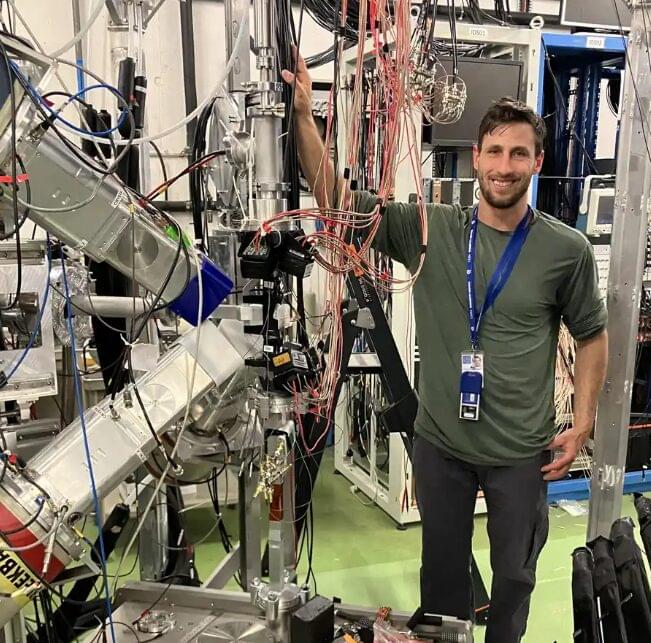
Gold cannot form until certain unstable atomic nuclei break apart. Exactly how those nuclear transformations unfold has long been difficult to determine. Now, nuclear physicists at the University of Tennessee (UT) report three discoveries in a single study that clarify important parts of this process. Their findings could help researchers build improved models of the stellar events that create heavy elements and better predict the behavior of exotic atomic nuclei.
Heavy elements such as gold and platinum are forged under extraordinary conditions, including when stars collapse, explode, or collide. These events trigger the rapid neutron capture process (or r-process for short). During this process, an atomic nucleus absorbs neutrons in rapid succession. As the nucleus grows heavier and more unstable, it eventually breaks down into lighter and more stable forms.
Along this pathway across the nuclide chart, a common sequence involves beta decay of the parent nucleus followed by the release of two neutrons. The atomic nuclei involved in these reactions are extremely rare and unstable, making them difficult or even impossible to study directly in experiments. Because of this, scientists rely heavily on theoretical models, which must be tested and refined using laboratory data.
“with Brian Berzin — Co-Founder & CEO of Thea Energy.
What if we could build a fusion reactor that runs continuously—without the instability issues that have plagued the field for years?
Brian Berzin is the Co-Founder and CEO of Thea Energy (https://thea.energy/), a next-generation fusion company focused on advancing stellarator technology—one of the most promising but historically underexplored approaches to magnetic confinement fusion.
Brian brings a unique combination of deep technical and financial expertise, with a background spanning electrical engineering, venture capital, private equity, and investment banking.
Prior to founding Thea Energy, Brian served as Vice President of Strategy at General Fusion, where he helped shape commercialization strategy and led engagement with global capital markets during a pivotal period for privately funded fusion.