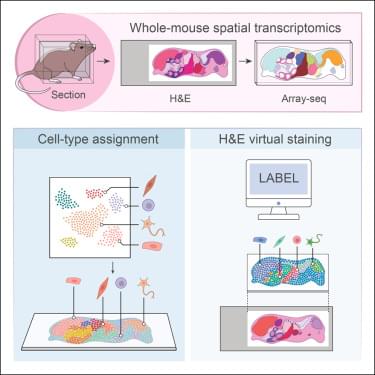
Now online! A scalable experimental and computational platform for mapping all organs and cell types in the mouse body, enabling comprehensive analysis of tissue organization and disease responses.
Immortality is doubtful but what might be possible?
In a world-first, quantum physicists at ANU have observed atoms entangled in motion. Their experiment using helium atoms, represents a major advancement on similar experiments using photons, which are particles of light.
But unlike photons, helium atoms have mass and experience gravity.
Read the full article in Nature Communications:
https://www.nature.com/articles/s4146… development unlocks new ways to examine one of the biggest unanswered questions about the universe: how does the small-scale physics of quantum mechanics interact with gravity and general relativity at the universal scale? By observing quantum entanglement in atoms for the first time, are we one small step closer to finding out whether the “Theory of Everything” is not just hot air?
This development unlocks new ways to examine one of the biggest unanswered questions about the universe: how does the small-scale physics of quantum mechanics interact with gravity and general relativity at the universal scale?
By observing quantum entanglement in atoms for the first time, are we one small step closer to finding out whether the “Theory of Everything” is not just hot air?
For more visit https://science.anu.edu.au/
Brian Greene and physicist Samir Mathur explore one of the deepest puzzles in modern physics, the true nature of black holes and the fate of information in the universe.
Their conversation centers on the black hole information paradox, a problem that has challenged physicists for decades. If quantum mechanics says information can never be destroyed, how can black holes once thought to erase everything that falls into them be reconciled with that principle? Mathur introduces the fuzzball theory, a proposal from string theory suggesting that black holes are not empty regions but complex structures that preserve information.
Greene and Mathur also revisit key developments in black hole physics, from entropy and Hawking radiation to modern ideas like firewalls and wormholes. They reflect on why certain approaches may fall short and whether recent theoretical insights are bringing the paradox closer to resolution. This conversation offers an engaging look at how physicists are rethinking black holes, quantum gravity, and the fundamental structure of reality.
This program is part of the Rethinking Reality series, supported by the John Templeton Foundation.
Participant: Samir Mathur.
Moderator: Brian Greene.
#worldsciencefestival #briangreene #blackhole.
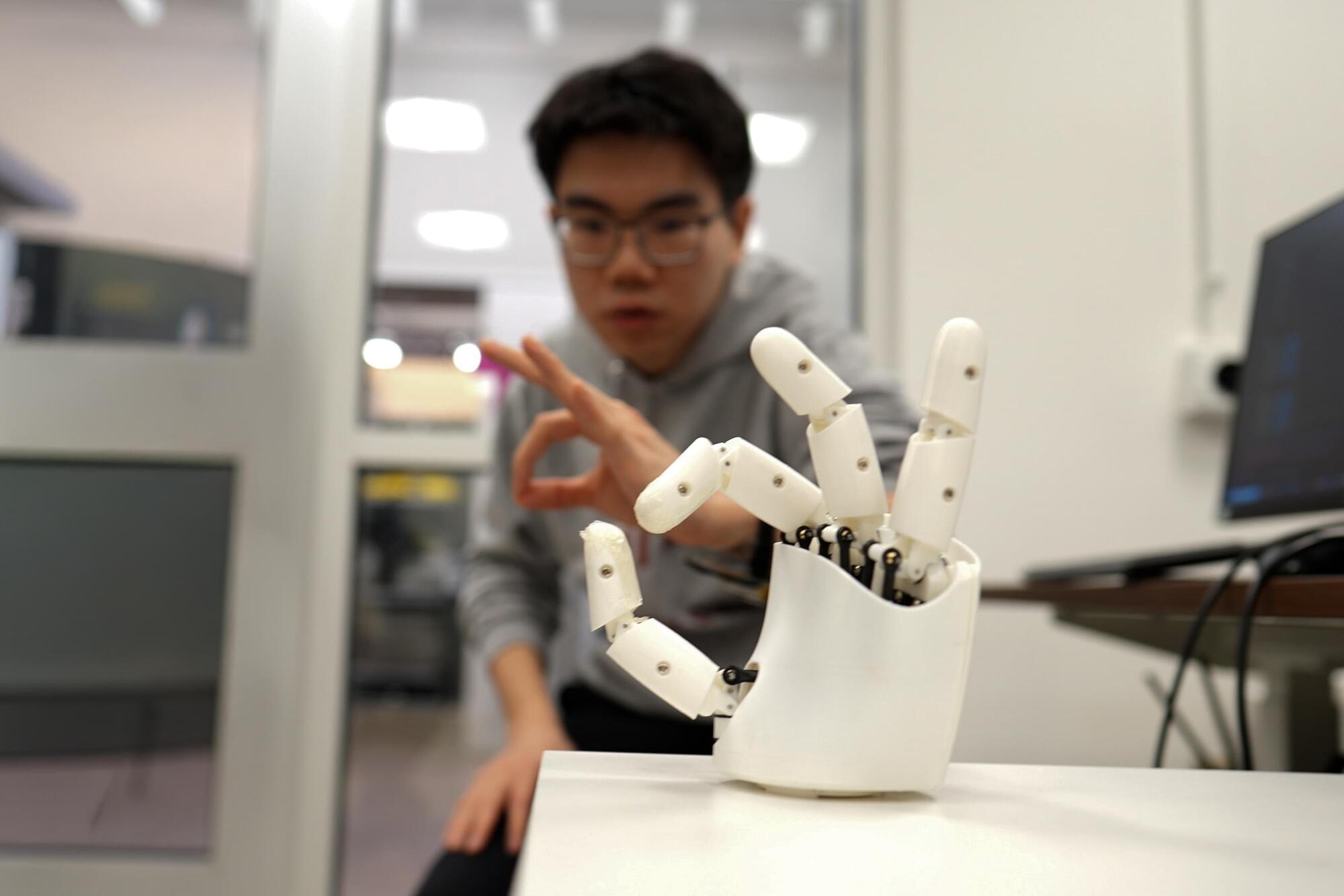
Massachusetts Institute of Technology (MIT) engineers have developed an ultrasound wristband that precisely tracks hand movements in real-time for robotics and virtual reality control.
The next time you’re scrolling your phone, take a moment to appreciate the feat: The seemingly mundane act is possible thanks to the coordination of 34 muscles, 27 joints, and over 100 tendons and ligaments in your hand. Indeed, our hands are the most nimble parts of our bodies. Mimicking their many nuanced gestures has been a longstanding challenge in robotics and virtual reality.
Now, MIT engineers have designed an ultrasound wristband that precisely tracks a wearer’s hand movements in real-time. The wristband produces ultrasound images of the wrist’s muscles, tendons, and ligaments as the hand moves, and is paired with an artificial intelligence algorithm that continuously translates the images into the corresponding positions of the five fingers and palm.

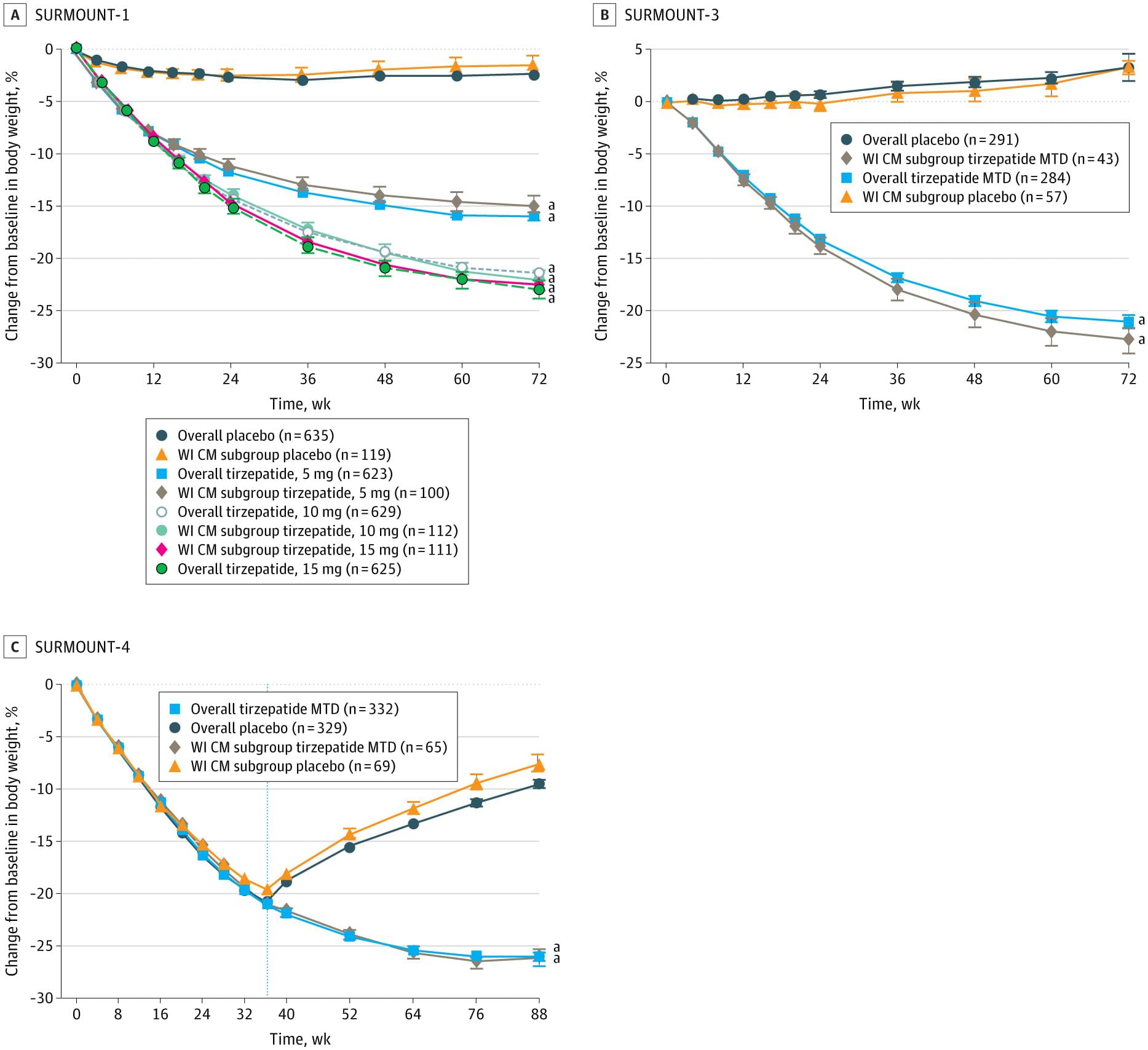
In three RCTs, Tirzepatide was associated with clinically meaningful weight loss among adults with overweight or obesity, even when concomitant weight-inducing medications were initiated during treatment.
Question What is the association between tirzepatide and weight reduction among patients with overweight or obesity who initiated concomitant weight-inducing medications?
Findings In this post hoc analysis of participants in the SURMOUNT-1,-3, and-4 trials receiving at least 1 concomitant weight-inducing medication (17.3%-20.0%), tirzepatide treatment was associated with comparable weight loss to the primary study results.

Early results from preclinical studies and a clinical trial led by researchers at the UCLA Health Jonsson Comprehensive Cancer Center and Stanford Medicine suggest that combining targeted radiation therapy with an experimental immune-boosting drug called BO-112 and anti-PD-1 therapy before surgery may help the immune system fight aggressive soft tissue sarcomas.
The findings, published in Cancer Discovery, show that the approach can reshape the tumor microenvironment to activate the body’s immune cells against cancer.
Soft tissue sarcomas are a rare and often hard-to-treat group of cancers that typically require a combination of surgery, radiation therapy and other systemic treatments. However, these tumors may still be resistant to standard therapies, highlighting the need for new treatment strategies.
A central question in molecular biology is how cells protect their chromosomes from damage during repeated cell division. At the heart of this protective process is an enzyme called telomerase. Now an international research team has mapped the three-dimensional structure of telomerase in the yeast Saccharomyces cerevisiae, a widely used model organism in genetics.
Using cutting-edge technology, the scientists were able to visualize the architecture of this complex enzyme in unprecedented detail, uncovering unexpected features that may explain how it functions.
This major discovery was the result of an international collaboration between Pascal Chartrand, a professor in the Department of Biochemistry and Molecular Medicine at Université de Montréal, and researchers from Université de Sherbrooke and the MRC Laboratory of Molecular Biology in the U.K. Their findings were recently published in Science.
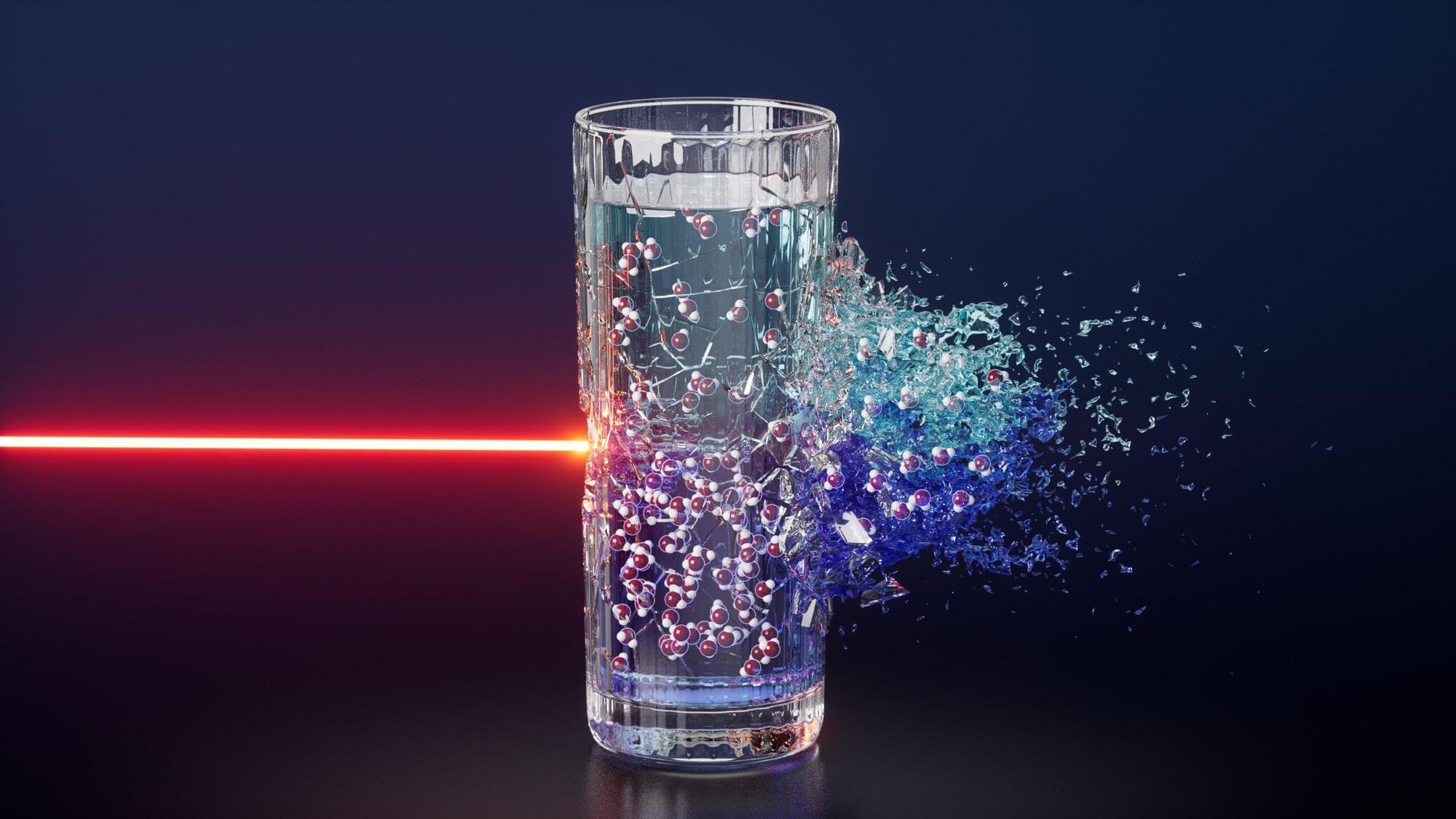
Using X-ray lasers, researchers at Stockholm University have been able to determine the existence of a critical point in supercooled water at around −63 °C and 1,000 atmospheres. Ordinary water at higher temperatures and lower pressures is strongly affected by the presence of this critical point, causing the origin of its strange properties. The findings are published in the journal Science.
Water, both omnipresent and essential for life on Earth, behaves very strangely in comparison with other substances. How water’s density, specific heat, viscosity and compressibility respond to changes in pressure and temperature is the complete opposite of other liquids that we know.
All matter shrinks when it is cooled, resulting in an increase in its density. One would therefore expect that water would have a high density at the freezing point. However, looking at a glass of ice water, everything is upside down, since—as we all know—ice cubes float. Strangely enough for the liquid state, water is the densest at 4 degrees C, and therefore it stays on the bottom whether it’s in a glass or in an ocean.