Toggle light / dark theme

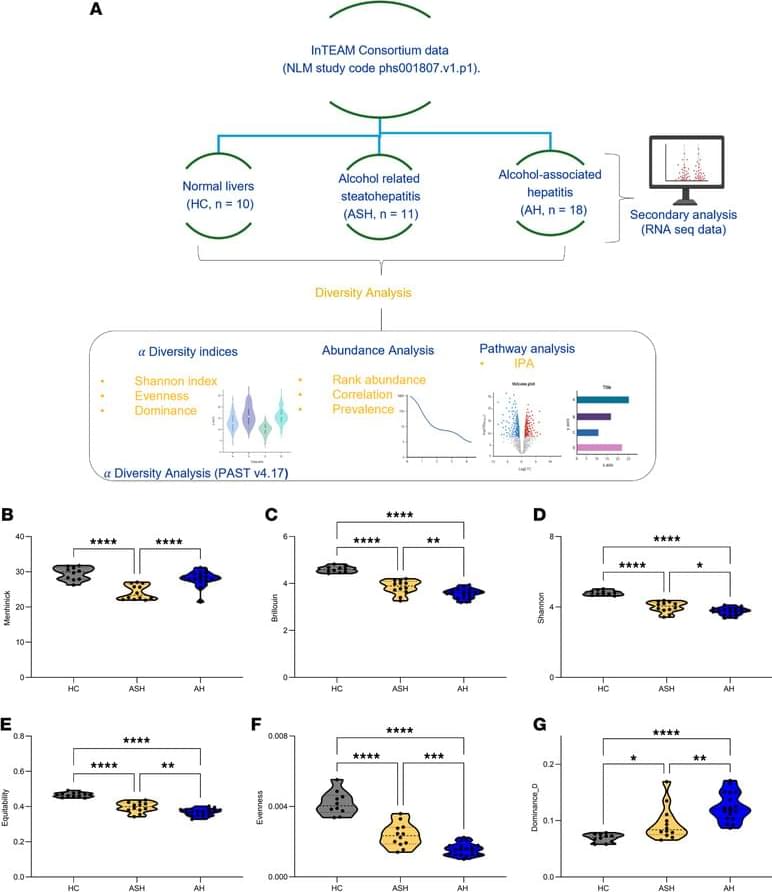
✨Presenting a methodological advancement that bridges ecological theory with clinical hepatology✨

https://doi.org/10.1172/jci.insight.

Here, Gavin E. Arteel & team perform alpha diversity analysis of hepatic transcriptome, revealing distinct pathways in alcohol-associated hepatitis and offering new perspectives on disease progression and identifying potentially informative biomarkers.


4Pittsburgh Liver Research Center, and.

5Department of Computational and Systems Biology, University of Pittsburgh, Pittsburgh, Pennsylvania, USA.

6Institut d’Investigacions Biomediques August Pi i Sunyer (IDIBAPS), University of Barcelona, Barcelona, Spain.

Enhancing gut-brain communication reversed cognitive decline, improved memory formation in aging mice

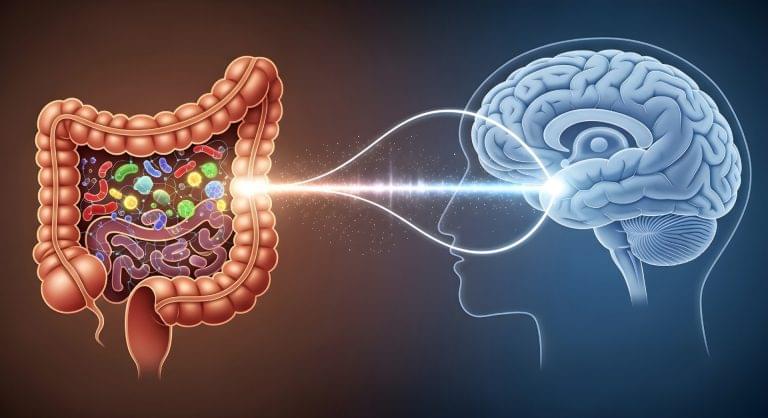
The sight of a delectable plate of lasagna or the aroma of a holiday ham are sure to get hungry bellies rumbling in anticipation of a feast to come. But although we’ve all experienced the sensation of “eating” with our eyes and noses before food meets mouth, much less is known about the information superhighway, known as the vagus nerve, that sends signals in the opposite direction — from your gut straight to your brain.

These signals relay more than just what you’ve eaten and when you are full. A new study in mice from researchers at Stanford Medicine and the Palo Alto, California-based Arc Institute has identified a critical link between the bacteria that live in your gut and the cognitive decline that often occurs with aging.

“Although memory loss is common with age, it affects people differently and at different ages,” said Christoph Thaiss, PhD, assistant professor of pathology. “We wanted to understand why some very old people remain cognitively sharp while other people see significant declines beginning in their 50s or 60s. What we learned is that the timeline of memory decline is not hardwired; it’s actively modulated in the body, and the gastrointestinal tract is a critical regulator of this process.”


By Krista Conger

Aging causes changes in gut bacteria in mice, which hampers communication between the intestines and the brain. Restoring this connection helped old mice form memories as well as young animals.

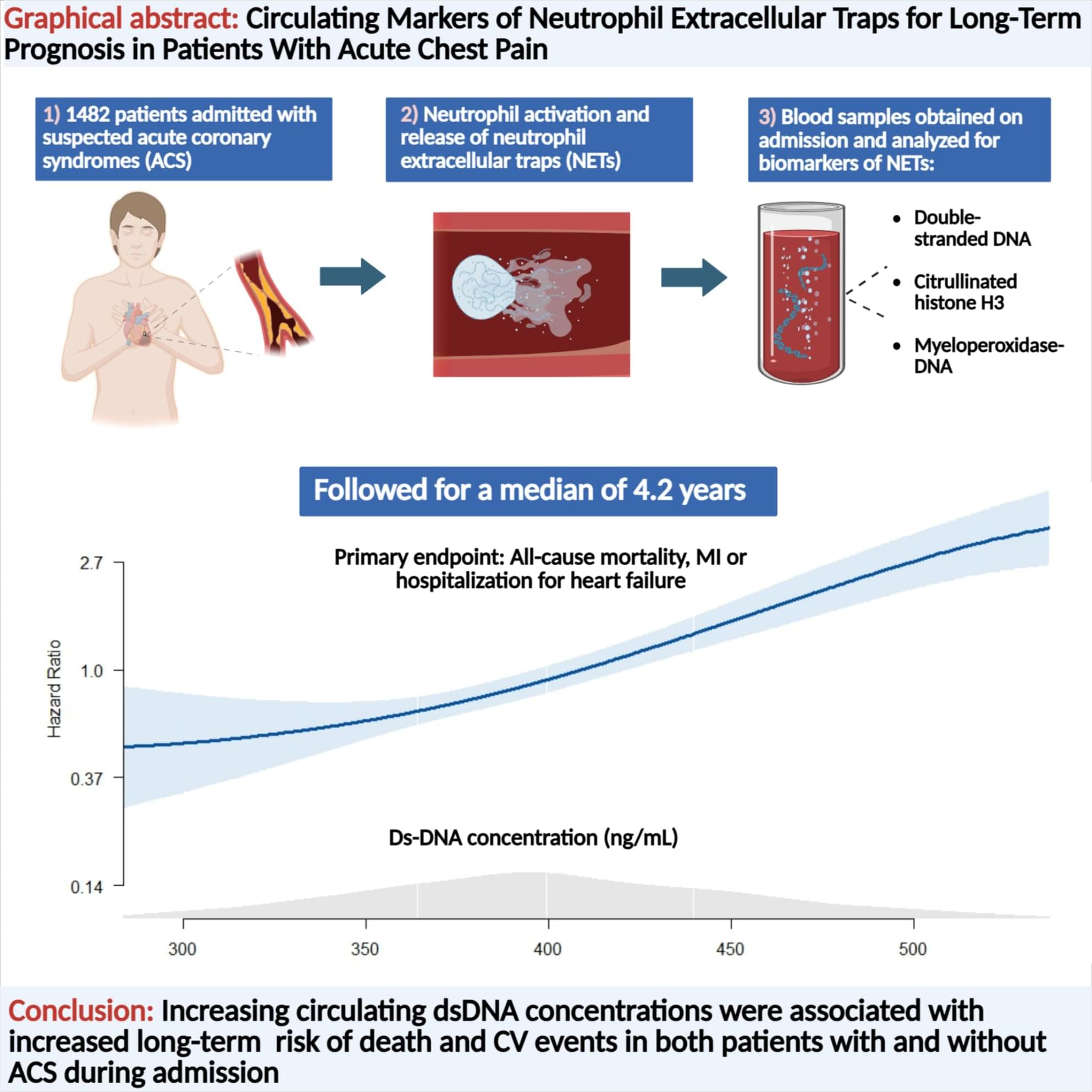
Circulating Markers of Neutrophil Extracellular Traps for Long‐Term Prognosis in Patients With Acute Chest Pain

Whole-brain cell mapping using AI

The researchers developed a highly multiplexed whole-mount staining technique, utilizing the repeated application of fluorescence in situ hybridization.

The technique called mFISH3D for multiplexed mRNA staining in whole mouse organs and human tissue.

The technique helps to visualize 10 types of mRNAs in an intact mouse brain.

This workflow provides a robust approach to studying selective cell vulnerability in disease. sciencenewshighlights ScienceMission https://sciencemission.com/Artificial-intelligence-driven-wh…ll-mapping


Murakami et al. developed mFISH3D for multiplexed mRNA staining in whole-mouse organs and human tissue. Analysis of the stained mouse brains using the AI-driven ZenCell platform reveals unique cell populations activated by pharmacological perturbation. This workflow provides a robust approach to studying selective cell vulnerability in disease.

Pollen-replacing feed strengthens honey bee colonies, long-term study confirms

A man-made food source provided honey bees a nutritious diet at a commercial scale over the course of two winter seasons, according to a new study led by Washington State University researchers. The study, published in the journal Insects, looked at the new feed as used by five commercial beekeepers in California and Idaho from fall 2022 to spring 2024. This study is a follow-up to an initial paper describing the bee feed.

The nutritionally complete feed, which resembles an oversized, very thin granola bar, was developed by APIX Biosciences, a biotech company based in Belgium with a U.S. subsidiary. The company worked with WSU’s Honey Bee Program to test the nutritional supplement.

“The first paper was a trial during the spring and summer pollination season to make sure the feed worked in real-world field conditions,” said Brandon Hopkins, WSU’s P.F. Thurber Endowed Distinguished Professor of Pollinator Ecology and a corresponding author on the paper. “This study happened during the other half of the year when beekeepers tend to see the biggest losses and depend the most on supplemental feeding. It was also done on a significantly larger scale than our previous study.”

New DNA tools outperform traditional methods for detecting genetic risk in wildlife

Wildlife populations that become small and isolated, often due to habitat loss, inevitably experience inbreeding which can lead to the loss of fitness and eventual extinction. One solution is to perform a genetic rescue: a management intervention where new blood is brought in by introducing outsiders to a population to reduce inbreeding and restore diversity. But how do researchers know the inbreeding problem has been solved?

A new long-term study from Western, led by biology professor and chair David Coltman, shows DNA-based tools detected changes in inbreeding more accurately than traditional pedigree methods in a wild population of bighorn sheep that was recently genetically rescued. The study was published in the journal Evolutionary Applications.

Pedigree approaches estimate genetic health from family history, whereas genomic approaches directly analyze DNA.

Quantum dots generate entangled photon pairs on demand

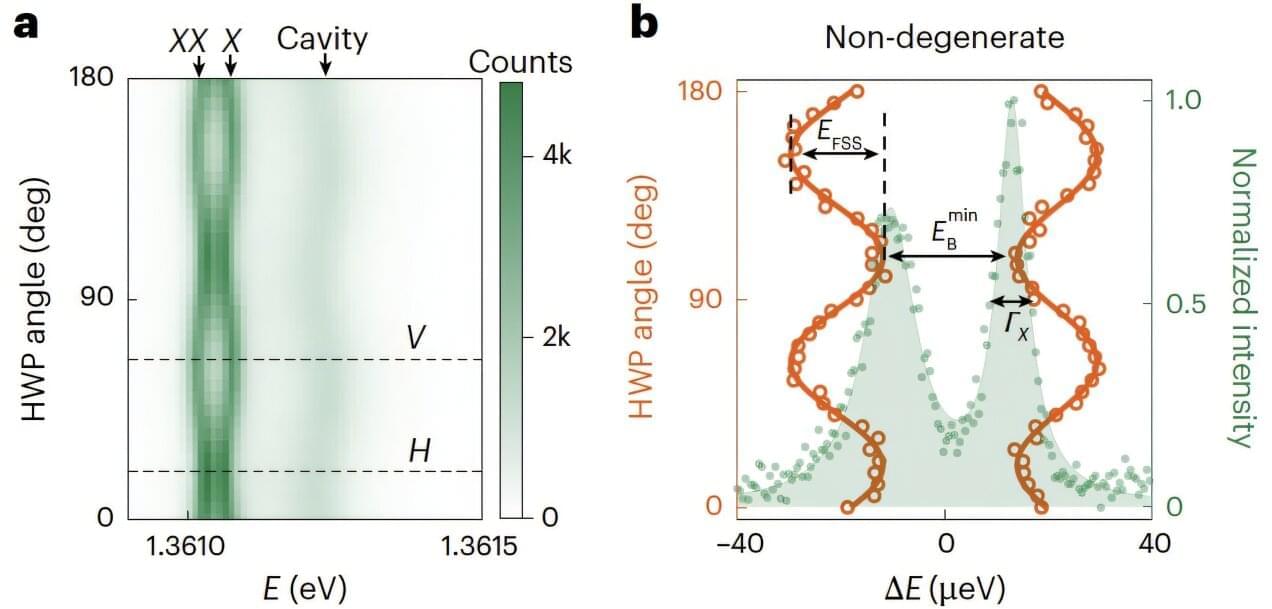
For the first time, researchers in China have demonstrated how quantum dots can be engineered to consistently generate pairs of entangled photons. By carefully tailoring the photonic environment surrounding a single quantum dot, the team showed that it is possible to produce highly correlated photon pairs with remarkable efficiency, potentially opening new opportunities for emerging quantum technologies. The work, led by Zhiliang Yuan at the Beijing Academy of Quantum Information Sciences, is reported in Nature Materials.

In recent years, technologies capable of generating single photons on demand have advanced at an impressive pace. Already, these sources have led to substantial progress in fields ranging from quantum computing and secure communications, to advanced sensing and biomedical imaging.

A natural next step will be the ability to produce pairs of photons that are identical and strongly entangled. Even when separated by large distances, the properties of entangled photons remain linked: an effect that lies at the heart of many quantum technologies.

Bacterial strain breaks decades-old bottleneck in chemotherapy drug manufacturing

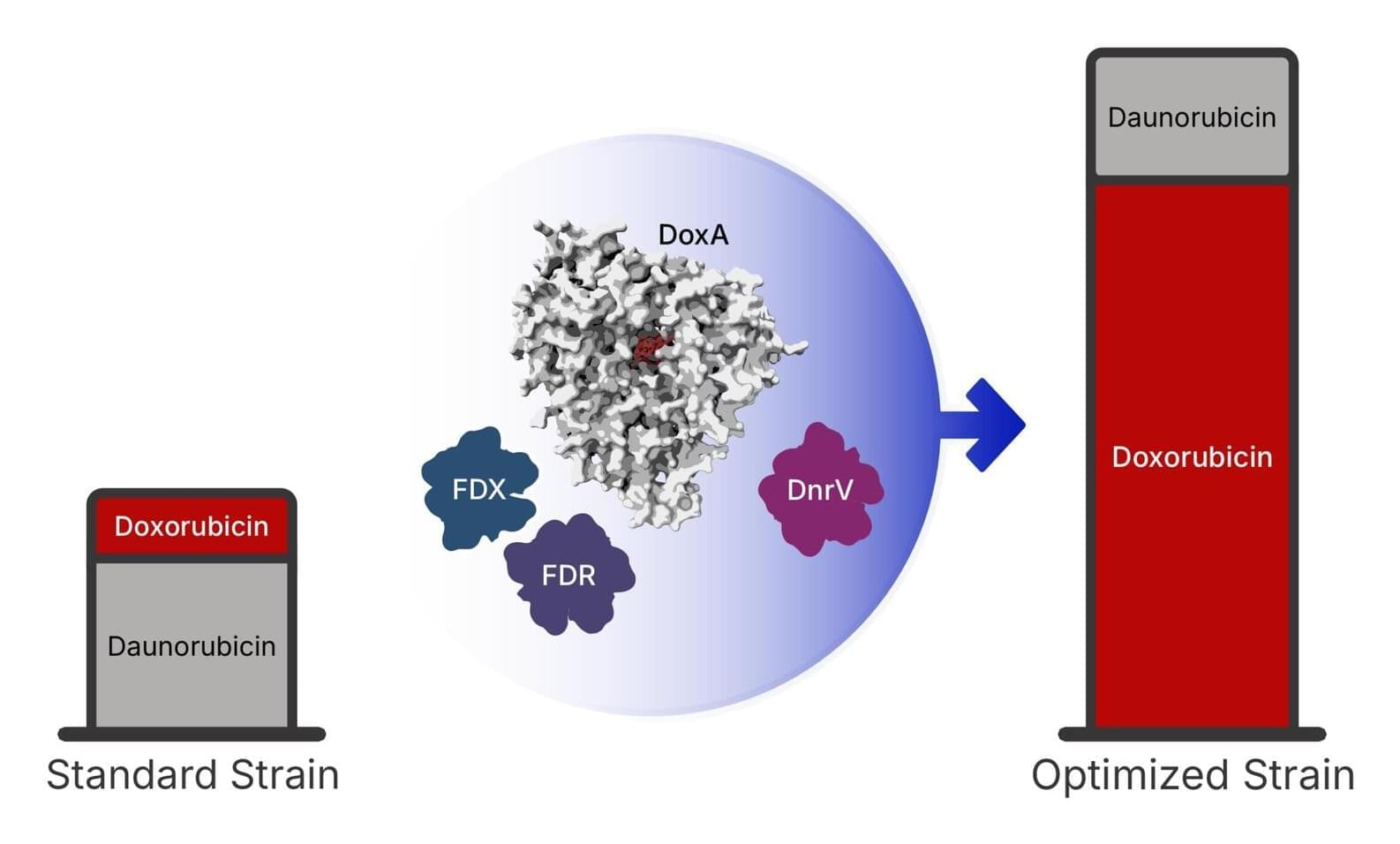
An international team of researchers has achieved a breakthrough in the production of doxorubicin, a vital chemotherapy agent. The study identifies and resolves molecular “bottlenecks” that have limited the natural production of this drug for over 50 years. The research is published in Nature Communications.

Doxorubicin is a chemotherapy drug that was first approved for medical use in the 1970s. It is a cornerstone in treating various cancers, including breast cancer, bladder cancer, lymphomas and carcinomas, with over one million patients receiving the treatment annually. However, bacteria naturally produce this important drug very inefficiently. Consequently, the pharmaceutical industry has relied on expensive, multi-step semi-synthetic processes.

“We have uncovered several independent factors that limit the formation of doxorubicin,” says researcher Keith Yamada, Ph.D., from the University of Turku in Finland, a lead scientist on the study.

Oligodendrocyte molecular perturbations associated with tau in Alzheimer’s

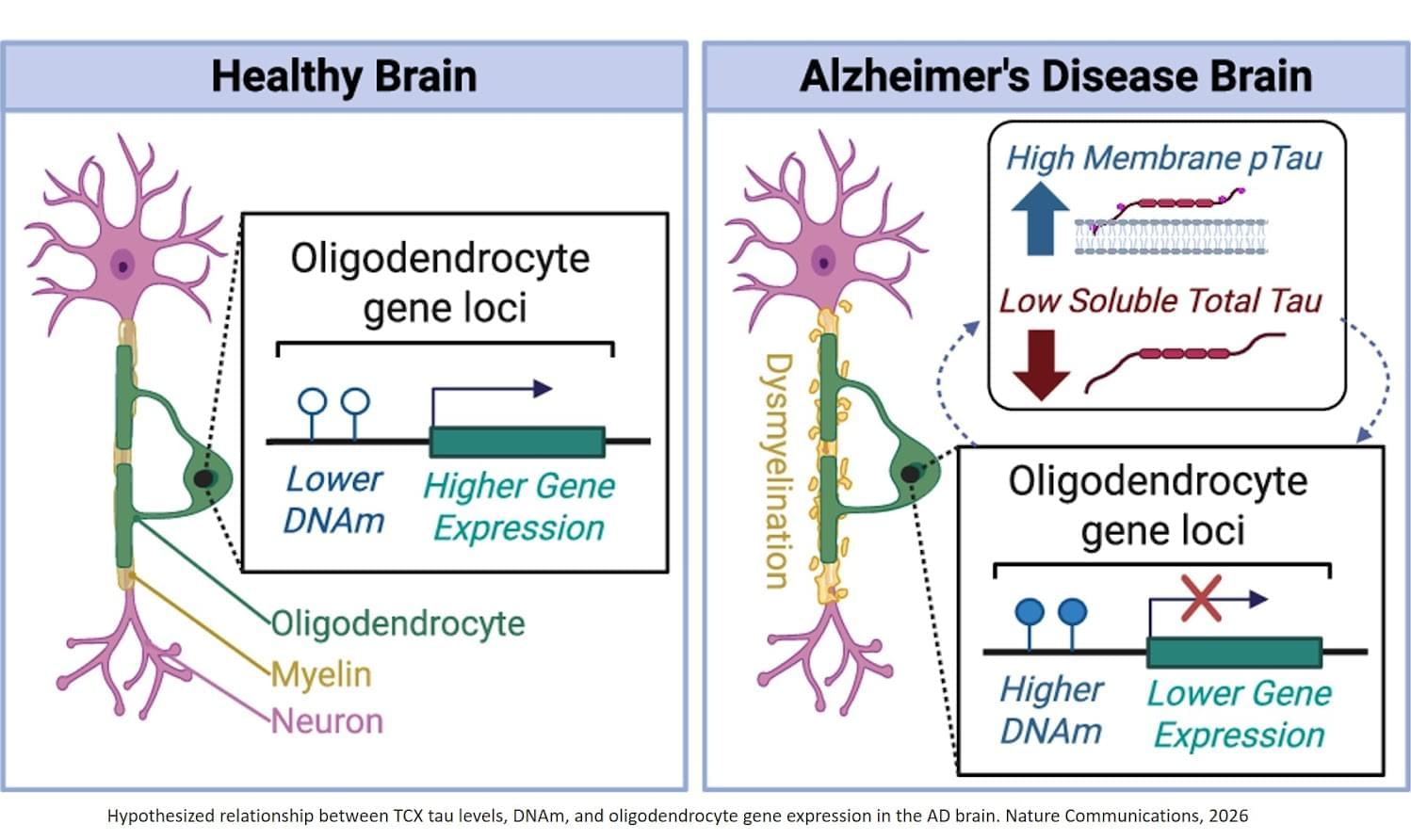
The findings suggest that in AD, part of what happens in the brain may involve changes in DNA tagging that affect the function of oligodendrocytes, particularly in relation to the buildup of the toxic protein tau.

Oligodendrocytes are the brain cells that make myelin, the insulation that helps nerve cells communicate. Scientists have theorized that disrupting neuron communication contributes to symptoms for people with AD. Researchers in this study found that nearly all significant methylation changes — small chemical tags added to DNA that help control when genes are turned on or off — were linked to the tau protein. This supports the idea that this protein plays a key role in brain cell changes tied to AD.

“Our team has previously shown that oligodendrocytes are affected in Alzheimer’s and another tau-related disease, progressive supranuclear palsy (PSP),” says the author. “These new results further highlight that problems in oligodendrocytes and myelin are central to AD. They also point to specific molecular pathways, particularly epigenetic changes, that could be targeted in future therapies.”

The study results identified new genes that may play a role in AD, including one called LDB3, and confirmed many findings across multiple independent datasets, showing its reliability. The identification of specific genes provides potential targets for future research — for example, scientists might investigate whether interventions that reverse methylation or support oligodendrocyte health can slow or modify disease progression for patients with AD. ScienceMission sciencenewshighlights.


In a study published in Nature Communications, the researchers have identified specific DNA-level changes in the brains of people with Alzheimer’s disease (AD). Using advanced biological analysis, the team mapped alterations in the brain’s regulatory landscape that may help explain why Alzheimer’s presents and progresses differently from person to person. The findings could also open new avenues for understanding other neurodegenerative diseases.

Alzheimer’s disease is the most common cause of dementia. Biologically, the disease begins with the formation of protein deposits, known as amyloid plaques, and neurofibrillary tangles in the brain. This causes brain cells to die over time and the brain to shrink. About 6.9 million people in the U.S. age 65 and older live with Alzheimer’s disease. There is no cure, and in advanced stages, complications can result in a significant decline in quality of life and death.
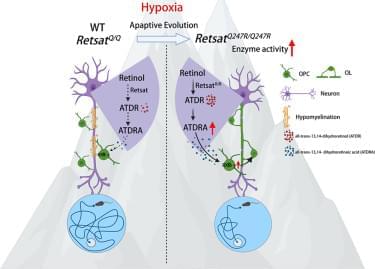
A gain-of-function Retsat variant from high-altitude adaptation promotes myelination via a neuronal dihydroretinoic acid-RXR-γ pathway

High-altitude survival gene in mammals may help reverse nerve damage from conditions like multiple sclerosis.

Neuron.


Li et al. report that a gain-of-function Retsat variant, associated with high-altitude adaptation, promotes myelination by boosting neuronal synthesis of the signaling metabolite ATDRA. This molecule activates RXR-γ in oligodendrocyte progenitors. Administration of the prodrug ATDR promotes remyelination in models of myelin disease.

/* */