Toggle light / dark theme

Get the latest international news and world events from around the world.

Log in for authorized contributors

Have the Harms of Lung Cancer Screening Been Exaggerated?

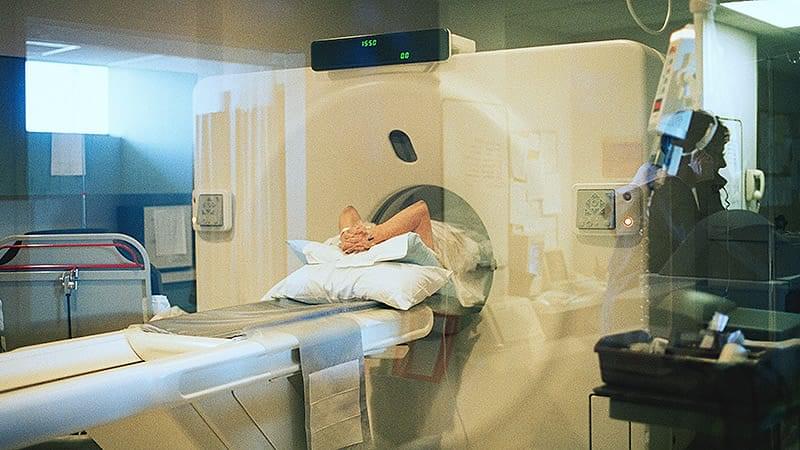
Some medical societies say recent studies may have overstated the risks of lung cancer screening, potentially discouraging eligible patients from being screened. While debates continue about false positives and overdiagnosis, many experts agree that routine screening with low-dose CT has clear benefits for people at high risk of lung cancer.


Three medical societies claim recent studies have overestimated the potential harms from lung cancer screening and may be deterring patients. Not everyone agrees.

Navigating Complexity: Key Updates to ASCO’s Living Guidelines for Stage IV Driver Mutation–Negative NSCLC

The landscape for stage IV driver mutation-negative NSCLC is shifting toward even greater precision. ASCO has released critical updates to the Living Guidelines, emphasizing that the “absence” of a driver mutation is a vital biomarker in itself.


An interview with Joshua Reuss, MD, thoracic medical oncologist at Georgetown University and co-author of the guidelines.

Abstract: BreastCancer is associated with loss of the sirtuin deacetylase SIRT2, which leads to genomic instability and carcinogenesis, but the precise mechanism has been unclear

David S. Yu & team now show SIRT2 deacetylates MRE11 facilitating DNA binding to promote DNA end resection and ATM-dependent DNA damage signaling:

The figure shows MRE11 K393 deacetylation by SIRT2 promotes DNA end resection after ionizing radiation exposure, in the osteosarcoma cell line U20S.


1Department of Radiation Oncology and Winship Cancer Institute, Emory University School of Medicine, Atlanta, Georgia, USA.

2Department of Biology, Clark Atlanta University, Atlanta, Georgia, USA.

3Department of Biochemistry, Emory University School of Medicine, Atlanta, Georgia, USA.

Sandisk Extreme Fit Drive launched as ‘world’s smallest’ 1TB USB Type-C flash drive: Price in India, features and more

Laptops & PC News: Sandisk has launched the SANDISK Extreme Fit USB-C Flash Drive in India, the world’s smallest 1TB USB-C flash drive. The tiny drive is aimed at profes.

Caretaker AI & Genius Loci: When Worlds Grow Minds of Their Own

Meet the caretaker AIs: guardians of planets, habitats, and civilizations. What happens when machines become the spirit and soul of the worlds they protect?

Checkout Rifftrax https://go.nebula.tv/rifftrax?ref=isa… Watch my exclusive video The Fermi Paradox — Civilization Extinction Cycles: https://nebula.tv/videos/isaacarthur–… Nebula using my link for 40% off an annual subscription: https://go.nebula.tv/isaacarthur Grab one of our new SFIA mugs and make your morning coffee a little more futuristic — available now on our Fourthwall store! https://isaac-arthur-shop.fourthwall… Visit our Website: http://www.isaacarthur.net Join Nebula: https://go.nebula.tv/isaacarthur Support us on Patreon: / isaacarthur Support us on Subscribestar: https://www.subscribestar.com/isaac-a… Facebook Group: / 1,583,992,725,237,264 Reddit: / isaacarthur Twitter: / isaac_a_arthur on Twitter and RT our future content. SFIA Discord Server: / discord Credits: Caretaker AI & Genus Loci 2025 Edition Written, Produced & Narrated by: Isaac Arthur Editors: Ludwig Luska Graphics: Bryan Versteeg Jeremy Jozwik Ken York YD Visual Kris Holland Mafic Studios Select imagery/video supplied by Getty Images Music Courtesy of Epidemic Sound http://epidemicsound.com/creator.
Watch my exclusive video The Fermi Paradox — Civilization Extinction Cycles: https://nebula.tv/videos/isaacarthur–
Get Nebula using my link for 40% off an annual subscription: https://go.nebula.tv/isaacarthur.

Grab one of our new SFIA mugs and make your morning coffee a little more futuristic — available now on our Fourthwall store! https://isaac-arthur-shop.fourthwall

Visit our Website: http://www.isaacarthur.net.
Join Nebula: https://go.nebula.tv/isaacarthur.
Support us on Patreon: / isaacarthur.
Support us on Subscribestar: https://www.subscribestar.com/isaac-a
Facebook Group: / 1583992725237264
Reddit: / isaacarthur.
Twitter: / isaac_a_arthur on Twitter and RT our future content.
SFIA Discord Server: / discord.
Credits:
Caretaker AI & Genus Loci 2025 Edition.
Written, Produced & Narrated by: Isaac Arthur.
Editors: Ludwig Luska.
Graphics:
Bryan Versteeg.
Jeremy Jozwik.
Ken York YD Visual.
Kris Holland Mafic Studios.
Select imagery/video supplied by Getty Images.
Music Courtesy of Epidemic Sound http://epidemicsound.com/creator

The Simulation Argument Was Never Actually Debunked — And The Math Is Getting Worse

In 2017, headlines around the world declared the simulation hypothesis dead. Physicists had debunked it, the articles said. We could all move on. There was one problem. The paper they cited never mentioned the simulation hypothesis. The debunking was invented by journalists who never read the research. And in the years since, the actual physics has gotten significantly worse.

This documentary follows that physics all the way down.

We begin with what really happened in 2017 — the Ringel-Kovrizhin paper, what it actually proved, and Scott Aaronson’s correction that nobody shared. Then we examine Nick Bostrom’s original 2003 trilemma, the real math behind it, and why two decades of attacks from Sean Carroll, Lisa Randall, and Sabine Hossenfelder have failed to break it. Every critique concedes something. Every attempted kill shot narrows the escape routes.

From there, we trace the physics of information through three remarkable lives. Konrad Zuse, who built the first programmable computer in his parents’ living room during the bombing of Berlin, then proposed in 1967 that the universe itself is a computation — and was ignored. John Archibald Wheeler, who lost his brother in World War Two and spent the rest of his life asking whether reality is built from information, condensing it into three words that changed physics: \.

Read more

Spontaneous metacognitive experiences and involuntary memories in the laboratory

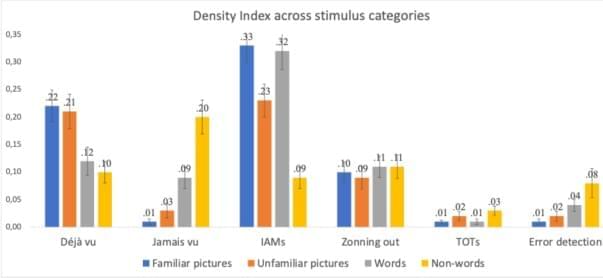
A recent study published in Consciousness and Cognition provides evidence that everyday mental quirks like déjà vu or tip of the tongue states are natural byproducts of a resting mind. The findings suggest that when a person’s attention is not fully occupied, a wide variety of spontaneous thoughts and reflective feelings naturally emerge into awareness.

The scientists conducted the research to understand if a broad spectrum of unprompted mental experiences could be systematically captured in a laboratory setting. Past research has mostly focused on involuntary memories, which are recollections of personal events that pop into the mind without warning. The team wanted to know if the same boring, repetitive conditions that produce these memories might also generate other spontaneous phenomena.

They specifically focused on metacognition. Metacognition is a term used to describe the brain’s ability to think about and monitor its own processes. While people sometimes use metacognition deliberately, such as trying to gauge how well they learned a topic for a test, it can also happen without effort.

Spontaneous metacognition includes sudden feelings like déjà vu, which is the sensation that a new situation is highly familiar. It also includes the sudden realization that a well known word looks strangely incorrect, a phenomenon known as jamais vu.

“This study was motivated by the observation that many mental experiences—such as déjà vu, tip-of-the-tongue states, or sudden memories—seem to appear spontaneously in everyday life, yet they are usually studied separately in different areas of psychology,” explained study author Krystian Barzykowski, the head of the Applied Memory Research Laboratory at Jagiellonian University and Marie Skłodowska-Curie Postdoctoral Fellow at the Grenoble Alpes University.

Abstract: Consciousness and Cognition.
Behavioral scientists found that people without children develop a relationship to mortality that is psychologically distinct. Without biological continuation

I’ve been thinking about death differently lately. Not in a morbid way, not in a crisis way. More like the way you start noticing a sound you’d been filtering out for years. A few months ago, I was having dinner near Tanjong Pagar with a woman I’ve known for about eight years, a 56-year-old consultant who runs a small but well-regarded advisory firm. She has no children. Never wanted them, she told me once, years ago, with the kind of calm clarity that made the topic feel settled. But that night, she said something that hasn’t settled at all. She said, “The hardest part of not having kids isn’t the loneliness people assume. It’s figuring out what your life means when there’s no one who carries it forward.”

She said it the way you’d describe a delayed train. Factual. Slightly inconvenient. Already accommodated.

That sentence has stayed with me. Because over nearly two decades of building companies across multiple countries, I’ve watched the question of legacy come up again and again in people’s lives, usually somewhere around their late forties or early fifties, and I’ve noticed something: the people who face it most directly, most honestly, are often the ones without children.


Without biological continuation, people who never have children are forced to build their own relationship with mortality from scratch, and the psychological architecture that requires turns out to be both more fragile and more deliberate than most of us assume.

/* */