Toggle light / dark theme

Get the latest international news and world events from around the world.

Log in for authorized contributors

Multi-wavelength observations track bright gamma-ray blazar’s three-year cycle

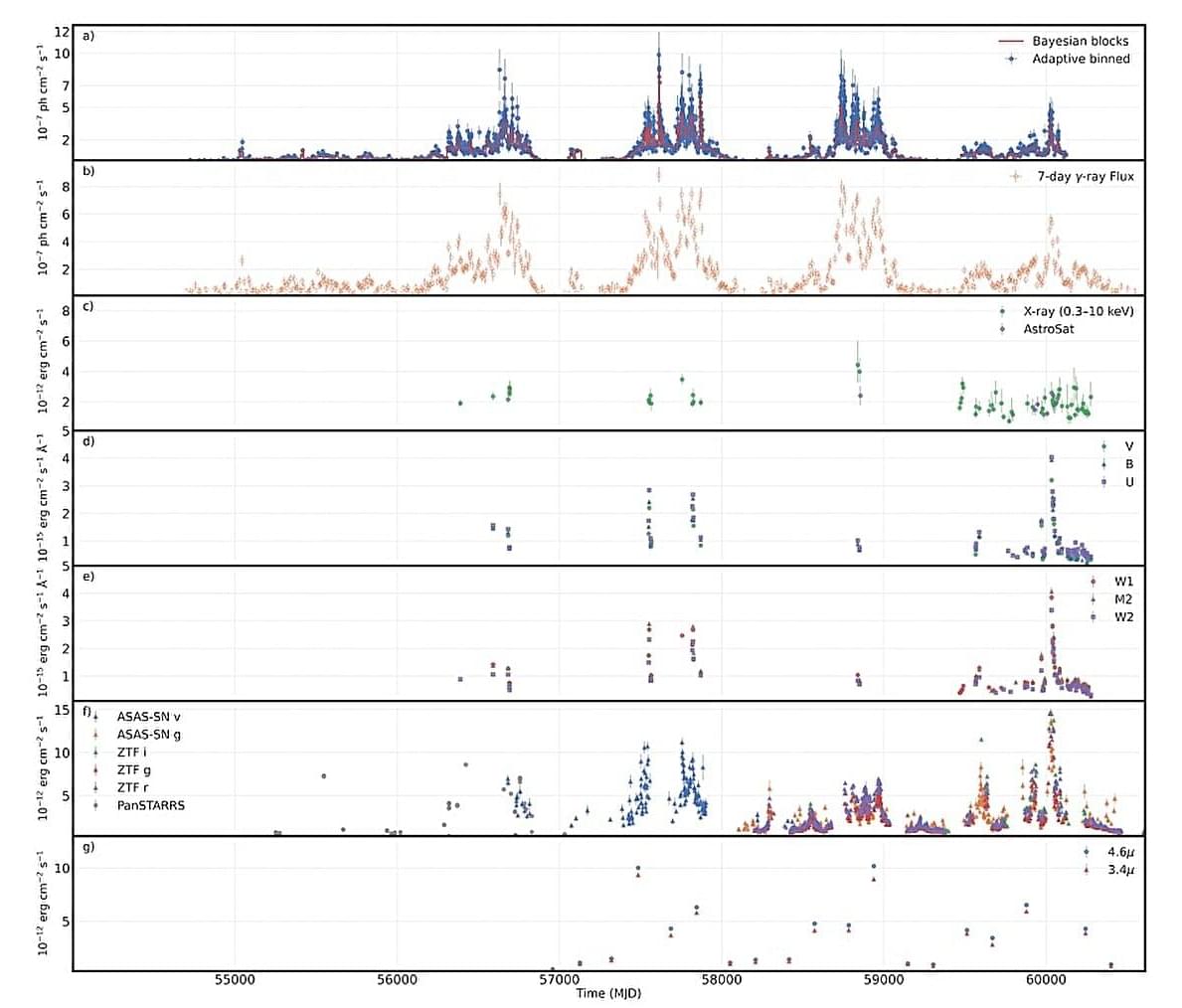
By analyzing the data from various space observatories and ground-based telescopes, European astronomers have performed a multiwavelength study of a bright gamma-ray blazar known as S5 1044+71. The new study, published Feb. 26 on the arXiv pre-print server, delivers a comprehensive view of this blazar, which could help us better understand its nature.

Blazars are very compact quasi-stellar objects (quasars) associated with supermassive black holes (SMBHs) at the centers of active, giant elliptical galaxies. They are the most luminous and extreme subclass of active galactic nuclei (AGNs). The characteristic features of blazars are highly collimated relativistic jets pointed almost exactly toward Earth.

Astronomers divide blazars into two classes, based on their optical emission properties: flat-spectrum radio quasars (FSRQs) that feature prominent and broad optical emission lines, and BL Lacertae objects (BL Lacs), which do not.
Mapping 3D-super-enhancers with machine learning to pinpoint regulators of cell identity

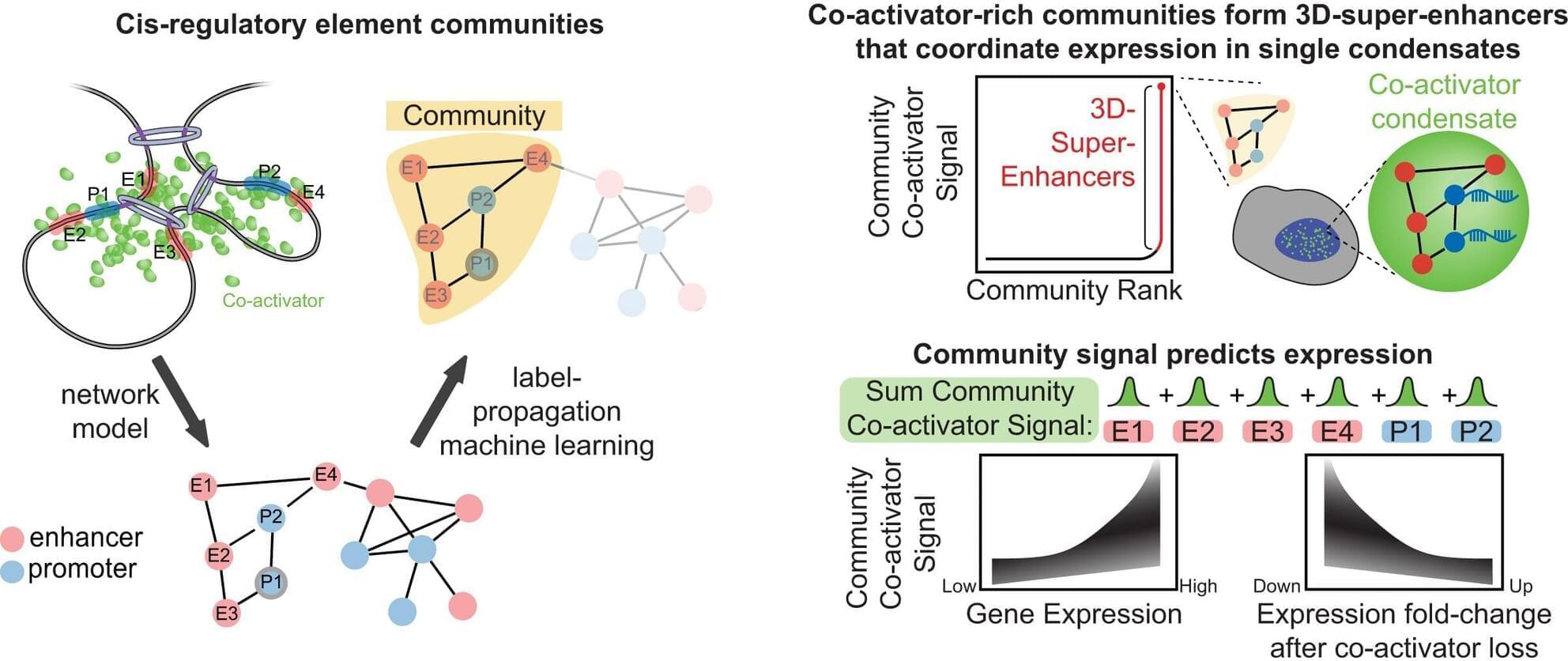
Scientists usually study the molecular machinery that controls gene expression from the perspective of a linear, two-dimensional genome—even though DNA and its bound proteins function in three dimensions (3D). To better understand how key components of this machinery, such as super-enhancers, regulate genes in this 3D reality, scientists at St. Jude Children’s Research Hospital have developed a new algorithm called BOUQUET.

Using machine learning, BOUQUET reveals that sets of genes and their regulatory elements can interact within protein condensates, high-density membraneless droplets, in cells’ nuclei. The findings, which provide new insight into how cells regulate the genes that control their specialized identities, were published today in Nucleic Acids Research.

Cells express certain sets of genes to carry out specific functions; for example, a blood cell and a brain cell express different context-specific genes. There are 3 billion base pairs of human DNA, and the genes involved in cell identity are scattered throughout. Even more challenging, enhancers, DNA elements that activate gene expression, can be thousands of DNA bases away from their target genes.

Ultrafast light pulses make molecules rotate on quantum materials

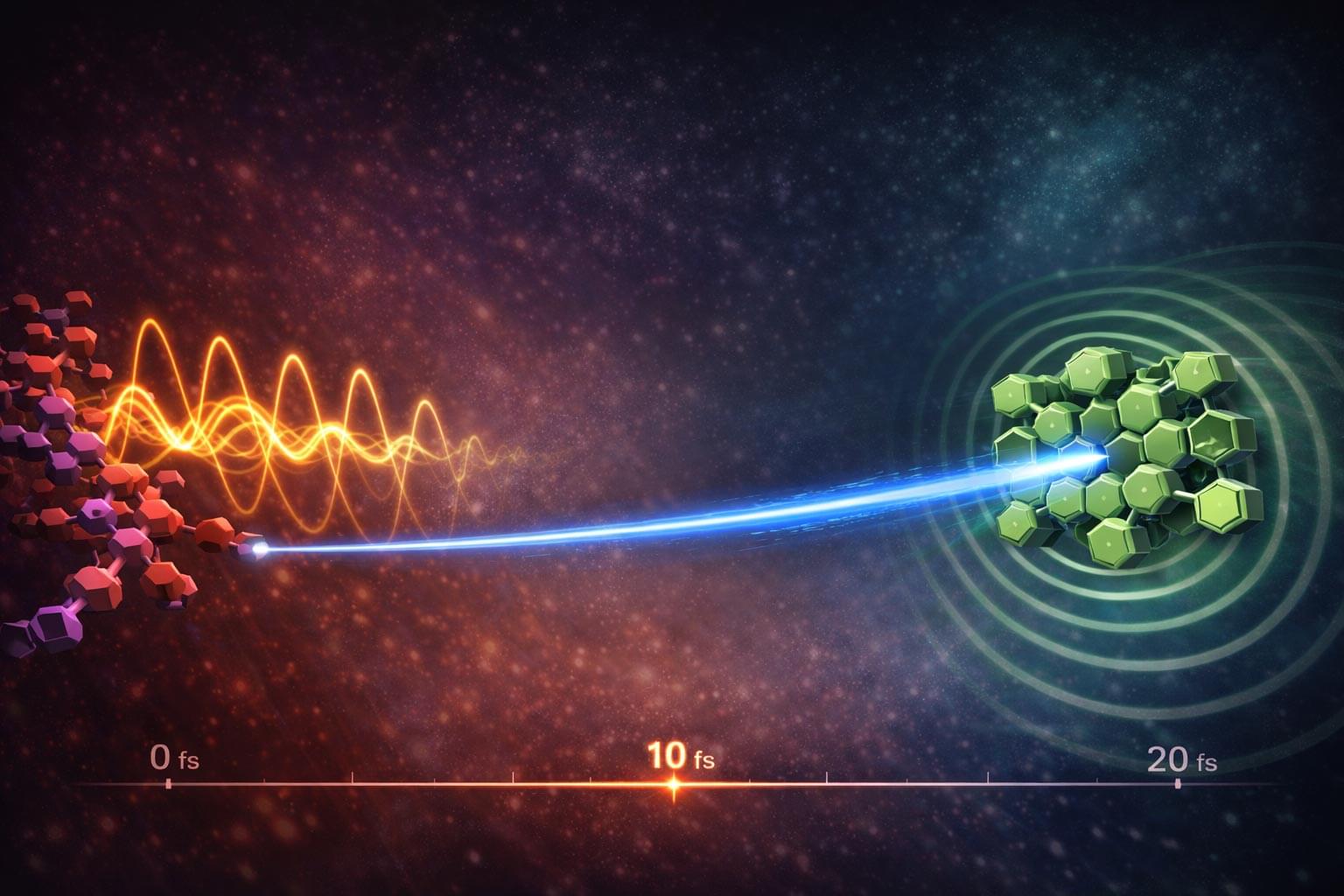
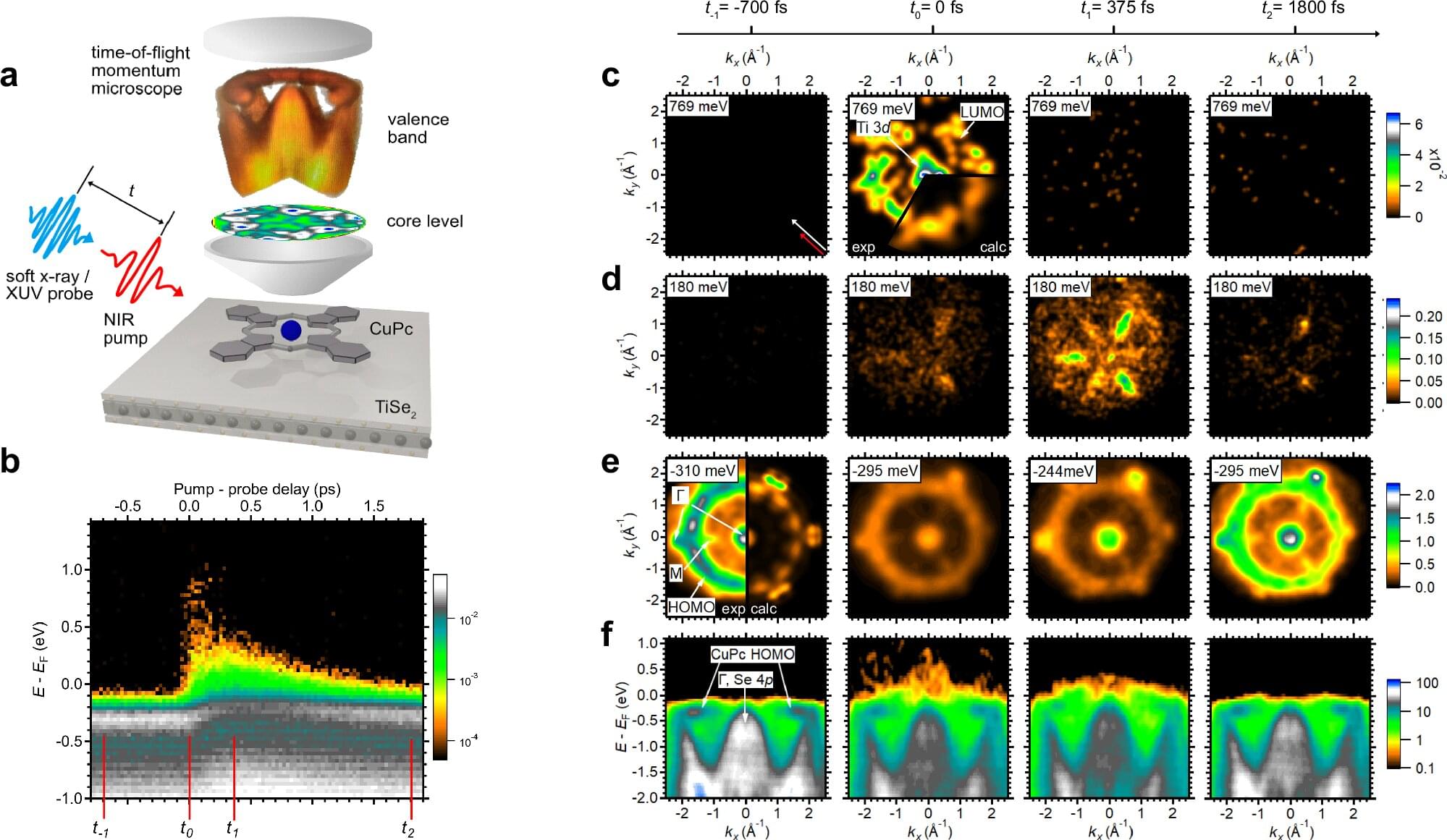
Researchers from Germany, Japan and India, led by scientists from DESY and the Universities of Kiel and Hamburg, have found a way to collectively make molecules on a flat surface rotate by exposing them to light using ultrafast light pulses from DESY’s free-electron laser FLASH and a high-harmonic generation source. However, making those molecules dance is not the ultimate goal: this result could have an impact on next-generation quantum and energy materials for electronics, data storage and energy conversion.

Molecules sitting on a material surface usually do just that—they sit on the surface without changing. If you send energy their way, however—for example, in the form of light—they can become dynamic and move. If this movement could be controlled, it could have a massive influence on all sorts of nanomaterials that are being investigated for a variety of applications from health to data storage.

DESY scientist Markus Scholz, leader of a study now published in Nature Communications, points out that this is particularly interesting in hybrid systems where organic molecules are placed on atomically thin, two-dimensional quantum materials. Examples of these hybrid systems are molecular electronics or energy-driven functional surfaces.

The Moon Was Hit Again: NASA Scientists Discover a Newly Formed Crater

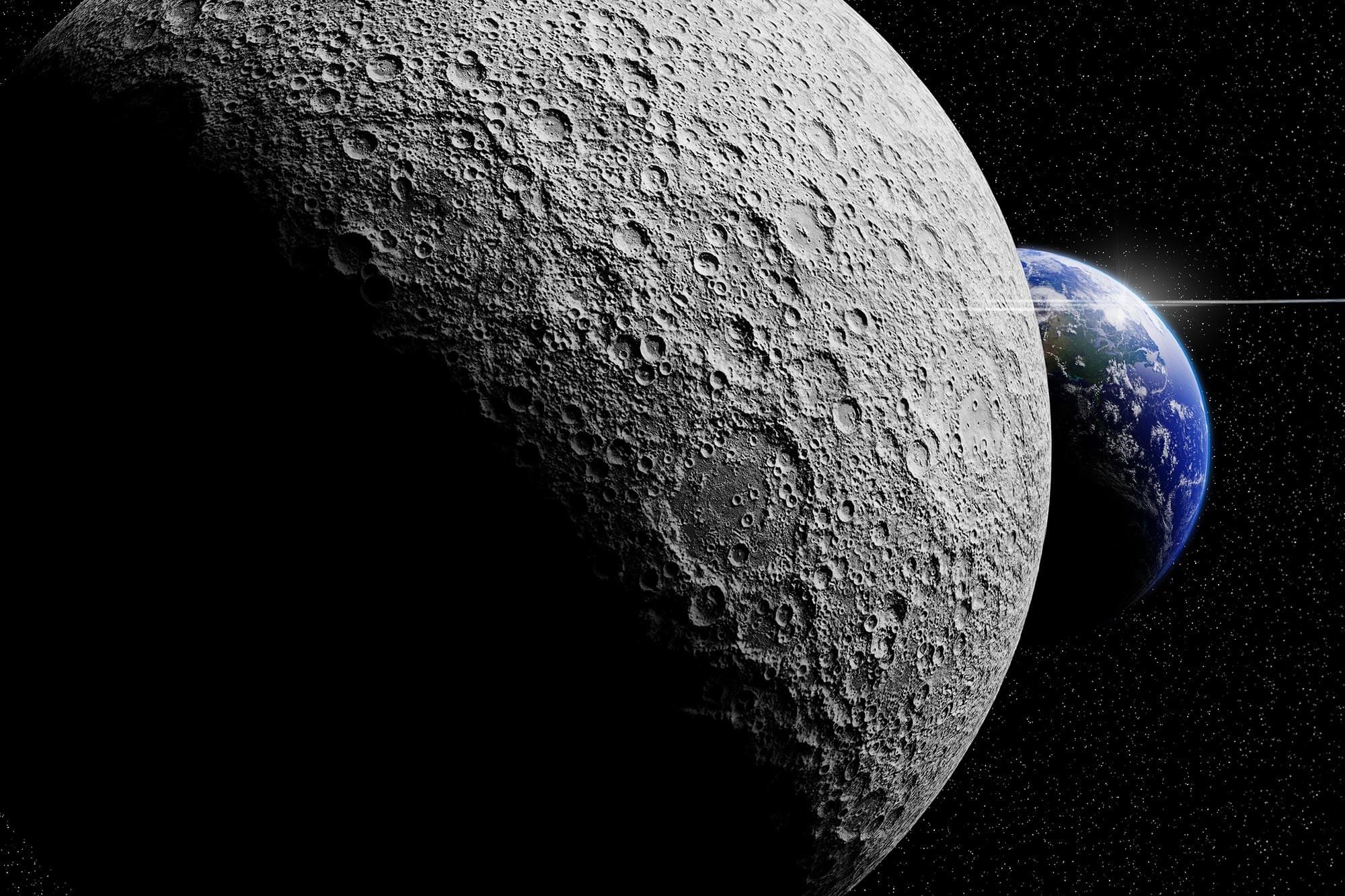
A bright new lunar crater detected in spacecraft images shows that asteroid impacts continue to reshape the Moon’s surface today. The Moon’s familiar surface tells a story of both ancient violence and ongoing change. While its vast dark basins formed during a period of intense bombardment billion

/* */