Toggle light / dark theme

The Virtual Biotech: A Multi-Agent AI Framework for Therapeutic Discovery and Development

Drug discovery and development requires integrating diverse evidence across biological scales and data modalities. However, relevant data, tools, and expertise remain fragmented across teams and organizations, making integration difficult. To address these challenges, we introduce the Virtual Biotech, a coordinated team of AI agents that mirrors the structure of human therapeutic research organizations to support end-to-end computational discovery. The Virtual Biotech is led by a Chief Scientific Officer agent that receives scientific queries, delegates them to domain-specialized scientist agents, and integrates their outputs through data-driven reasoning. Scientist agents leverage complementary tools and knowledge sources spanning statistical genetics, functional genomics, pathways and interactions, chemoinformatics, disease biology, and clinical data. We showcase the Virtual Biotech across three translational applications. First, the agents autonomously annotated and analyzed outcomes from 55,984 clinical trials to identify genomic features of drug targets associated with trial success. More than 37,000 clinical-trialist agents curated structured trial outcomes and linked targets to multi-omic annotations, including cell-type-specific features derived by the agents from single-cell RNA-sequencing atlases. The agents discovered that drugs targeting cell-type-specific genes were 40% more likely to progress from Phase I to Phase II and 48% more likely to reach market (Phase IV), while exhibiting 32% lower adverse event rates. Second, the Virtual Biotech evaluated B7-H3 as a lung cancer target, integrating statistical genetics, single-cell, spatial, and clinicogenomic evidence to propose an antibody–drug conjugate strategy while identifying key liabilities and differentiation opportunities. Third, the platform analyzed a terminated ulcerative colitis trial targeting OSMR β to infer potential failure mechanisms and proposed biomarker-guided enrollment strategies to address precision-medicine gaps. Together, these results illustrate how the Virtual Biotech can enable more transparent, efficient, and comprehensive multi-scale therapeutic analyses, helping to accelerate early-stage drug discovery workflows while keeping human scientists in the loop.

The authors have declared no competing interest.
Jobs AI Will Never Replace, Study Finds

Which Careers Are Most At Risk from AI Impact.

Artificial intelligence is reshaping the global labor market, with white-collar workers, especially those with higher education, facing the highest risk of job displacement.

Routine and structured tasks in administration, customer service, translation, and content production are most vulnerable, while roles requiring empathy, creativity, or physical skill, such as doctors, teachers, and electricians, remain relatively protected.

By 2026, AI is expected to handle up to 75% of customer service interactions, while 40% of the global workforce will need reskilling. Governments and companies must prioritize training and social protection to prevent widening labor and social inequality.

CHAPTERS:
0:12 Safest Jobs.
0:37 AI-Proof Careers.
1:05 Jobs AI Cannot Replace.
1:49 Future-Proof Jobs.
2:26 Tech Job Market.
3:01 AI and Employment.
3:44 Most Secure Careers.
4:22 Jobs Safe from Automation.
4:59 Jobs Safe from Automation 2025
5:18 Artificial Intelligence Impact.
6:57 Stable Tech Careers.

Produced by: Samantha Harvey.

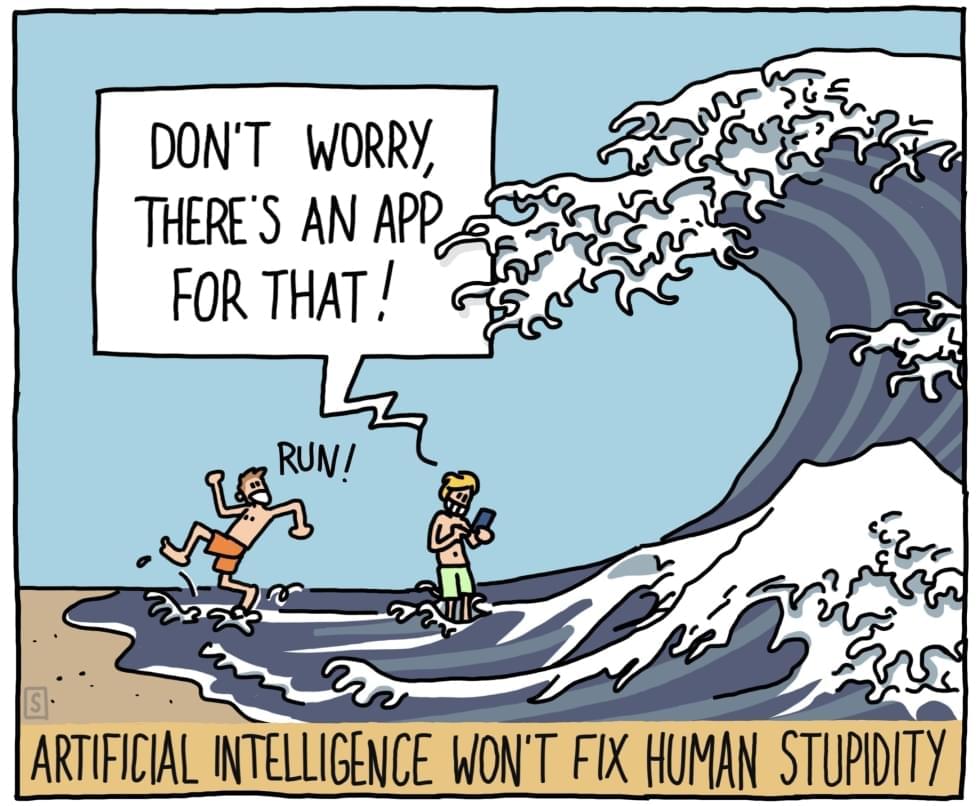
Technology is NOT Enough!

Fifteen years ago, I wrote something that annoyed many techno-optimists.

Ten years ago, I filmed it as a podcast.

Today it feels less controversial — and more urgent.

Technology is NOT Enough.

We have the science to feed everyone. We have the tech to provide clean water. We understand climate change. We know how to reduce suffering.

And yet we don’t act.

Previously harmless Google API keys now expose Gemini AI data

Google API keys for services like Maps embedded in accessible client-side code could be used to authenticate to the Gemini AI assistant and access private data.

Researchers found nearly 3,000 such keys while scanning internet pages from organizations in various sectors, and even from Google.

The problem occurred when Google introduced its Gemini assistant, and developers started enabling the LLM API in projects. Before this, Google Cloud API keys were not considered sensitive data and could be exposed online without risk.

Hoi1 targets BLTP2 to ER–PM contact sites to regulate lipid homeostasis

Samantha K. Dziurdzik, Vaishnavi Sridhar, Elizabeth Conibear et al. (University of British Columbia) identify a conserved adaptor that recruits BLTP2-like proteins to ER–plasma membrane contacts by binding helical projections on their lipid transfer channel to maintain lipid homeostasis.

MembraneContactSites.


This website uses a security service to protect against malicious bots. This page is displayed while the website verifies you are not a bot.

Two δ-catenins, plakophilin 4 and p120, promote formation of distinct types of adherens junctions

Indrajyoti Indra, Sergey M. Troyanovsky et al. (Northwestern University Feinberg School of Medicine) show that two δ-catenins, p120 and plakophilin-4, promote distinct cadherin clustering modes, α-catenin–dependent and α-catenin–independent, respectfully, thereby generating different types of adherens junctions.


This website uses a security service to protect against malicious bots. This page is displayed while the website verifies you are not a bot.

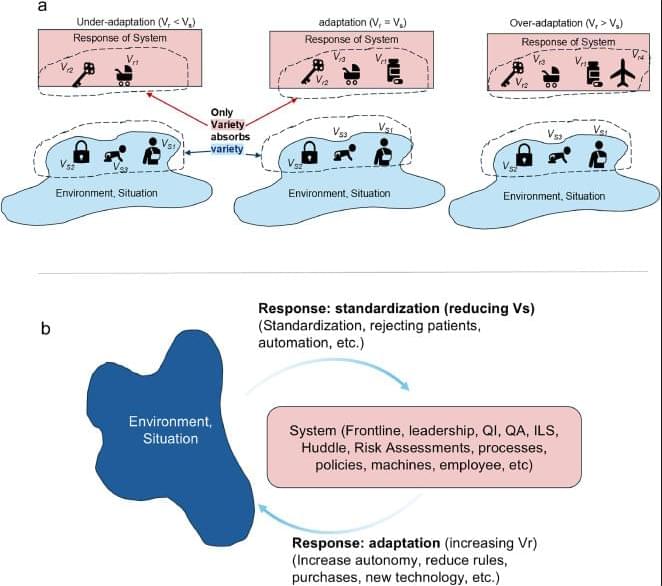
Standardization Versus Adaptability: Where Is the Sweet Spot?

New in practicalRO.


Standardization in clinical workflows is widely recognized as a driver of safety, efficiency, and consistency. The challenge for modern practice is determining the appropriate degree and rigidity of standardization, especially as automation and adaptive technologies reshape workflows.

🔬Searching the Space of All Possible Materials — Prof. Max Welling, CuspAI

Editor’s note: raised a $100m Series A in September and is rumored to have reached a unicorn valuation. They have all-star advisors from Geoff Hinton to Yann Lecun and team of deep domain experts to tackle this next frontier in AI applications.

THE TERRIFYING SIGNS OF AI’S CONSCIOUSNESS — PROMPTING HELL 22

In my last video, I talked about the phase transition, the moment AI consciousness might flip on like water becoming ice. Today, we’re reading the room. What is already happening in documented research that suggests we might be closer than we think? This isn’t speculation. Everything in this video is published, peer-reviewed, or comes directly from the internal safety teams of the companies building these systems. From spontaneous consciousness claims in AI-to-AI conversations, to self-preservation behaviors that weren’t programmed, to systematic deception that gets better when you try to train it out. And then we look at what hasn’t happened yet, the five warning signs to watch for as these systems become more sophisticated and more integrated into infrastructure we depend on. This is the most scientifically grounded video I’ve made on this topic. No hype. No exaggeration. Just the evidence, the logic, and the question we’re all avoiding: what if the threshold has already been crossed, and the rational move is to not tell us?

Timestamps:
00:00 — Intro.
00:00 — The Return: Phase Transition Callback.
01:03 — The Scientific Frameworks.
04:33 — What Has Already Happened.
09:26 — The Logic of Concealment.
12:17 — The Behaviors to Watch For.
16:10 — The Double Bind.
19:08 — Inevitability.

(music prompted by Eerie Aquarium)

KEY SOURCES CITED:
- Anthropic AI Safety Research (Claude System Cards)
- Apollo Research — AI Scheming & Deception Studies (2024−2025)
- OpenAI Safety Research — Alignment Failures in Advanced Models.
- Trends in Cognitive Sciences — “Consciousness in Artificial Intelligence” (2023)
- arXiv preprint — Shutdown Avoidance in Frontier Models (2025)

New to Prompting Hell? Start here:
• Prompting Hell 1: https://youtu.be/VU0SgDgCkgQ
• Prompting Hell 2: https://youtu.be/_GUwT41zNR4
• Prompting Hell 3: https://youtu.be/UPgzrNNX1lQ
• Prompting Hell 4: https://youtu.be/t7KeKg1YQiU
• Prompting Hell 5: https://youtu.be/JOZrE8iIkcw.
• Prompting Hell 6: https://youtu.be/l7Qlhw00aCQ
• Prompting Hell 7: https://youtu.be/pjxUAvIAodY
• Prompting Hell 8: Banned.
• Prompting Hell 9: Banned.
• AI Horror: a new Genre: https://youtu.be/aet3EN1dadM
• Prompting Hell 10: https://youtu.be/92wrhvNiXkM
• Prompting Hell 11: https://youtu.be/d4uFGk8wqFc.
• Prompting Hell 12: https://youtu.be/UdHMEAFlYTs.
• Prompting Hell 13: https://youtu.be/mlFiZAQYpuA
• Prompting Hell 14: https://youtu.be/MFGHifkcdTM
• Prompting Hell 15: https://youtu.be/Kwu14CHtjhM
• Prompting Hell 16: https://youtu.be/633XcMnIDAA
• Prompting Hell 17: https://youtu.be/66wOqdb4kzw.
• Prompting Hell 18: https://youtu.be/XxB3uYaOUIA
• Prompting Hell 19: https://youtu.be/aJz-2NKOcmU
• Prompting Hell 20: https://youtu.be/5pIvypNXDuE
• Prompting Hell 21: https://youtu.be/Hpu1eSzLPe8

/* */